What Is a Sixth-Generation Fighter? The F-47 and Its Rivals
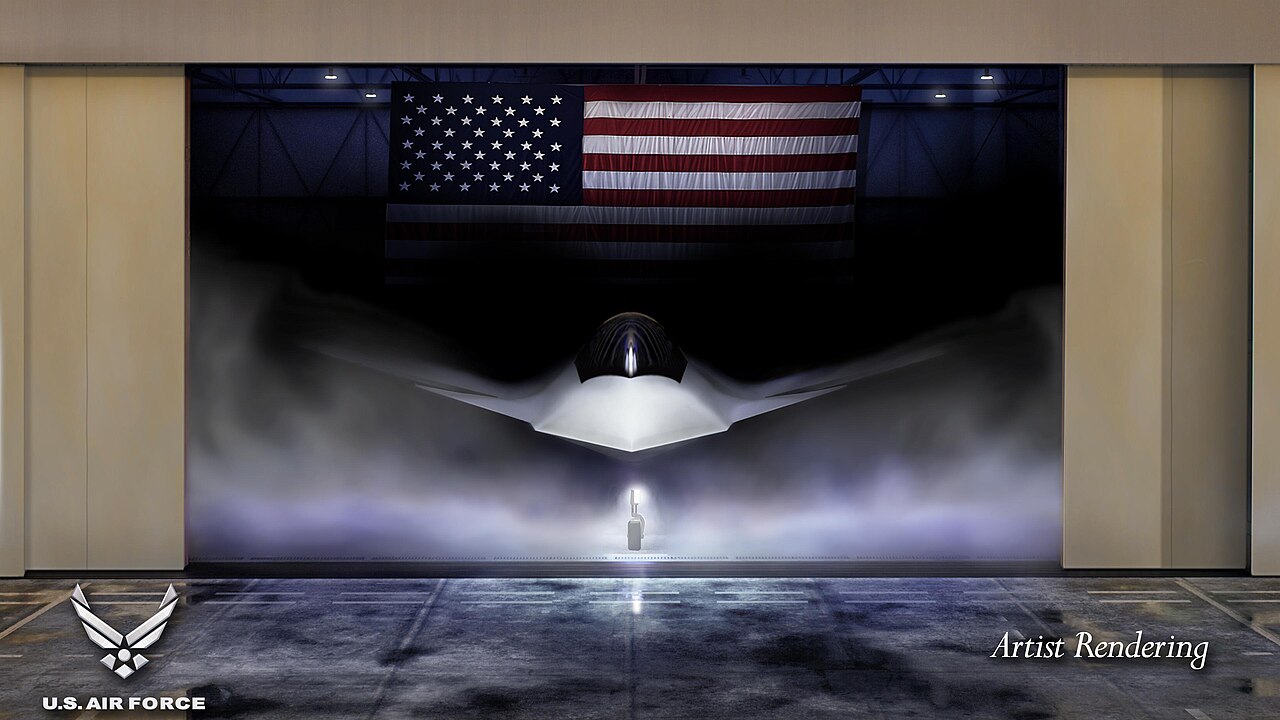
A sixth-generation fighter is a combat aircraft meant to go beyond the F-22 and F-35 in stealth, range, sensing and the ability to direct uncrewed aircraft. No such fighter is in service anywhere. The term has no official definition. Fighter generations are a shorthand used by air forces, manufacturers and analysts, and each uses it slightly differently. What exists is a set of features that most sixth-generation programmes share.
This explainer sets out those features, shows how the generations are usually divided, and lists the aircraft that claim the label in late 2026, led by the Boeing F-47.
How fighter generations are counted
Generations describe steps in technology. The numbering was applied in hindsight, and the boundaries are argued over. The broad outline is widely accepted.
| Generation | Period | What defines it | Examples |
|---|---|---|---|
| Fourth | 1970s onward | Agility, look-down radar, fly-by-wire controls | F-15, F-16, Su-27, MiG-29 |
| 4.5 | 1990s onward | AESA radar, sensor upgrades, reduced radar signature | Rafale, Typhoon, F-15EX, Su-35 |
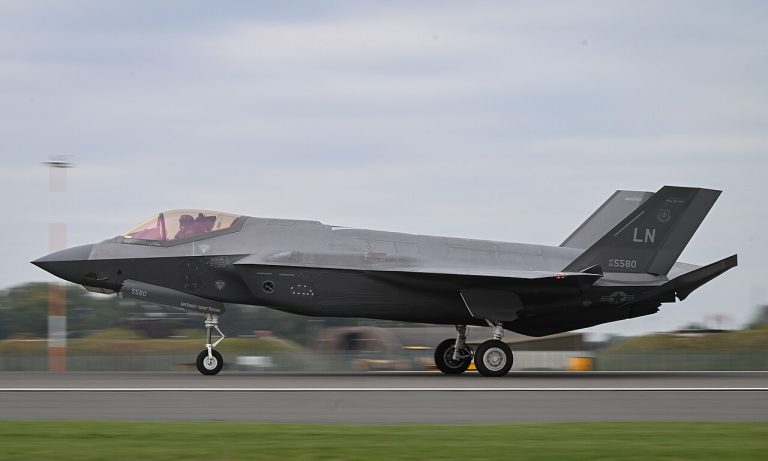
| Fifth | 2005 onward | Stealth shaping, internal weapons, sensor fusion | F-22, F-35, J-20, Su-57 |
| Sixth | 2030s (planned) | See below | F-47, F/A-XX, J-36, GCAP |
Fifth-generation aircraft are covered in our guide to stealth and sensor fusion. The step to the sixth is less about one new invention and more about combining several.
The features most often named
Five characteristics appear in almost every description, including the Air Force’s own statements about the F-47.
The first is stealth against more kinds of radar and from more directions. Fifth-generation fighters are hardest to detect from the front and by high-frequency fire-control radars. Removing the tail, as the F-47’s official images suggest, reduces what lower-frequency radars can see from the side and rear. We explain the physics in F-47 stealth explained.
The second is range. The F-47’s combat radius above 1,000 nautical miles is nearly double the F-22’s. The third is teaming with uncrewed aircraft. A sixth-generation fighter is expected to direct drone wingmen that carry sensors and missiles.
The fourth is a new kind of engine. Adaptive engines such as those in the NGAP programme change their airflow in flight to give either more thrust or better fuel economy, and produce more electrical power and cooling. The fifth is software: sensor fusion aided by artificial intelligence, and an open architecture so that systems can be upgraded quickly.
Some lists add laser weapons, hypersonic speed or optional crewing. None of these has been confirmed for any aircraft in development, and they should be treated as speculation.
Who is building one
Several countries have programmes. They are at very different stages.
| Aircraft | Country | Status | Target |
|---|---|---|---|
| F-47 | United States (Air Force) | In development; first aircraft in build | First flight 2028 |
| F/A-XX | United States (Navy) | Boeing selected September 2026 | Service in the 2030s |
| J-36 | China | Three prototypes seen flying | Not announced |
| J-50 | China | Prototypes seen flying | Not announced |
| GCAP | UK, Italy, Japan | In development; demonstrator due by end of 2027 | Service in 2035 |
| FCAS | France, Germany, Spain | Joint fighter ended June 2026 | None |
| MiG-41 / PAK DP | Russia | Announced; no aircraft shown | Unclear |
China has moved fastest in public. Two tailless designs, known abroad as the J-36 and J-50, first appeared in December 2024, and the Pentagon’s December 2025 report said Chinese sixth-generation aircraft could be operational by 2035. Our comparison of the F-47 and J-36 sets out how little is confirmed about either.
In Europe the picture has narrowed. The British, Italian and Japanese GCAP is funded and aiming for 2035. The French, German and Spanish FCAS fighter was abandoned in June 2026. An earlier survey on this site, comparing sixth-generation programmes, gives more background.
Is the F-47 really sixth-generation?
By the usual list, yes, on paper. The Air Force describes it as the first crewed sixth-generation fighter. Its published range and stealth rating exceed the F-22’s, it is tied to an adaptive engine, and it is designed around Collaborative Combat Aircraft.
The qualification is that none of this has been demonstrated. The aircraft has not flown. Its engine is more than two years late. Its drones are only now entering production. A generation is earned in service, and the F-22 and F-35 both took many years after first flight to deliver what was promised.
The same caution applies to every aircraft in the table above. China’s prototypes are flying, which is an achievement, but nothing is known for certain about their sensors, engines or weapons.
Why the label matters, and why it does not
The label matters in politics and budgets. Governments use it to justify spending, and manufacturers use it to sell. It also signals intent: a country that starts a sixth-generation programme is telling rivals that it expects to contest the air in the 2040s.
It matters less in combat. What counts is whether an aircraft can find its opponent first, survive, and bring enough weapons to the fight. A well-upgraded fifth-generation aircraft with good missiles and good support may beat an immature sixth-generation one. Lockheed Martin has made exactly that argument for an improved F-35.
A useful test is to ignore the generation and ask four questions. How far can it fly? How hard is it to detect? What can it see? And how many of them, with how many drones, can the country afford? Our comparison of the F-47 and F-35 works through those questions.
Frequently asked questions
What is a sixth-generation fighter?
A combat aircraft intended to surpass fifth-generation types such as the F-22 and F-35 in stealth, range, sensors and teaming with uncrewed aircraft. There is no official definition.
Is any sixth-generation fighter in service?
No. As of late 2026 all are in development or flight test.
Is the F-47 a sixth-generation fighter?
The US Air Force describes it as one. It has not yet flown, so its capabilities are unproven.
Does China have a sixth-generation fighter?
China has flown at least two new tailless designs since December 2024. They are prototypes, and their capabilities are not publicly known.
What is the difference between fifth and sixth generation?
Sixth-generation designs aim for broader stealth, much longer range, adaptive engines, and control of uncrewed aircraft.
Will sixth-generation fighters have pilots?
The F-47, F/A-XX and GCAP are all crewed. Each is designed to work with uncrewed aircraft.
- The War Zone – First F-47 6th Generation Fighter Now Being Built: twz.com
- Air Data News – Pentagon report on China’s sixth-generation fighters: airdatanews.com
- The Aviationist – Third prototype of China’s J-36 has flown: theaviationist.com
- The Aviationist – Global Combat Air Programme Awards First Contract with Edgewing: theaviationist.com
- The Aviationist – France and Germany Set to End Future Combat Air System Program: theaviationist.com
- Boeing – U.S. Navy Selects Boeing for F/A-XX Program: investors.boeing.com
- Breaking Defense – Lockheed won’t protest NGAD loss, instead pitches new fifth-gen-plus version of F-35: breakingdefense.com