US Air Defense Systems: Patriot, THAAD, Aegis and Golden Dome
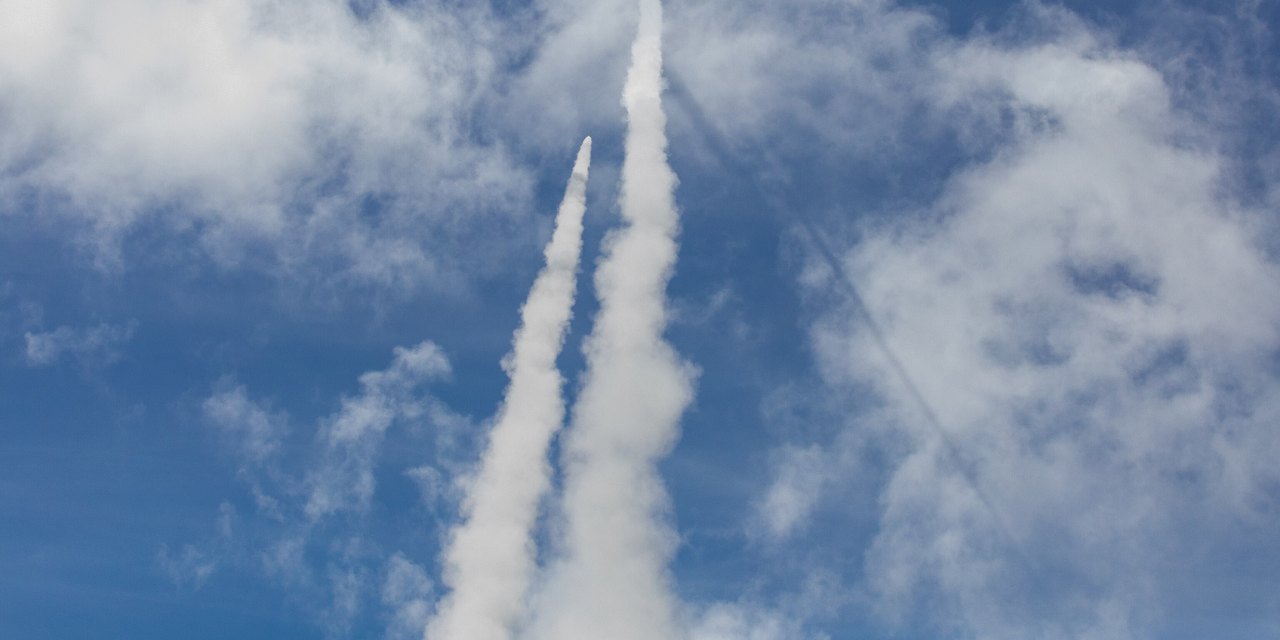
The United States defends against air and missile attack with four main systems: Patriot and THAAD on land, Aegis at sea, and the Ground-based Midcourse Defense that protects the homeland from intercontinental missiles. A fifth, the Golden Dome, is being designed to tie them together and add interceptors in space.
This guide explains what each layer does, how many units exist and why the stock of interceptors, not the number of launchers, has become the main worry.
What air defense systems does the US have?
American air defense is layered. Each system covers a band of altitude and range, and a missile that gets past one should meet the next. The upper layers are designed to hit ballistic missiles in space or at the edge of the atmosphere. The lower ones deal with aircraft, cruise missiles and drones. The principle is set out in how air defense systems work, and the leading systems worldwide are ranked in our top 10 air defense systems.
| System | Operated by | Main targets | Reach | Numbers |
|---|---|---|---|---|
| Ground-based Midcourse Defense | Army, Missile Defense Agency | Intercontinental ballistic missiles | Intercepts in space | 44 interceptors in Alaska and California |
| Aegis with SM-3, SM-6 and SM-2 | Navy | Ballistic missiles, cruise missiles, aircraft | SM-3 in space; SM-6 more than 240 km | About 80 cruisers and destroyers; two land sites in Europe |
| THAAD | Army | Short- to intermediate-range ballistic missiles | About 200 km | 8 batteries |
| Patriot | Army | Aircraft, cruise missiles, short-range ballistic missiles | Up to 160 km against aircraft; about 35 km against ballistic missiles | 15 battalions |
| NASAMS | Army National Guard | Aircraft, cruise missiles and drones over Washington | About 40 km | National Capital Region |
| Sgt Stout, Avenger, Stinger | Army, Marine Corps | Drones, helicopters, low-flying aircraft | Under 10 km | Divisional and brigade units |
Patriot: the workhorse
Patriot has been in service since the 1980s and is the most used Western air defense system. A battery has a radar, a control station and up to eight launchers. It fires two families of missile: the PAC-2 GEM-T against aircraft and cruise missiles, and the hit-to-kill PAC-3 MSE against ballistic missiles. In Ukraine it has shot down Russian Kinzhal missiles, a record compared with its rival in Patriot vs S-400.
The Army has 15 Patriot battalions and plans three more, one a year from 2029. It is also replacing the old radar, which looks in one direction, with the LTAMDS, which sees all round, and linking every launcher and sensor through a network called IBCS. The Congressional Research Service puts the price of a new four-battery battalion at about $1.8 billion.
THAAD: the upper layer on land
THAAD engages ballistic missiles in their final descent, inside or just above the atmosphere, at ranges of 150 to 200 km. It carries no explosive: the interceptor destroys its target by collision. A battery has six launchers with eight missiles each and the powerful TPY-2 radar.
There are only eight batteries, and the Army has no plan to buy more. They are permanently stretched between Guam, South Korea and the Middle East. Lockheed Martin makes 96 interceptors a year, a rate now being raised to 400 with new contracts such as the L3Harris propulsion deal.
Aegis: missile defense at sea
The Navy’s contribution is the Aegis combat system, fitted to about 80 cruisers and destroyers. Its SPY radars track hundreds of targets and its vertical launch cells hold a mix of interceptors. The SM-3 hits ballistic missiles in space. The SM-6 handles aircraft, cruise missiles and ballistic missiles in their last seconds. The SM-2 and ESSM cover shorter ranges, and the Phalanx gun is the last resort.
Two Aegis systems sit on land, in Romania and Poland, as part of NATO’s missile defense. Ships of this type shot down Iranian missiles aimed at Israel in 2024 and 2025 and again throughout the 2026 war.
Homeland defense: GMD and the Golden Dome
Only one system can stop an intercontinental missile aimed at American territory. The Ground-based Midcourse Defense has 44 interceptors, 40 at Fort Greely in Alaska and four at Vandenberg in California. It was sized for a small attack from North Korea, not for Russia or China. A new interceptor is due to join it from about 2028.
Golden Dome is meant to go much further. Ordered by President Trump in January 2025, it would link existing systems with new sensors and with interceptors based in space, to defend the whole country against ballistic, cruise and hypersonic missiles. Gen. Michael Guetlein, who runs the programme, has told Congress it will cost $185 billion to deliver by 2035. The Congressional Budget Office estimates $1.2 trillion over 20 years. The 2027 budget asks for $17.5 billion, and in August 2026 Fort Story in Virginia was named as the first operational site.
Short-range air defense and drones
The weakest layer is the lowest. After the Cold War the Army disbanded most of its short-range air defense, and it is rebuilding under pressure from cheap drones. The main new system is the Sgt Stout, a Stryker armored vehicle with Stinger missiles and a 30 mm cannon, whose next version we covered in M-SHORAD Increment 4. A NASAMS battery has guarded Washington since 2005.
Lasers are starting to arrive. The Army took delivery of its first production laser weapon in 2026, reported in our article on the LOCUST system. The attraction is cost: a laser shot costs a few dollars, against $4 million for a PAC-3.
The interceptor shortage
The 2026 war with Iran tested every layer at once, and the missiles ran down faster than factories could replace them. The Center for Strategic and International Studies estimates that more than half of the Patriot and THAAD stock was used in 39 days.
| Interceptor | Stock before the Iran war | Used in the first 39 days | FY2027 request |
|---|---|---|---|
| Patriot PAC-3 | About 2,330 | 1,060 to 1,430 | 3,202 |
| THAAD | About 360 | 190 to 290 | 857 |
| SM-3 | About 410 | 130 to 250 | 214 |
| SM-6 | About 1,160 | 190 to 370 | 540 |
The fiscal 2027 request includes $12.2 billion for PAC-3 MSE and $11.4 billion for THAAD interceptors. PAC-3 output is to rise from about 600 a year to 2,000 by 2030, helped by agreements such as Boeing’s seeker deal. CSIS expects it to take about three years to rebuild each stock.
Frequently asked questions
What is the best US air defense system?
It depends on the threat. Patriot is the main defense against aircraft and short-range missiles, THAAD and Aegis SM-3 handle longer-range ballistic missiles, and only GMD can engage an ICBM.
How many Patriot batteries does the US have?
The Army has 15 Patriot battalions, usually of four batteries each, or about 60 batteries. Three more battalions are planned from 2029.
Does the US have an Iron Dome?
The Army bought two Iron Dome batteries from Israel, delivered in 2020 and 2021. Golden Dome is a different and far larger project for defending the whole country against long-range missiles.
Can the US shoot down an ICBM?
In limited numbers. The 44 Ground-Based Interceptors are meant to stop a small attack, not a large one from Russia or China.
How much does a Patriot interceptor cost?
A PAC-3 MSE costs about $4 million. An SM-3, the most expensive American interceptor, costs up to about $28 million.
- Congressional Research Service – The U.S. Army and the Golden Dome Program (August 2026): everycrsreport.com
- CSIS – Last Rounds? Status of Key Munitions at the Iran War Ceasefire (April 2026): csis.org
- Al Jazeera – US weapons stockpile estimates after the Iran war (July 2026): aljazeera.com
- CSIS Missile Threat – Patriot: missilethreat.csis.org
- CSIS Missile Threat – Terminal High Altitude Area Defense (THAAD): missilethreat.csis.org