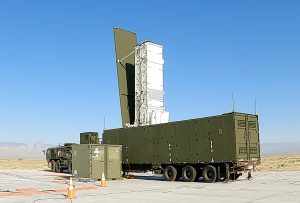


NASAMS, the Air Defense System Guarding Kyiv and Washington
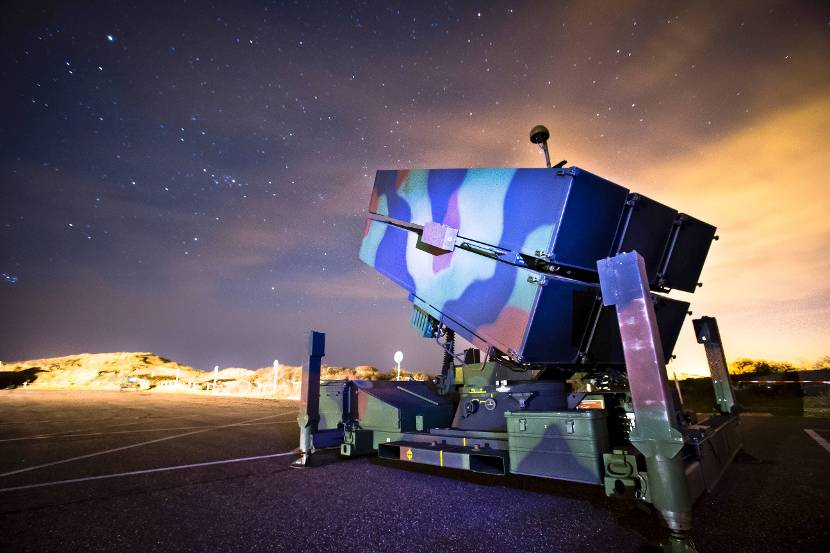
NASAMS is the air defense system that guards Washington DC and shot down hundreds of missiles and drones over Kyiv, built around a simple idea: take a proven air-to-air missile and fire it from the ground. Developed by Norway’s Kongsberg with Raytheon, it has become the West’s default medium-range air defense purchase, with operators from Ukraine to Australia and a combat record few systems can match.
What is NASAMS
NASAMS, the National (originally Norwegian) Advanced Surface-to-Air Missile System, entered service in 1997 as a joint development of Kongsberg Defence & Aerospace and Raytheon, now RTX. Its core innovation was economic as much as technical: instead of a bespoke interceptor, it ground-launches the AIM-120 AMRAAM, a missile produced in the tens of thousands and stocked by every NATO air force. Its maker’s broader portfolio is covered in our Kongsberg profile and recent Naval Strike Missile reporting.
NASAMS range, missiles and radar
| Parameter | Figure |
|---|---|
| Developers | Kongsberg Defence & Aerospace (Norway) and Raytheon/RTX (US) |
| In service | Since 1997; NASAMS 2 from 2007, NASAMS 3 from 2019 |
| Missiles | AIM-120 AMRAAM; AMRAAM-ER extended range; AIM-9X Sidewinder (NASAMS 3) |
| Range | About 40 km (NASAMS 2); about 60 km with AMRAAM-ER |
| Altitude coverage | About 21 km; up to about 35 km quoted for NASAMS 3 configurations |
| Radar | AN/MPQ-64F1 Sentinel, about 120 km track range |
NASAMS battery composition
A NASAMS 2 battery fields up to four firing units, each combining three canister launchers of six missiles, a Sentinel radar, an electro-optical sensor vehicle and a Fire Distribution Center. The architecture is distributed by design: launchers can sit kilometers from the radar, any radar can cue any launcher, and the network absorbs the loss of single nodes, the property Ukrainian crews have exploited to keep batteries alive under Russian strikes.
From Norwegian F-16s to a NATO standard, the history
NASAMS was born of a 1990s Norwegian problem: replacing aging HAWK batteries on a small country’s budget. Kongsberg’s answer, pair the US Sentinel radar with the AMRAAMs Norway already bought for its F-16s, produced a system whose parts were all proven before the first battery stood up in 1997. The US National Capital Region adopted it in 2005, an endorsement that did more for exports than any brochure, and the NASAMS 2 upgrade in 2007 networked the launchers properly. NASAMS 3, fielded from 2019, added AIM-9X for close targets, canister improvements and the extended-range AMRAAM-ER, which grafts a larger rocket motor onto the AMRAAM seeker.
The architecture aged well because it was modular from birth. New missiles, new radars and new command posts have slotted in without redesigning the system, and the same Fire Distribution Center now fronts national networks well beyond the original batteries, a quiet business Kongsberg has built in parallel with the launcher sales.
NASAMS combat record in Ukraine
NASAMS arrived in Ukraine in November 2022 and reportedly opened its account by intercepting 10 of 10 targets in its first engagements. By February 2025, Ukrainian officials credited the system with about 900 missiles and drones destroyed at a 94 percent hit rate, figures that come from the operator and cannot be independently audited, but that track with the system’s visible role in defending Kyiv’s power grid against cruise missile and Shahed drone salvos. The same class of threat is pushing every Western army toward layered defenses, from new US interceptors to directed energy trials.
Who operates NASAMS
| Region | Countries |
|---|---|
| Nordics and Europe | Norway, Finland, Spain, Netherlands, Lithuania, Hungary |
| North America | United States, which has used NASAMS in the National Capital Region air defense of Washington DC since 2005 |
| Asia-Pacific and Middle East | Australia, Indonesia, Oman, Qatar |
| Other | Ukraine, Chile |
NASAMS frequently asked questions
What is the range of NASAMS?
About 40 kilometers with standard AMRAAM and about 60 kilometers with AMRAAM-ER, at altitudes up to roughly 21 to 35 kilometers depending on configuration.
Who makes NASAMS?
Norway’s Kongsberg Defence & Aerospace with Raytheon (RTX) of the United States.
How effective is NASAMS in Ukraine?
Ukrainian officials report about 900 targets downed at a 94 percent hit rate as of February 2025; the figures are operator-reported.
Which missiles does NASAMS fire?
AIM-120 AMRAAM variants including AMRAAM-ER, and AIM-9X Sidewinder on NASAMS 3.
Does the US use NASAMS?
Yes, NASAMS has protected the airspace around Washington DC as part of the National Capital Region defense since 2005.
- Wikipedia – NASAMS (accessed October 2026)
- Kongsberg and RTX program materials
- Ukrainian government statements on NASAMS performance (operator-reported)
- Defence & Tech reporting on Kongsberg