Boeing-Anduril and Lockheed Reach Final Two in Army Interceptor Race
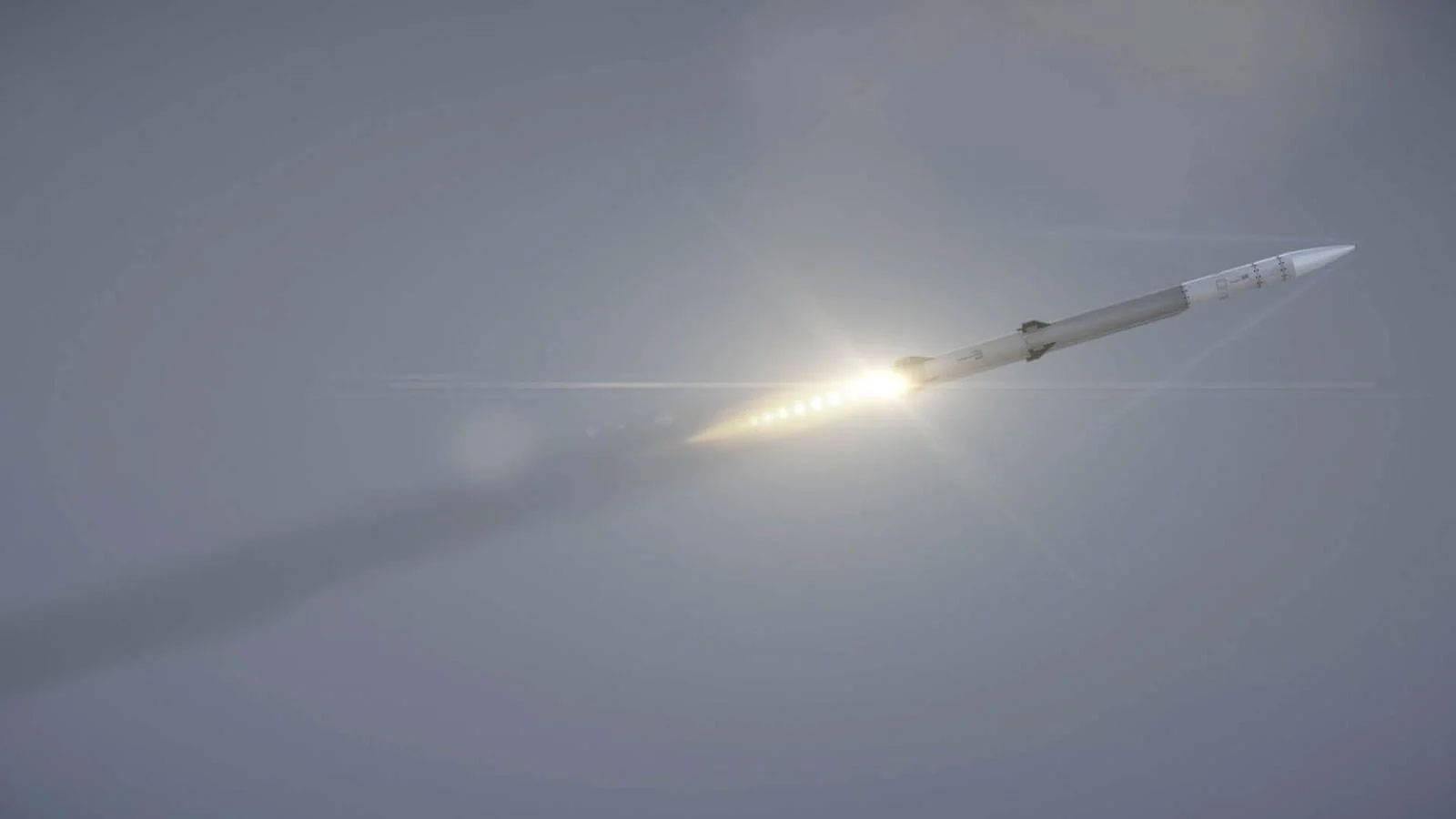
The U.S. Army has narrowed its competition for a second interceptor for the Indirect Fire Protection Capability Increment 2 system to two contenders, advancing a Boeing–Anduril team and Lockheed Martin into the next phase and eliminating the U.S. subsidiary of Israel’s Rafael. The selection, announced on 9 September 2026, sets up a head-to-head design and demonstration contest for a mid-range round intended to shoot down cruise missiles and armed drones at a price the Army can afford to expend.
The Requirement
IFPC Increment 2 is the Army’s system for protecting fixed and semi-fixed sites — airfields, logistics hubs, command posts, forward operating bases — against cruise missiles and unmanned aircraft. The system pairs the Multi-Mission Launcher with the Integrated Battle Command System, and its first interceptor is the AIM-9X Sidewinder, adapted for surface launch.
AIM-9X works, but it was designed as an air-to-air missile and is priced accordingly. Using a round in that cost bracket against a subsonic drone is the same arithmetic problem that has strained air defences from Ukraine to the Red Sea: the defender spends more per engagement than the attacker spends per shot, and the attacker can iterate faster.
The Second Interceptor programme exists to break that ratio. The Army wants a purpose-built round that costs meaningfully less than an AIM-9X, fits the existing Multi-Mission Launcher, and covers the mid-range band between short-range counter-UAS effectors and Patriot.
What Boeing and Anduril Are Offering
Boeing and Anduril formed their team in December 2025, with Boeing leading integration and Anduril Rocket Motor Systems supplying the solid rocket motor. Boeing describes the resulting interceptor as combining a seeker, a compact airframe and a Modular Open Systems Architecture that allows the seeker, avionics or software to be replaced in blocks without redesigning the weapon.
The MOSA claim is the strategic argument as much as the technical one. Air-defence interceptors have historically been closed designs in which a seeker upgrade means a new missile variant and a new qualification cycle. An open architecture promises faster and cheaper refresh as threat drones change — which, in this threat class, they do on timescales measured in months.
Anduril’s role is arguably the more significant industrial detail. Solid rocket motor capacity has been the acknowledged chokepoint across U.S. munitions programmes since 2022, dominated by a small number of established suppliers. Anduril entered that market deliberately, and IFPC Inc 2 is one of the first major competitions in which its motor production is a discriminator rather than a promise.
Lockheed Martin Advances Too
Lockheed Martin also moved into the next phase, keeping the competition genuinely contested. Lockheed brings the deepest existing portfolio in Army air and missile defence — PAC-3 MSE, THAAD and the guided multiple launch rocket family — along with established production infrastructure and long-running relationships with the programme office.
The elimination of Rafael’s U.S. arm removes the contender most directly associated with operational counter-rocket and counter-drone experience through the Iron Dome and Tamir lineage. The Army has previously acquired Iron Dome batteries as an interim IFPC solution, so the decision to drop the Rafael-linked offering from a programme explicitly about affordable interceptors is a pointed one, and likely reflects the Army’s preference for a design it can sustain and upgrade through domestic supply chains.
What Happens in Phase 2
Both teams now carry out detailed design, development, integration and demonstration work before a competitive test against Army requirements. That phase structure — design, then shoot, then decide — is the Army’s method for avoiding a paper down-select, and it means the eventual winner will be chosen against live-fire performance rather than proposal scoring.
No contract value or production quantity has been disclosed for the phase. If the programme follows the pattern of comparable Army interceptor efforts, production decisions would follow demonstration by roughly two years, with initial fielding toward the end of the decade.
Why It Matters Beyond the Army
Base air defence has moved from a neglected mission to a first-order requirement in under four years. Attacks on airfields and logistics nodes by cheap drones — in Ukraine, across the Middle East, and against shipping in the Red Sea — demonstrated that fixed sites without a layered defence are exposed regardless of how sophisticated the force operating from them may be.
The interceptor that wins IFPC Inc 2 will therefore have an export profile well beyond the U.S. Army. European NATO members, Gulf states and Indo-Pacific partners are all working the same problem with the same constraint: they need something cheaper than the missiles they own and more capable than the guns and jammers they are buying. A modular, mid-range, open-architecture interceptor built on a scalable rocket motor line is exactly the shape of the answer, and whoever fields one first sets the reference point for everyone else.
Sources
- Boeing — “Boeing, Anduril midrange interceptor advances in U.S. Army competition,” September 2026
- Breaking Defense — “Army selects Lockheed, Boeing-Anduril team for next phase in IFPC Inc 2 competition”
- Aviation Week — “Boeing Unveils IFPC Second Interceptor Design”
- Army Recognition — “U.S. Army Advances Boeing-Anduril Mid-Tier Interceptor to Counter Cruise Missiles and Drones”