Which European Countries Operate Military Satellites?
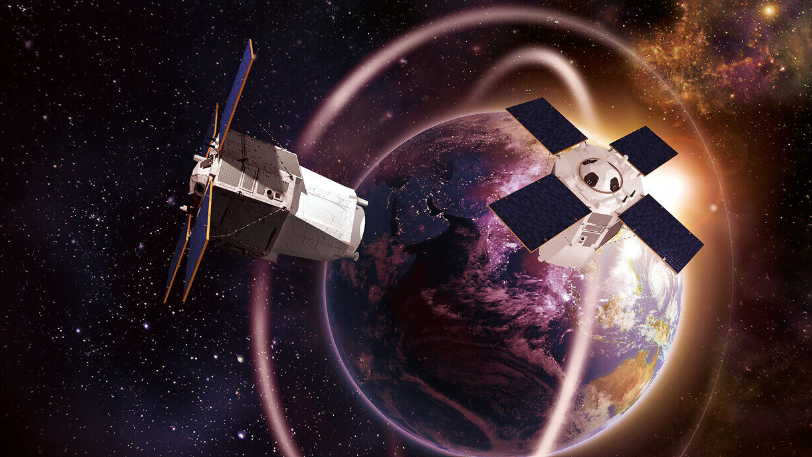
Five European states operate their own military satellites outright: France, Germany, Italy, the United Kingdom and Spain run national reconnaissance, radar or communications constellations built by their own defence-space industries. A second group, including Poland, Finland and the Netherlands, has moved in the past two years from buying satellite time to buying satellites, mostly through the Finnish radar firm ICEYE. Most other European countries still have no national military satellite and depend on NATO allies, commercial imagery and, from 2029, the European Union’s IRIS² constellation.
Why This Matters
Europe’s armed forces need three things from orbit: secure communications that cannot be jammed or eavesdropped on the battlefield, imagery that does not depend on an ally’s tasking priorities, and early warning of what an adversary is doing before it becomes visible on the ground. For three decades, most European states covered all three needs by renting capacity from the United States, from commercial operators, or from a handful of larger neighbours. The war in Ukraine changed the calculation. Western intelligence agencies have been open about the role commercial and allied satellite imagery played in tracking Russian troop movements before February 2022, and several European governments have since concluded that owning at least some of that capability, rather than renting all of it, is now a baseline requirement rather than a luxury.
That shift explains why the satellite order book in Europe looks so different in 2026 to how it looked even five years ago: not just the five established national programmes expanding, but a wave of small, relatively cheap radar satellites being bought by countries that had never operated a military satellite before.
The European Picture
European military satellites fall into four categories: optical and radar reconnaissance (imagery intelligence), signals intelligence (listening to an adversary’s own transmissions), secure communications, and early warning or space domain awareness. No single European country operates a full set across all four categories on its own. France comes closest, with reconnaissance, communications and signals-intelligence satellites in service. Germany and Italy each run one reconnaissance constellation and one communications programme. The UK and Spain are rebuilding their communications fleets and adding smaller reconnaissance satellites. Everyone else either buys into someone else’s system, such as NATO’s Alliance Persistent Surveillance from Space (a model similar to the networked, allied approach the US is building with the PWSA constellation), or has started acquiring a handful of commercial radar satellites, typically from Finland’s ICEYE, rather than building a national programme from scratch.
How These Satellites Work
Most of the reconnaissance satellites discussed below carry synthetic aperture radar, which images the ground through cloud and darkness; DefenceAndTech has covered how SAR imaging works in detail elsewhere. The communications satellites use a mix of military UHF, X, Ka and Ku-band payloads, explained in our guide to military SATCOM bands. None of the systems below provide the missile-launch early-warning role that US satellites such as SBIRS perform; that capability is explained separately, and no European state currently fields an equivalent, though France’s CERES and Germany’s planned sovereign constellation move toward adjacent signals-intelligence and surveillance roles.
| Country | Programme | Category | Status | Prime contractor(s) |
|---|---|---|---|---|
| France | CSO-1/2/3 (MUSIS) | Optical ISR | OPERATIONAL | Airbus Defence and Space, Thales Alenia Space |
| France | Syracuse IV (4A/4B) | SATCOM | OPERATIONAL | Thales Alenia Space, Airbus |
| France | CERES | SIGINT | OPERATIONAL | Thales (payload), Airbus (platform) |
| Germany | SARah (1 phased-array + 2 reflector satellites) | SAR ISR | OPERATIONAL | OHB, Airbus |
| Germany | Heinrich Hertz (H2Sat) | SATCOM (experimental, with military payload) | OPERATIONAL | OHB |
| Germany | Sovereign LEO constellation (planned) | SATCOM/ISR | CONSIDERING | Not yet contracted |
| Italy | COSMO-SkyMed Second Generation (3 of planned 4 satellites) | SAR ISR (dual-use) | OPERATIONAL | Thales Alenia Space, Leonardo |
| Italy | SICRAL 1B / 2 / 3A / 3B | SATCOM | OPERATIONAL (1B, 2); CONTRACTED (3A, 3B, due 2027-28) | Thales Alenia Space, Telespazio |
| Italy | Rheinmetall Italia / Argotec air-defence surveillance satellite | Early-warning-adjacent ISR | DELIVERED (1 satellite, 1 Oct 2026) | Argotec, Rheinmetall Italia |
| United Kingdom | Skynet 5 (in service) / Skynet 6A (in development) | SATCOM | OPERATIONAL (5); CONTRACTED (6A, service target 2027) | Airbus Defence and Space UK |
| United Kingdom | Tyche (ISTARI programme) | Optical ISR | OPERATIONAL | SSTL |
| United Kingdom | Titania, Juno, Oberon (MINERVA demonstrators) | Optical comms / ISR demonstrators | CONTRACTED/ORDERED | In-Space Missions and partners |
| Spain | PAZ | SAR ISR (dual-use) | OPERATIONAL | Airbus, Hisdesat |
| Spain | PAZ-2 (2 satellites) | SAR ISR | CONTRACTED (service from ~2031) | Airbus, Hisdesat |
| Spain | SpainSat NG I | SATCOM | OPERATIONAL | Airbus, Hisdesat |
| Spain | SpainSat NG II | SATCOM | RETIRED (debris strike, declared non-recoverable 16 Jan 2026; replacement NG III in procurement) | Airbus, Hisdesat |
| Poland | MikroSAR / POLSARIS (ICEYE) | SAR ISR | DELIVERED (first 3 of up to 6) | ICEYE, Polish industry |
| Poland | POLEOS (Airbus optical satellites) | Optical ISR | CONTRACTED (due 2027) | Airbus Defence and Space |
| Finland | National SAR constellation (ICEYE) | SAR ISR | CONTRACTED (2025 agreement, ~€158m) | ICEYE |
| Netherlands | BRIK-II (nanosatellite technology demonstrator) | Comms/ISR demonstrator | DELIVERED | ISISPACE, NLR |
| Norway | Arctic Satellite Broadband Mission (hosted military payload) | SATCOM | OPERATIONAL | Space Norway, Northrop Grumman, KONGSBERG |
| Luxembourg / Belgium / France (NATO users) | GovSat-1 | SATCOM | OPERATIONAL | SES, LuxGovSat |
| Greece | National ISR satellite (ELKAK tender) | SAR ISR | CONSIDERING (tender stage) | Not yet contracted |
| Sweden, Netherlands, Portugal, Germany | Government SAR agreements with ICEYE | SAR ISR | ORDERED/CONTRACTED (varies by country) | ICEYE |
| European Union (all member states) | IRIS² / SpaceRISE (defence and emergency-services layer) | SATCOM/ISR | CONTRACTED (first launches targeted 2029) | SES, Eutelsat, Hispasat (SpaceRISE) |
| NATO (allied, not NATO-owned) | Alliance Persistent Surveillance from Space (APSS) | Data-sharing network, not satellites | OPERATIONAL (initial capability, Dec 2025) | NCIA; data from Planet Labs and allied systems |
Countries without a national military satellite
Most NATO and EU members in Europe, including the Baltic states, Czechia, Slovakia, Hungary, Romania, Bulgaria, Croatia, Austria, Switzerland, Denmark and Portugal, do not operate a military satellite of their own. They rely on a combination of NATO’s data-sharing arrangements, allied bilateral support (chiefly from the United States, France and the UK), commercial imagery purchases, and increasingly short-term contracts for ICEYE radar passes. That is the gap the EU’s IRIS² constellation and national programmes such as Poland’s and Finland’s are aimed at closing over the rest of this decade.
Industrial Players
Three companies build almost every satellite in the table above. Airbus Defence and Space builds or co-builds France’s CSO and Syracuse satellites, Germany’s SARah reflector satellites, the UK’s Skynet 6A, and Spain’s PAZ and SpainSat NG series, making it the only company with prime or major-subcontractor status in five of the six national programmes. Thales Alenia Space, the Franco-Italian joint venture between Thales and Leonardo, builds Italy’s COSMO-SkyMed and SICRAL satellites and significant parts of France’s Syracuse and CERES systems. OHB, based in Bremen, is Germany’s national prime for SARah and Heinrich Hertz. Below that tier, ICEYE has become the default supplier for states building a reconnaissance capability from a standing start, with government contracts now running in Poland, Finland and, per the company and Forecast International, discussions or agreements with Portugal, Greece, Sweden, the Netherlands and Germany. Rheinmetall’s Italian subsidiary, working with the Turin-based smallsat builder Argotec, became the newest entrant to this list when it launched its first satellite on 1 October 2026, aimed specifically at air-defence surveillance rather than general reconnaissance.
Procurement Status
The clearest trend in 2025 and 2026 procurement is states buying small radar constellations rather than committing to a single large flagship satellite. ICEYE’s European government order book, cumulatively worth several hundred million euros, has grown faster than any single national flagship programme over the same period. At the other end of the scale, the EU’s IRIS² agreement, finalised with the SpaceRISE consortium in December 2024 and expanded in August 2026, is the largest single commitment: 290 satellites for general secure connectivity plus a 66-satellite defence and emergency-services layer, funded through the EU’s 2028-2034 budget period and member-state top-ups, with Poland (€656m), Hungary (€500m) and Spain (€1.6-2bn) the first to confirm national contributions.
Spain’s SpainSat NG II shows the risk in any single-satellite procurement: after launching successfully in October 2025, Hisdesat declared it non-recoverable in January 2026 following what it described as an impact from a small space object during its climb to geostationary orbit, and has opened procurement for a replacement, SpainSat NG III, while the older SpainSat satellite continues to cover the gap.
Production Capacity
Europe’s satellite-building capacity is concentrated in a small number of final-assembly sites: Airbus Defence and Space in Toulouse and Friedrichshafen, Thales Alenia Space in Cannes and Rome, and OHB in Bremen. All three have expanded cleanroom and integration capacity over the past three years in response to both the IRIS² order and national defence programmes, but European officials, including ESA director-general Josef Aschbacher, have warned publicly that national constellations built in parallel with IRIS², such as Germany’s planned sovereign system, risk becoming isolated technical “silos” unless ground segments and frequencies are coordinated from the outset. ICEYE’s production model is different again: its satellites are smaller, radar-only, and built on a semi-standardised production line in Finland, which is why it has been able to deliver multiple government customers inside two to three years rather than the seven-to-ten-year cycle typical of a flagship optical or SATCOM satellite.
Türkiye’s Military Satellites
Türkiye answers the same requirement outside the EU and NATO’s European core with two domestically built satellites: GÖKTÜRK-1, a sub-metre-resolution optical reconnaissance satellite operated for the Turkish Armed Forces, and TÜRKSAT 6A, the country’s first domestically designed and built communications satellite, which carries government and military-grade communications capacity. Both sit alongside the commercial TÜRKSAT fleet that Ankara also uses for government traffic. Envanter Media has a detailed Turkish-language look at Poland’s own satellite and space-defence programmes, including the PIAST and SAR efforts referenced above, for readers who want the equivalent picture from the Polish side.
What Changes Next
Three developments will reshape this table before 2030. First, Poland’s build-out continues: the defence ministry has said it went from zero military satellites at the start of 2025 to a planned nine in orbit by the end of 2026, split across the MikroSAR, MikroGlob and POLEOS lines. Second, IRIS²’s defence layer begins launching from 2029, giving every EU member state, for the first time, guaranteed access to a sovereign secure-connectivity system rather than depending on bilateral arrangements with France, Germany, Italy, Spain or the UK. Third, Germany’s reported plan for its own sovereign LEO constellation, still uncontracted, will test whether European space officials can keep national and EU-level systems interoperable rather than duplicative, a concern ESA’s leadership has already raised in public.
Frequently Asked Questions
Which European countries operate their own military satellites?
France, Germany, Italy, the United Kingdom and Spain each operate national military satellites covering reconnaissance, communications or signals intelligence. Poland and Finland have joined this group more recently through radar-satellite purchases from ICEYE.
Does Germany have military satellites?
Yes. Germany operates the SARah radar reconnaissance constellation (one phased-array and two reflector satellites) and the Heinrich Hertz communications satellite, which carries a Bundeswehr payload alongside its civilian test mission. A further sovereign constellation has been discussed but is not yet contracted.
How many military satellites does France have?
France operates three CSO optical reconnaissance satellites, two Syracuse IV communications satellites and three CERES signals-intelligence satellites, making it the most self-sufficient European power across the three main satellite categories.
What happened to Spain’s SpainSat NG II satellite?
It launched successfully in October 2025 but was struck by a small space object while manoeuvring into its final geostationary orbit. Hisdesat declared the damage non-recoverable in January 2026 and has begun procuring a replacement, SpainSat NG III, while older satellites cover the gap.
Do all EU countries have access to military satellites?
Not through national programmes. Most EU and NATO members in Europe have no satellite of their own and rely on allied support, commercial imagery or NATO’s data-sharing arrangements. The EU’s IRIS² constellation, due to begin launching its defence and emergency-services layer from 2029, is intended to give every member state guaranteed sovereign access.
What is IRIS² and is it a military system?
IRIS² is the EU’s planned 348-satellite secure-connectivity constellation, built and operated by the SpaceRISE consortium (SES, Eutelsat, Hispasat). Most of the system serves general secure government connectivity, but a dedicated 66-satellite layer is being added specifically for defence, security and emergency-response users.
Why are so many European countries buying satellites from ICEYE instead of building their own?
ICEYE’s radar satellites are smaller, cheaper and faster to deliver than a national flagship programme, letting a country acquire a sovereign imaging capability in two to three years rather than the seven-to-ten-year cycle typical of a dedicated optical or communications satellite. Poland, Finland and several other governments have used this route as a first step into owning military space assets.
Does NATO own its own satellites?
No. NATO’s Alliance Persistent Surveillance from Space programme, which reached initial operational capability in December 2025, is a data-sharing network that combines imagery and signals from allied national systems and commercial providers such as Planet Labs, rather than a constellation NATO owns outright.
Sources
- CNES, “Ariane 6 successfully orbits CSO-3 military satellite” (6 March 2025) – cnes.fr
- Assemblée Nationale, amendment on the 2024-2030 military programming law and a third Syracuse IV-C satellite – assemblee-nationale.fr
- Thales Group, “Thales to develop France’s CERES space-borne military intelligence system” – thalesgroup.com
- OHB SE, “Federal Armed Forces start operational use of SARah with the first satellite” – eqs-news.com
- DLR, Heinrich Hertz communications satellite launch – dlr.de
- Airbus, Skynet 6A satellite passes Critical Design Review and 2027 service target – airbus.com
- Breaking Defense, “UK launches first military spy satellite from Falcon 9 rocket” (August 2024) – breakingdefense.com
- Agenzia Spaziale Italiana, COSMO-SkyMed Second Generation data availability and constellation status – asi.it
- Space Intel Report, “Italian Defense Ministry to launch two Sicral 3 military satellites on SpaceX Falcon 9 rockets in 2027” – spaceintelreport.com
- ESA, “Pacis 3 now in orbit aboard Hisdesat’s SpainSat NG I” – connectivity.esa.int
- DataCenterDynamics, “Hisdesat confirms NATO satellite sustained non-recoverable damage after impact” – datacenterdynamics.com
- European Commission / EUSPA, “Commission accelerates IRIS² deployment with enhanced security and expanded satellites network” (7 August 2026) – euspa.europa.eu
- NATO Communications and Information Agency, “The Alliance Persistent Surveillance from Space (APSS) programme reaches initial operational capability” – ncia.nato.int
- Defence24, “Poland enters a new era in satellite reconnaissance” – defence24.com
- Helsinki Times / Finnish Ministry of Defence, ICEYE satellite procurement contract (September 2025) – helsinkitimes.fi
- Forecast International, “ICEYE Emerges as a Key Supplier in Europe’s Shift Toward Military Microsatellites” – forecastinternational.com
- Forsvaret (Norwegian Armed Forces), Norwegian Intelligence Service space activities and the Arctic Satellite Broadband Mission – forsvaret.no
- Rheinmetall AG, “Rheinmetall and Argotec launch their first satellite into space with SpaceX” (2 October 2026) – rheinmetall.com
Last updated: 21 October 2026.