US Navy Awards Boeing $562M for First MQ-25A Stingray Production Lot
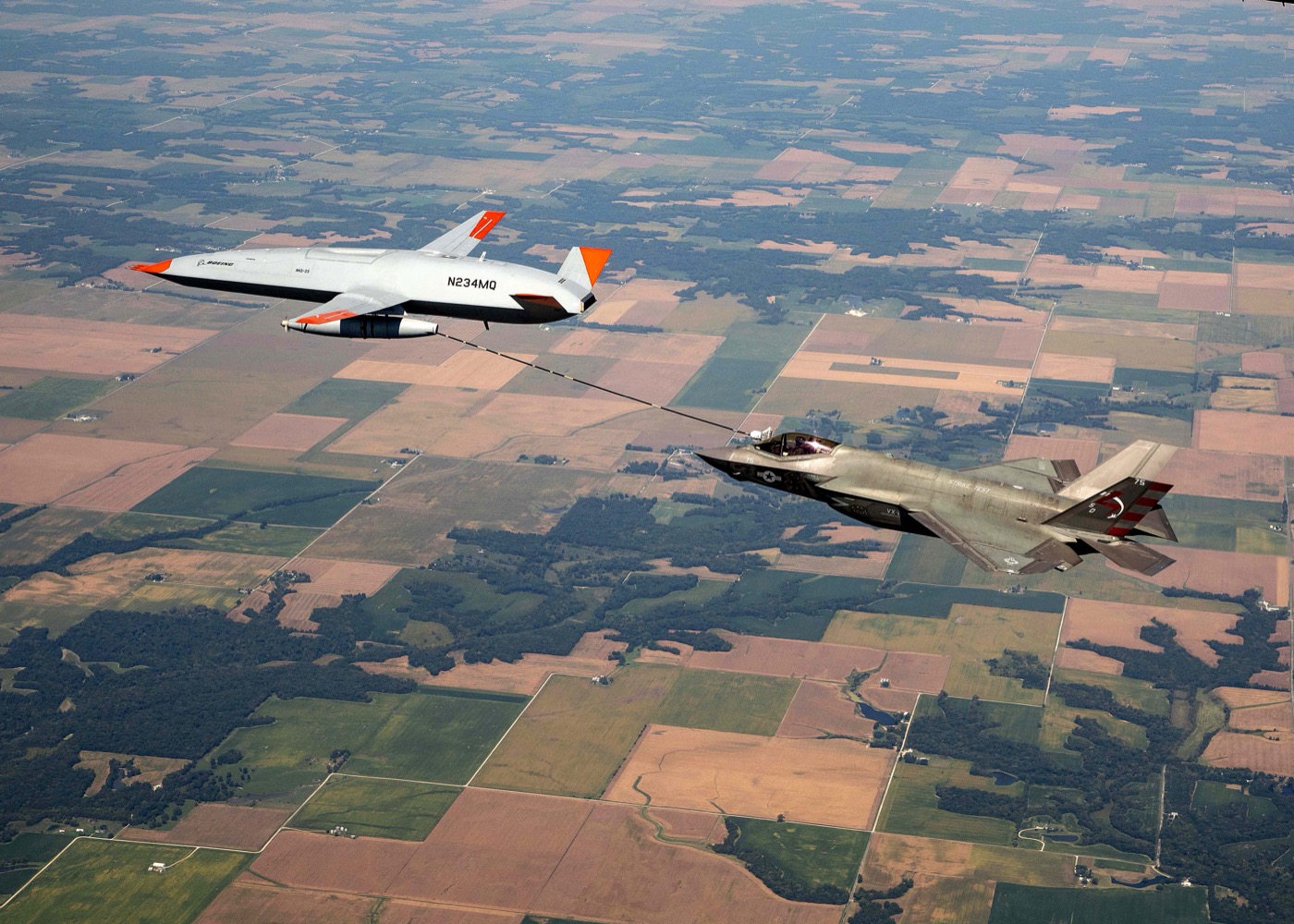
The U.S. Navy has awarded Boeing a $562 million contract for the first production batch of the MQ-25A Stingray, moving the service’s carrier-based unmanned tanker out of development and onto a manufacturing line for the first time.
The fixed-price incentive award covers three aircraft in Low Rate Initial Production Lot 1, along with long-lead components for three more aircraft planned under Lot 2. With the seven test articles already in production, the award brings the total number of MQ-25s under contract to 14. The programme of record is 76 aircraft.
“Reaching this milestone shows how we’re redefining naval aviation and expanding what autonomy can do,” said Troy Rutherford, Boeing’s MQ-25 programme vice president.
First deliveries from Lot 1 are expected to begin in 2029. The Navy plans to award Lot 2 in 2027.
From Demonstrator to Programme of Record
The production award follows a compressed sequence of programme milestones. The MQ-25A flew for the first time in April 2026, several months later than the Navy had originally intended, and the service granted Milestone C approval in May, formally clearing the aircraft to enter the Production and Deployment phase.
That first flight used a purpose-built engineering development aircraft rather than the T1 demonstrator Boeing flew in 2019 and used for the programme’s headline achievements — the first aerial refuelling of a manned aircraft by an unmanned tanker in June 2021, followed by refuelling contacts with the E-2D Hawkeye and the F-35C. T1 also conducted deck-handling trials aboard USS George H.W. Bush in late 2021, work that proved an aircraft with no pilot could be manoeuvred through the choreography of a carrier flight deck.
Production is split between Boeing’s St. Louis operations and a dedicated MQ-25 facility at MidAmerica St. Louis Airport in Mascoutah, Illinois, a site the company built specifically for the programme and which now shifts from prototype assembly to rate production.
What the Aircraft Is For
The MQ-25A exists to solve a problem the Navy created for itself. Since the retirement of the S-3 Viking in 2009, the carrier air wing has had no dedicated tanker, and the mission has fallen to F/A-18E/F Super Hornets flying in the “buddy store” configuration. By some service estimates, roughly a fifth to a quarter of Super Hornet sorties have been consumed by tanking — flight hours burned off the airframe life of strike fighters to move fuel a few dozen miles from the ship.
Handing that mission to an unmanned aircraft returns those sorties to the strike role and extends the service life of a Super Hornet fleet the Navy intends to fly well into the 2040s. The MQ-25A is designed to deliver roughly 15,000 pounds of fuel at 500 nautical miles from the carrier, which pushes the air wing’s unrefuelled reach outward at a moment when that reach has become the central problem of Pacific naval planning.
The Range Problem
China’s anti-ship ballistic missiles, chiefly the DF-21D and DF-26, are credited with engagement ranges that would oblige a carrier strike group to operate far enough offshore to put many targets beyond the practical combat radius of an F/A-18E/F or an F-35C. The carrier air wing’s answer is either longer-legged aircraft or airborne refuelling that can be pushed forward — and land-based tankers such as the KC-46 are large, non-stealthy and dependent on bases that would themselves be under missile threat.
A tanker that launches from the deck, carries no crew and can loiter without regard to aircrew fatigue changes that calculation. It does not solve the range problem outright, but it buys the air wing several hundred miles of standoff without redesigning the aircraft that fly from it.
First of Its Kind
The MQ-25A will be the first operational carrier-based unmanned aircraft in any navy, and the first unmanned tanker in U.S. military service. That distinction carries weight beyond the tanking mission itself. The Navy has built the Unmanned Carrier Aviation Mission Control System and the associated deck and network infrastructure around the Stingray, and that architecture is intended to host whatever unmanned carrier aircraft follow — surveillance, electronic attack or strike platforms that the service has discussed but not funded.
In that sense, the value of the programme is partly the aircraft and partly the plumbing. Getting a large unmanned aircraft to operate routinely from a carrier deck, inside the same control system and the same flight-deck procedures as manned aircraft, is the hard problem. Refuelling is the mission chosen to solve it.
The 2029 delivery date leaves the Navy without an operational Stingray for the remainder of the decade, and the programme’s history of schedule slippage — the first flight arrived about a year behind plan — gives reason for caution about that date. But the award moves the MQ-25A into the category of programmes that are being built rather than argued about, which is a different kind of problem to have.
Sources
- U.S. Navy press release, “First Production Contract Awarded for MQ-25A Stingray,” September 15, 2026
- Naval Today, “Boeing gets $562M US Navy contract for three MQ-25A Stingrays,” September 15, 2026
- Navy Times, “US Navy, Boeing ink first MQ-25A Stingray production contract,” September 15, 2026
- Naval Technology, “Boeing wins $562m US Navy production contract for MQ-25A Stingray,” September 2026
- The Aviationist, “Boeing Awarded LRIP Contract for MQ-25 Stingray,” September 15, 2026