What Is Tempest? Britain’s GCAP Sixth-Generation Fighter
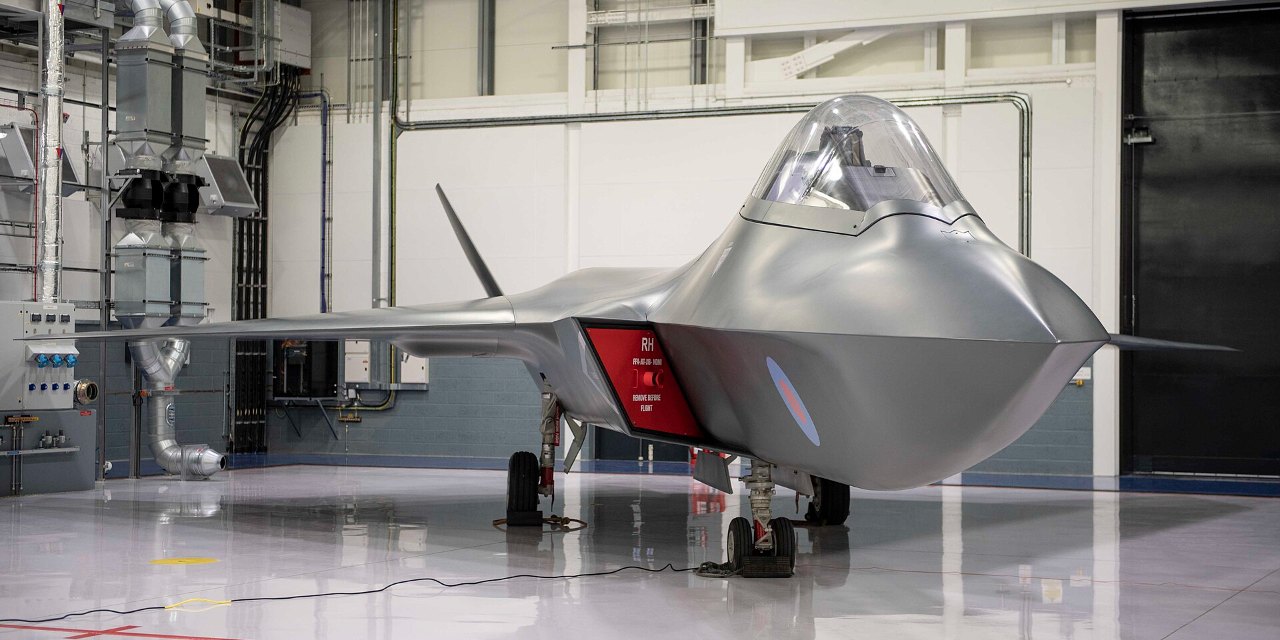
Tempest is the stealth fighter Britain is developing with Italy and Japan to replace the Eurofighter Typhoon from 2035. The programme is called GCAP, the Global Combat Air Programme, and it is the largest military aircraft project in British industry since the Typhoon itself. In July 2026 the three governments signed a £4.6 billion contract to move it into detailed design, and a flying demonstrator is being assembled at Warton in Lancashire.
This guide explains what Tempest is meant to do, who is building it, what it costs and how realistic the 2035 date is.
What is Tempest?
Tempest is a large twin-engine stealth fighter with a tailless delta wing, internal weapons bays and the range to operate far from its base. It is described as sixth-generation because it is designed from the start to act as the centre of a network: sharing data with other aircraft, ships and satellites, and controlling unmanned aircraft that fly alongside it. Britain calls the aircraft Tempest, Italy and Japan use their own names, and the joint programme is GCAP.
| Item | Detail |
|---|---|
| Partners | United Kingdom, Italy, Japan |
| Aircraft design company | Edgewing, owned equally by BAE Systems, Leonardo and Japan Aircraft Industrial Enhancement |
| Government customer | GCAP Agency, headquartered in Reading |
| Engine | New design by Rolls-Royce, Avio Aero and IHI |
| Sensors and electronics | GCAP Electronics Evolution consortium |
| Demonstrator | Twin EJ200 engines; to fly by the end of 2027 |
| Service entry | 2035 (target) |
| Replaces | Typhoon in the UK and Italy; F-2 in Japan |
How did the programme begin?
Britain unveiled a model of Tempest at the Farnborough air show in July 2018, with BAE Systems, Rolls-Royce, Leonardo’s British arm and MBDA as the core industrial team. Italy joined soon after. Japan was developing its own successor to the F-2, and in December 2022 the three countries agreed to merge the two efforts. A treaty in December 2023 created the GCAP Agency, and Edgewing was formed as the joint company that holds design authority for the aircraft. The industrial work is shared among the three countries, a point that has caused hard negotiations over who builds which parts.
What does it cost?
The Defence Investment Plan published on 30 June 2026 commits £8.6 billion to GCAP over the four years to 2029-30, on top of £2.7 billion spent since 2024. On 1 July 2026 the GCAP Agency signed a £4.6 billion contract with Edgewing, funded roughly equally by the three countries, covering the work until the end of 2027. It completes the concept phase and begins joint detailed design and development. It followed a first, shorter contract worth £686 million signed in April. The total cost of developing and building the aircraft has not been published; independent estimates run to tens of billions of pounds per country over the life of the programme.
The demonstrator
Before the real aircraft, BAE Systems is building a crewed supersonic demonstrator to test the shape, the stealth materials and the new manufacturing methods. Its fuselage is made at Samlesbury and final assembly is at Warton. It uses two Eurojet EJ200 engines from the Typhoon, and by mid-2026 it was about three-quarters complete by volume. It is due to fly by the end of 2027, which would make it the first new British crewed combat aircraft demonstrator to fly since the EAP of 1986. The production engine is being developed separately by Rolls-Royce with Avio Aero and IHI, and is approaching its first ground tests.
Tempest and drones
Tempest is meant to fly with unmanned aircraft that carry sensors, jammers or weapons and take the risks a crewed aircraft should not. Britain’s own programme for such aircraft received £300 million in the 2026 plan and is described in our guide to British drones. The aircraft Tempest will replace, the Typhoon, and the F-35s that will fly alongside it are covered in our guide to British fighter jets.
How does it compare with its rivals?
Two other sixth-generation fighters are under way in the West. The United States is building the Boeing F-47 for its air force, and France, Germany and Spain are working on FCAS, a project slowed by disputes between Dassault and Airbus. Tempest is generally seen as ahead of FCAS and behind the F-47, which is backed by a much larger budget. A comparison is in our article on the F-47 and Tempest, and the wider field in our article on what comes after the F-35. Saudi Arabia has expressed interest in joining GCAP; the three partners have not agreed to admit it.
Frequently asked questions
What is the Tempest fighter?
A sixth-generation stealth fighter being developed by Britain, Italy and Japan under the Global Combat Air Programme to replace the Typhoon from 2035.
When will Tempest fly?
A demonstrator aircraft is due to fly by the end of 2027. The production aircraft is planned to enter service in 2035.
Who is building Tempest?
Edgewing, a company owned equally by BAE Systems, Leonardo and Japanese industry, is the design authority. Rolls-Royce, Avio Aero and IHI are developing the engine.
How much does GCAP cost?
The UK has committed £8.6 billion in the four years to 2029-30, after spending £2.7 billion since 2024. A £4.6 billion development contract was signed in July 2026.
What is the difference between GCAP and Tempest?
GCAP is the name of the joint programme. Tempest is the name Britain uses for the aircraft.
Is Tempest better than the F-47?
It is too early to say. The F-47 has a larger budget and is further ahead; Tempest is reported to have a larger fuel load and weapons bay, for long range.
- Calibre Defence – GCAP takes £8.6 billion in the DIP and a £4.6 billion trilateral contract (July 2026): calibredefence.co.uk
- The Aviationist – Global Combat Air Programme awards first contract with Edgewing (April 2026): theaviationist.com
- Aerospace Testing International – Tempest demonstrator in final assembly as GCAP engine nears ground test: aerospacetestinginternational.com
- MercoPress – RAF Typhoon upgrades and the Defence Investment Plan (July 2026): en.mercopress.com