Iran Escalates Drone Strikes on Kurdish Camps as US Exits Iraq
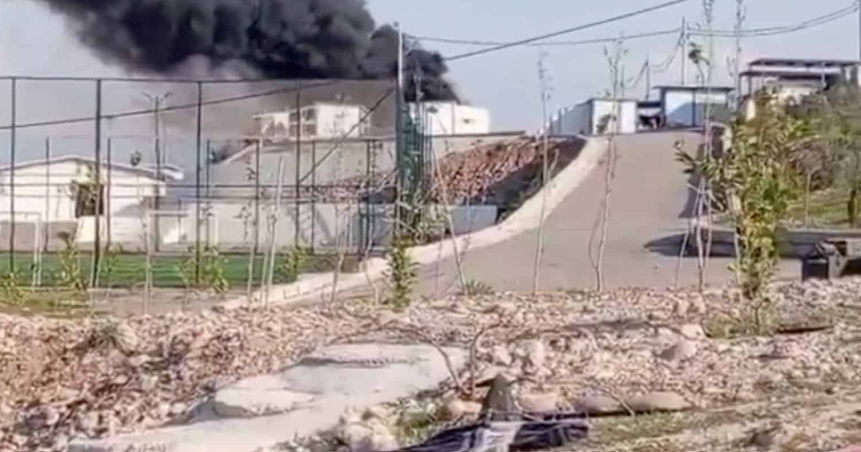
Iran struck camps belonging to Iranian Kurdish opposition parties in Iraq’s Kurdistan Region twice in the first two weeks of October, continuing a bombardment that has intensified since the US-led coalition completed its withdrawal from Iraq on September 30 and pulled the air-defense coverage that had been intercepting most incoming drones and missiles over Erbil. The strikes, on October 8 and October 12, caused no reported casualties, but they extend a campaign that, according to the Democratic Party of Iranian Kurdistan (PDKI, also known as KDPI), has hit the party’s positions more than 165 times since Iran’s war with Israel and the United States began on February 28, 2026.
What Happened
On October 8, a drone attack hit a camp housing Iranian Kurdish refugee families in the Khabat district, north of Erbil, according to FDD’s Long War Journal. No casualties were reported. Four days later, on October 12 at roughly 12:05 p.m. local time, a drone struck the PDKI’s Azadi camp near Koya, which houses the families of party members. The PDKI said it was the third attack on that camp in two weeks and that no one was hurt. Kurdish outlet Rudaw separately reported that two drones launched from Iran struck a base of the Kurdistan Organization of the Communist Party of Iran (Komala) in Balisan, Erbil province, on October 17, damaging buildings but causing no casualties, according to the party’s head of foreign relations, Ali Ranjbari.
Independent confirmation of launch points and precise munitions for each strike was not available; the accounts rely on statements from the targeted parties and reporting by Kurdish and regional outlets, consistent with the reporting pattern across this campaign.
The Campaign and Its Scale
These incidents sit inside a much larger pattern tracked since late February 2026, when Israel and the United States opened their war on Iran and Tehran began retaliatory strikes on what it has called “hostile bases” inside Iraqi Kurdistan — a label it had previously reserved for the United Arab Emirates. Iran has carried out more than 1,000 drone and missile attacks on northern Iraq since the war began, according to FDD’s Long War Journal, with early waves hitting Erbil International Airport, the US Consulate General in Erbil, Harir Air Base, and Peshmerga and Kurdish intelligence facilities alongside opposition party camps.
The toll has fallen most heavily on non-state actors and civilians rather than Iraqi or coalition forces, though both have also been hit. Documented incidents over the course of the campaign include a March 24 rocket attack that killed six Peshmerga fighters near Soran, an April 17 strike near Shaqlawa that killed three PDKI members including two women, and a July 17 strike on a Komala camp near Sulaymaniyah that Kurdish rights monitors say killed around ten members. A US service member was killed in July during the controlled detonation of a downed Iranian drone, and French, and separately UK-linked, personnel have also been reported killed or wounded in strikes on coalition positions, per Long War Journal and wire reporting cited by Kurdish outlets. Iran’s government has not issued a detailed public justification for the camp strikes beyond branding the targeted parties “terrorists”; Consul General Faramarz Asadi said in an October 8 interview with Rudaw that foreign powers were pressuring five Iranian Kurdish parties into forming a political alliance, a reference to the Alliance of Political Forces of Iranian Kurdistan the parties announced in January and February.
The Withdrawal and the Air-Defense Gap
What has changed in October is the protective umbrella over the Kurdistan Region. US-led coalition forces completed their withdrawal from Iraq on September 30, 2026, ending a drawdown that had already seen a reported removal of US MIM-104 Patriot batteries from the region around July 31 and a rapid, roughly 72-hour pullout of remaining coalition personnel from Erbil International Airport in early August, which the Kurdistan Regional Government (KRG) said it was not informed of in advance. Those batteries and coalition fighter patrols had intercepted the large majority of projectiles fired at Erbil earlier in the campaign. Kurdish officials and regional analysts have said the drawdown leaves the region more exposed to the kind of camp strikes recorded this month, though Long War Journal’s October 13 report stops short of asserting a direct causal link and notes a US surveillance balloon was redeployed over Erbil in mid-August, suggesting some coalition presence or interest persisted even as ground forces left.
Who Is Being Targeted
The strikes target Iranian Kurdish opposition parties that have operated from bases in Iraqi Kurdistan for decades: the PDKI (KDPI), Komala, and the Kurdistan Freedom Party (PAK), among others. Five such parties formed the Alliance of Political Forces of Iranian Kurdistan in early 2026, a development Tehran has cited as justification for treating the groups as a unified threat. The parties have publicly distanced themselves from any armed role in the broader Iran war. PDKI spokesperson Khalid Azizi said in October that the party had pledged “not to turn Iraqi Kurdistan or Iraq into a rear front” and would not send Peshmerga fighters into Iran, rejecting Tehran’s characterization of the alliance as a foreign-backed insurgency.
Official Reactions
KRG President Nechirvan Barzani, speaking at a Middle East Research Institute (MERI) forum in Erbil on October 12, said the Iranian Kurdish opposition parties had “acted very irresponsibly, placing the Kurdistan Region in a dire situation” — a notably sharp rebuke of groups the KRG has otherwise hosted for years, and one that suggests growing frustration in Erbil over being caught between Tehran and the parties it hosts. KRG Interior Minister Rebar Ahmed, speaking at the same forum the next day, focused his remarks on the Islamic State rather than Iran. Earlier in the campaign, the KRG’s Council of Ministers and Peshmerga Ministry condemned Iranian strikes as “inexcusable” and warned that “the continuation of these terrorist acts will not go unanswered,” while Iraq’s federal government has said it will acquire its own counter-drone systems but will not extend them to the Kurdistan Region, a position Kurdish officials and some analysts have criticized. The UAE, UK, France, Germany, Jordan, Qatar, Saudi Arabia and the EU have at various points condemned earlier rounds of the campaign; no comparable joint statement had been issued specifically on the October 8 and 12 strikes as of this writing.
Why It Matters
The October strikes are modest in scale compared with the campaign’s worst weeks in March and July, but they mark a test of what happens to a years-long, low-intensity conflict once its external security guarantor leaves. Iraqi Kurdistan has functioned for decades as a relatively tolerated rear base for Iranian Kurdish opposition parties precisely because US and coalition air defenses made large-scale Iranian retaliation costly. With Patriot batteries gone and coalition personnel out of Erbil, Tehran can strike with drones at comparatively low cost and little risk of interception, while Baghdad’s refusal to share counter-drone systems with the KRI leaves Erbil reliant on its own, more limited air-defense capacity. That dynamic also bears on broader regional calculations: if Iran can sustain strikes into Iraqi territory without triggering a renewed US or coalition response, it offers Tehran a low-cost tool for pressuring both the Kurdish opposition and the KRG, and a precedent other actors may watch closely.
What Happens Next
Officials in Erbil have said little publicly about rebuilding independent air-defense capacity, and no public timetable exists for replacing the systems the coalition withdrew. Kurdish leaders including Masoud Barzani and PUK co-president Bafel Talabani have previously warned that “restraint also has its limits,” language that implies some threshold for a harder Kurdish response, though neither the KRG nor the Peshmerga has taken overt retaliatory action against Iranian targets to date. Whether Baghdad reconsiders extending counter-drone coverage to the Kurdistan Region, and whether the Alliance of Political Forces of Iranian Kurdistan curtails its political activity under Iranian pressure, are the two developments most likely to determine whether the campaign escalates further or settles into the lower-intensity pattern seen this month.
FAQ
Why is Iran striking camps inside Iraq’s Kurdistan Region?
Iran says the strikes target Iranian Kurdish opposition parties — principally the PDKI/KDPI, Komala, and PAK — which it has designated “hostile bases” and accuses of plotting unrest inside Iran with foreign backing. The parties deny any armed role against Iran from Iraqi soil.
Were there casualties in the October 2026 strikes?
No casualties were reported in the October 8 strike on the Khabat refugee camp or the October 12 strike on PDKI’s Azadi camp near Koya, according to the PDKI and FDD’s Long War Journal. Earlier strikes in the campaign, including in March, April and July, did cause fatalities among Peshmerga, opposition party members and coalition personnel.
Why does the US withdrawal from Iraq matter for these strikes?
US-led coalition forces, including Patriot air-defense batteries, had intercepted most drones and missiles fired at Erbil earlier in the campaign. The coalition’s withdrawal, completed September 30, 2026, removed that layer of protection, and Kurdish officials have said this leaves the region more exposed, though no official Iranian or Kurdish statement has drawn an explicit causal line to the specific October strikes.
What weapons has Iran used in this campaign?
Reporting on the broader 2026 campaign describes ballistic missiles and one-way attack drones, including Shahed-type drones, with Hadid-110 stealth drones reported in strikes on Kurdistan Regional Government facilities in August. Specific munitions used in the October 8 and 12 strikes were not identified in available reporting.
Is the Iraqi federal government providing air defenses to Kurdistan?
No. Baghdad has said it intends to acquire anti-drone systems for its own use but will not extend that coverage to the Kurdistan Region, a position Kurdish politician Ammar al-Hakim and other officials have criticized.
Sources
- Seth Frantzman, “Iran targets Kurdish opposition groups with new round of drone attacks,” FDD’s Long War Journal, October 13, 2026 — primary reporting on the October 8 and 12 strikes, casualty figures, and official statements.
- Rudaw English, October 17-18, 2026 — report on the drone strike on a Komala base in Balisan, Erbil province, and comment from Komala’s Ali Ranjbari.
- Wikipedia, “2026 Iranian strikes on the Kurdistan Region” (ongoing tracking page, ultimately sourced to Reuters, BBC, France 24, Rudaw, Kurdistan24, Al-Monitor and other outlets cited therein) — used for campaign timeline and cumulative casualty figures from March through September 2026.
- MERI Forum remarks by KRG President Nechirvan Barzani and Interior Minister Rebar Ahmed, Erbil, October 12-13, 2026, as reported by Kurdish and regional media.