
Akinci vs MQ-9 Reaper, the Heavy Drone Matchup Compared
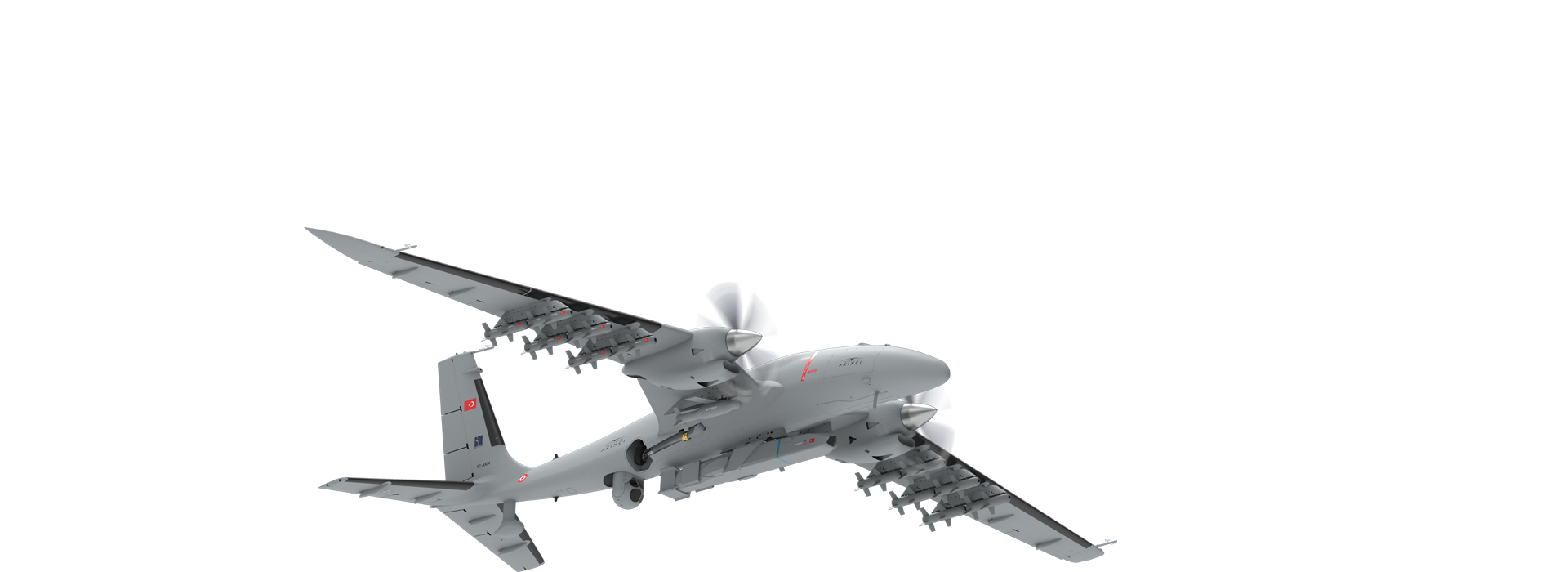
Akinci vs MQ-9 Reaper is the defining matchup of the heavy-drone market, a 5.5-ton twin-turboprop Turkish newcomer against the American type that has flown armed missions for more than 15 years. One sells on payload, radar and price momentum, the other on a combat record, sensors and an ecosystem nothing else matches.
Akinci vs MQ-9 Reaper spec table
| Item | Bayraktar Akinci | MQ-9A Reaper |
|---|---|---|
| Manufacturer | Baykar, Türkiye | General Atomics, USA |
| First flight | 2019 | 2001 |
| Propulsion | Two turboprops, 450–750 hp class options | One 900 hp Honeywell TPE331-10 turboprop |
| Max takeoff weight | 5,500 kg | 4,760 kg |
| Payload | Up to roughly 1,500 kg across nine hardpoints | Roughly 1,700 kg external plus internal sensor bay |
| Ceiling | Above 40,000 ft | Up to 50,000 ft |
| Endurance | 24+ hours, configuration dependent | Around 27 hours, more in extended-wing variants |
| Sensors | EO/IR turret, indigenous AESA radar option, SIGINT fits | MTS-B EO/IR, Lynx SAR/GMTI radar, maritime radar on SeaGuardian |
| Key weapons | MAM series, TOLUN, laser-guided bombs, SOM-A cruise missile, air-to-air trials | AGM-114 Hellfire, GBU-12/38, JDAM family |
| Control | Line-of-sight plus satellite link | Satellite-centric global operations architecture |
Where the Akinci is stronger
The Akinci is simply a bigger, more heavily armed aircraft. Twin engines lift a deeper magazine, and its headline trick is the SOM-A cruise missile, which lets a drone deliver standoff strikes from hundreds of kilometers, something no standard Reaper does. Baykar fits an indigenous AESA radar, has tested air-to-air missiles, and iterates the design at a pace American acquisition cannot match. Price and politics complete the pitch, the Akinci comes without the export restrictions and per-unit costs that accompany US systems, which is why its customer list grew from Pakistan to Saudi Arabia and across Africa and Central Asia within four years, extending the export model Baykar proved with the TB2, as covered in our Baykar profile.
Where the MQ-9 Reaper is stronger
The Reaper’s advantages are the unglamorous ones that decide real operations. Its satellite-based control architecture, refined over two decades, lets a crew in Nevada fly an aircraft over another continent with mature procedures, airspace certifications and NATO-standard interoperability. Its sensor chain, particularly the MTS-B ball and Lynx radar feeding a global intelligence enterprise, remains the benchmark. General Atomics has built more than 300 airframes, and the type’s reliability, spares pipeline and trained-crew base are things a young fleet cannot buy quickly, part of why the General Atomics family keeps winning NATO customers, and why the SeaGuardian variant owns the maritime patrol niche.
Combat records compared
The Reaper has fired weapons in anger continuously since 2007 across Afghanistan, Iraq, Syria, the Sahel and Yemen, a record without equal in unmanned aviation. It has also absorbed the hardest lessons, Houthi air defenses have shot down numerous MQ-9s over Yemen since 2023, per US acknowledgments. The Akinci’s record is shorter but real, Turkish forces have employed it against PKK targets in Iraq and Syria since 2021, operator-reported strikes with precision munitions, and it earned global attention in 2024 when one located the crashed helicopter of Iran’s president in mountain fog. Neither type has fought a peer air defense network and survived contested airspace, that test produced only losses on both sides of the drone world.
Survivability, the shared weakness
Both are large, slow, unstealthy aircraft built for permissive skies. Against MANPADS, fighter patrols or modern SAMs, neither survives long, the MQ-9’s Yemen losses and the drone attrition over Ukraine prove the point. The answer both makers give is the same, standoff weapons, electronic warfare fits and teaming with cheaper expendable aircraft, the logic driving the collaborative combat aircraft race.
Verdict by mission profile
| Mission | Better fit | Why |
|---|---|---|
| Counterinsurgency strike | Either | Both carry ample precision weapons for permissive airspace |
| Standoff strike | Akinci | SOM-A cruise missile integration gives real reach |
| Maritime patrol | MQ-9B SeaGuardian | Purpose-built radar, sonobuoy and certification package |
| Coalition/NATO operations | MQ-9 | Interoperability, certifications and shared logistics |
| Budget-constrained buyers | Akinci | Lower acquisition cost and fewer export conditions, per market reporting |
| Global reach from home soil | MQ-9 | Mature satellite control enterprise |
Akinci vs MQ-9 frequently asked questions
Is the Akinci bigger than the MQ-9 Reaper?
Yes. At 5,500 kg maximum takeoff weight with twin engines, the Akinci outweighs the 4,760 kg single-engine MQ-9A, though the Reaper flies higher.
Which countries operate the Akinci?
Türkiye plus a growing export list including Pakistan, Saudi Arabia and countries across Africa, the Gulf and Central Asia, more than ten operators by Baykar’s account.
Can the Akinci fire cruise missiles?
Yes, it has launched the SOM-A standoff cruise missile in tests and is marketed with it, a capability standard Reapers do not carry.
Has the MQ-9 been shot down?
Yes, repeatedly, most visibly over Yemen since 2023, underscoring that large drones of this class are not built for contested airspace.
Which is cheaper, Akinci or MQ-9?
Exact prices vary by package, but market reporting consistently places the Akinci well below the MQ-9’s roughly $30 million-plus system cost.
- Baykar and General Atomics product literature
- Wikipedia – Bayraktar Akinci and MQ-9 Reaper (accessed October 2026)
- US official statements on MQ-9 losses over Yemen
- Operator-reported Akinci employment in Turkish operations
- Defence & Tech reporting