

ATACMS vs Iskander-M, How the Rival Ballistic Missiles Compare
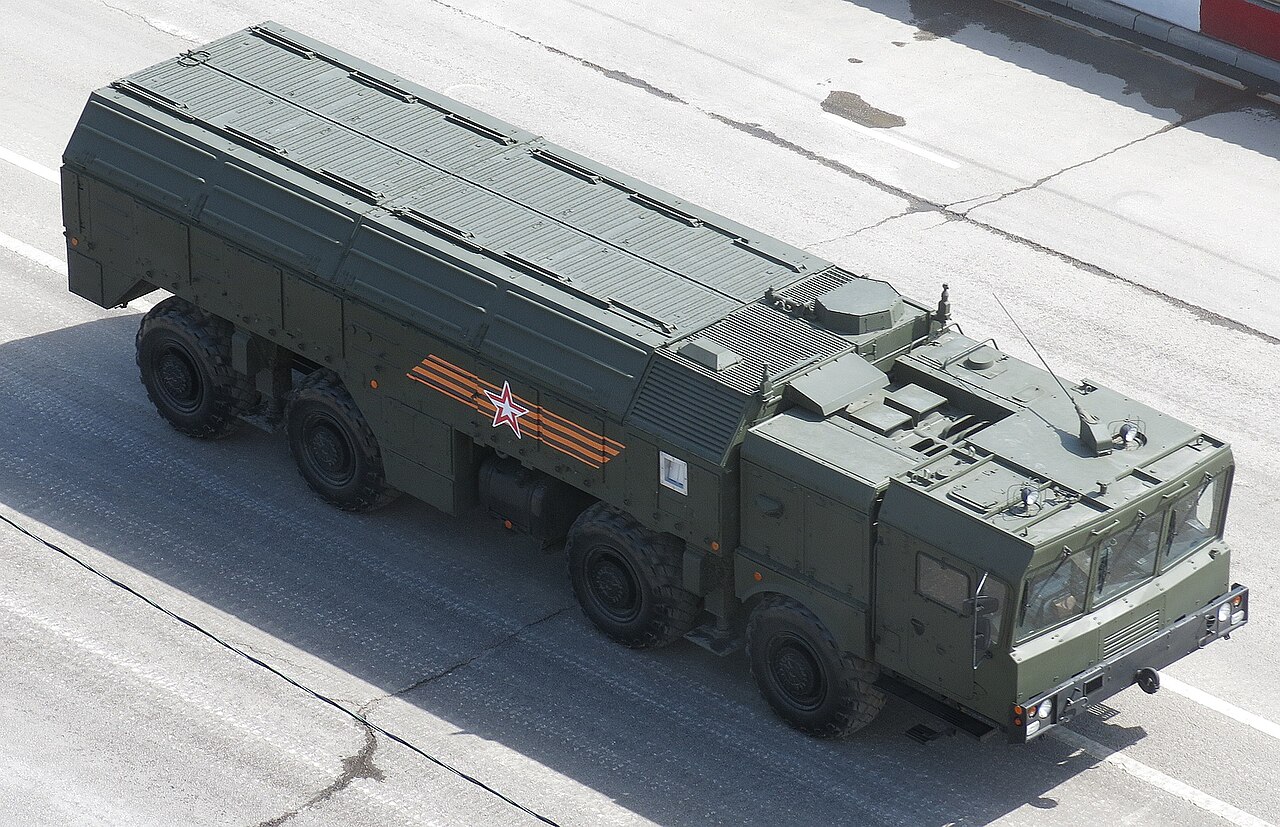
ATACMS and Iskander-M are the two short-range ballistic missiles defining the Ukraine war’s deep-strike duel, an American round of about 300 kilometers against a Russian system whose makers claim 500 kilometers and a maneuvering, decoy-dispensing flight path. Both have now fired in numbers no peacetime planner imagined, and the comparison is no longer theoretical.
ATACMS vs Iskander, quick verdict
Iskander-M is the bigger, longer-reaching, harder-to-intercept missile on paper; ATACMS is the more flexible one in practice, riding on launchers that also fire rockets, hiding in ordinary artillery formations, and now flowing from a production ecosystem that is scaling while Russia’s is sanctioned. Each reflects its army’s doctrine, a dedicated missile brigade weapon versus a deep-strike round for the rocket artillery every brigade already has.
ATACMS vs Iskander-M specifications
| Item | MGM-140/M57 ATACMS | 9K720 Iskander-M |
|---|---|---|
| Country | USA (Lockheed Martin) | Russia (KBM Kolomna / Votkinsk) |
| In service | 1991 | 2006 |
| Range | About 128–300 km by variant | Up to 500 km, manufacturer claims |
| Launch weight | Roughly 1,300–1,670 kg | About 3,800 kg |
| Warhead | 500-lb class unitary or M74 bomblets | 480–700 kg unitary, submunition and other types, per Russian sources |
| Guidance | GPS-aided inertial | Inertial with reported optical terminal seeker on some rounds |
| Flight profile | Conventional ballistic arc, ~Mach 3 | Quasi-ballistic, maneuvering, claimed to dispense decoys |
| Accuracy | Around 10 m with GPS, per US sources | 5–7 m CEP, manufacturer claims |
| Launcher | M270 (2 missiles), M142 HIMARS (1) | 9P78-1 TEL (2 missiles) |
How each missile is fired
ATACMS launches from the pods of the M142 HIMARS and M270, so any of the thousands of Western rocket launchers is a potential ballistic missile battery, and a pod of rockets is indistinguishable from a missile round until launch. Iskander-M travels in dedicated missile brigades, each 9P78-1 transporter-erector-launcher carrying two rounds with its own reload vehicles, a structure that concentrates capability and makes the launchers priority targets.
Accuracy and penetration aids
Iskander-M’s signature feature is survivability in flight. Russian sources describe a depressed, maneuvering quasi-ballistic trajectory and penetration aids, claims that Ukrainian Patriot crews have partially punctured by operator-reported intercepts of Iskander rounds since 2023, though interceptions are not routine and Russian modifications have reportedly made them harder. ATACMS flies a more conventional arc and predates modern penetration aids, its protection is saturation, speed and the element of surprise from launchers that fire and displace within minutes. Neither side publishes honest interception statistics, and both sides’ claims should be read as advocacy.
Combat record in Ukraine
Iskander-M has been one of Russia’s primary precision weapons since February 2022, used against command posts, air defenses, airfields and, controversially, urban targets; operator-reported Ukrainian accounts credit it as the hardest Russian missile to intercept. ATACMS entered the war in October 2023 with cluster-warhead strikes on helicopter bases at Berdyansk and Luhansk, then longer-range rounds hit S-400 batteries and airfields in Crimea through 2024, results that are operator-reported. Each has forced the other side to disperse, harden and push aircraft back from the front line, arguably the deepest operational effect either has achieved.
Which is better by mission
| Mission | Edge | Why |
|---|---|---|
| Counter-air-defense strikes | ATACMS | Cluster footprint and launcher deception suit SEAD-by-artillery |
| Fixed infrastructure at depth | Iskander-M | Longer claimed reach and heavier warhead |
| Surviving enemy air defenses | Iskander-M | Maneuvering profile and decoys, per manufacturer claims |
| Force integration and logistics | ATACMS | Fires from existing rocket launchers, huge operator base |
| Magazine depth in a long war | ATACMS | Allied production scaling; Russian output constrained by sanctions, per Western assessments |
The forward look favors the American lineage. ATACMS hands off to the longer-ranged PrSM on the same launchers, while Iskander-M’s growth has gone into the air-launched Kinzhal offshoot and reported North Korean KN-23 cousins, spreading the design but not transforming it.
ATACMS vs Iskander frequently asked questions
Is Iskander-M longer-ranged than ATACMS?
On stated figures yes, 500 kilometers claimed versus about 300; the Iskander figure is a manufacturer claim that Western estimates broadly accept for the ballistic variant.
Can Patriot shoot down an Iskander?
Ukrainian crews have operator-reported successful Patriot intercepts of Iskander-M rounds, though the missile’s maneuvering profile makes it among the hardest targets.
Which is more accurate, ATACMS or Iskander?
Both are credited with accuracy around 5–10 meters, but the Iskander figure rests on manufacturer claims while ATACMS accuracy derives from GPS-aided guidance documented by US sources.
Why does ATACMS fire from HIMARS but Iskander needs its own launcher?
ATACMS was designed to fit standard MLRS rocket pods; Iskander is a much heavier missile requiring a dedicated transporter-erector-launcher.
What replaces these missiles?
The US Precision Strike Missile succeeds ATACMS with two rounds per pod and 400+ kilometer range; Russia has focused on Iskander production increases and derivatives.
- US Army program data and budget documents
- Russian state media and manufacturer statements on Iskander-M (claims noted)
- Wikipedia – MGM-140 ATACMS and 9K720 Iskander (accessed October 2026)
- Operator-reported strike and intercept accounts from Ukraine
- Defence & Tech reporting on the deep-strike campaign