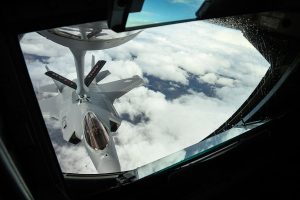

F-47 vs F/A-XX: How Boeing’s Two Sixth-Gen Fighters Differ
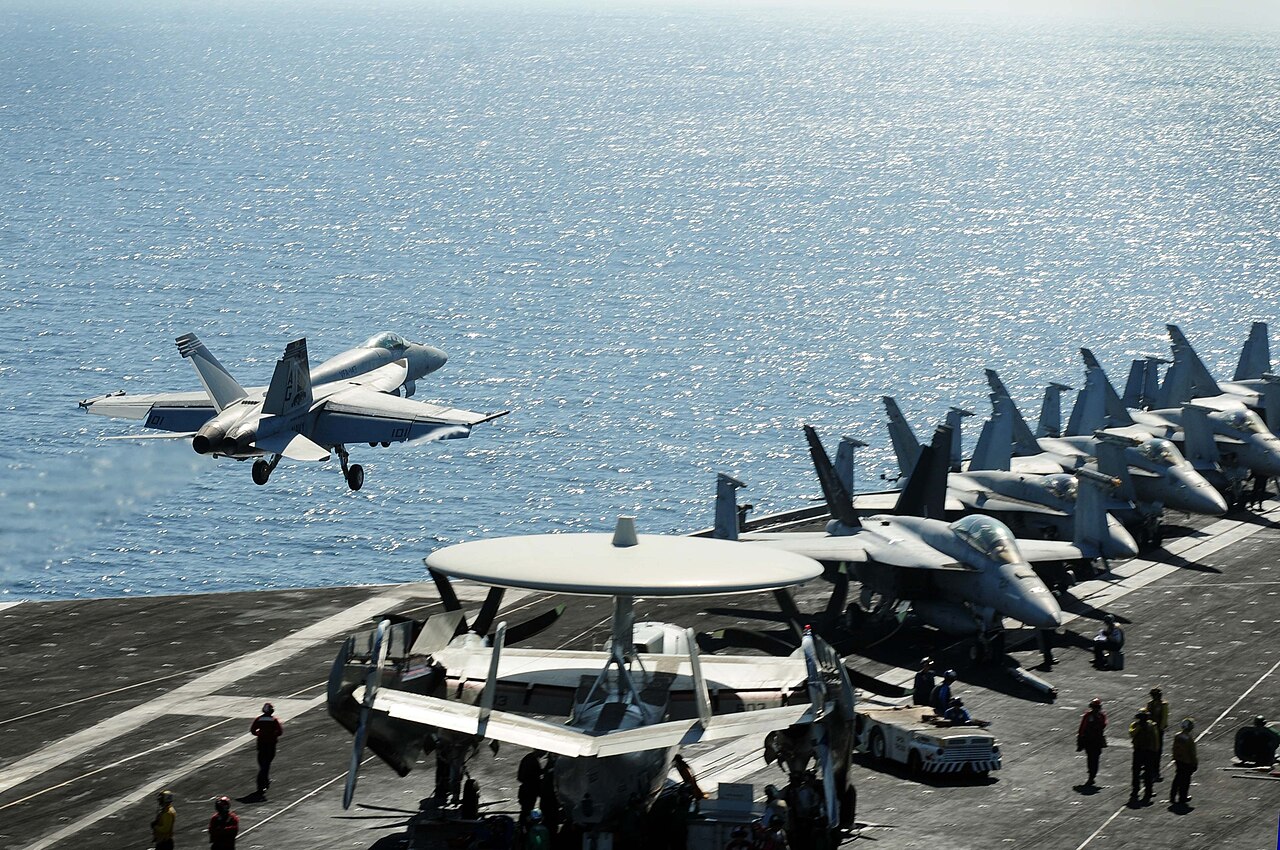
Boeing is now the prime contractor for both American sixth-generation fighters: the Air Force’s F-47 and the Navy’s F/A-XX. The Navy announced its choice on 29 September 2026, eighteen months after the Air Force picked Boeing for the F-47. The two aircraft share a builder and a city, but they are separate designs for separate services, and the published details point to very different machines.
This comparison sets out what is confirmed about each, what officials have only hinted at, and what is still unknown. Almost every performance figure for both aircraft is classified, so the gaps are large.
Two programmes, one builder
The F-47 is the crewed fighter at the centre of the Air Force’s Next Generation Air Dominance effort. Boeing won its engineering and manufacturing development contract on 21 March 2025, in a deal reported to be worth more than $20 billion. Our guide to who builds the F-47 covers the industrial side.
F/A-XX is the Navy’s equivalent: a carrier-based fighter to follow the F/A-18E/F Super Hornet. Lockheed Martin was reported to have been eliminated in 2025, which left Boeing and Northrop Grumman. The Navy selected Boeing for full-scale development, with USNI News putting the estimated value at more than $20 billion. The contract covers test aircraft for ground, airworthiness, systems and weapons work.
The Navy fighter has no formal designation yet. F/A-XX is a programme name, in the way NGAD was before the F-47 was given its number.
Different jobs: long runways and carrier decks
The F-47 replaces the F-22 Raptor as the Air Force’s air superiority fighter. It flies from land bases, and its first task is to win control of the air deep inside defended airspace.
F/A-XX has a wider brief, which is what the F/A prefix means: fighter and attack. The Navy says it will supplement and then replace the Super Hornet, later take over from the EA-18G Growler electronic attack jet, and fly alongside the F-35C. That makes it a multirole aircraft from the start.
Carrier life also shapes the airframe. A naval fighter needs a strengthened undercarriage, an arrester hook, folding wings and good handling at low approach speeds, and it has to fit the lifts and hangar of a ship such as the USS John F. Kennedy. Those demands add weight and limit size in ways a land-based design avoids.
| F-47 | F/A-XX | |
|---|---|---|
| Service | US Air Force | US Navy |
| Prime contractor | Boeing | Boeing |
| Development award | 21 March 2025 | 29 September 2026 |
| Replaces | F-22 Raptor | F/A-18E/F, later EA-18G |
| Operates from | Land bases | Aircraft carriers |
| Published range | Combat radius above 1,000 nm | More than 25% beyond current Navy fighters |
| Engine | NGAP adaptive engine | Not announced |
| First flight | Targeted for 2028 | Not announced |
| In service | Air Force aims for this decade | 2030s |
Range: the clearest gap
The Air Force has published one number that matters here. A graphic released by then Chief of Staff Gen. David Allvin in May 2025 gave the F-47 a combat radius of more than 1,000 nautical miles, against 590 for the F-22. We look at that figure in detail in our F-47 range explainer.
The Navy’s public target is more modest. In April 2025 Rear Adm. Michael Donnelly, then the service’s air warfare director, said F/A-XX would fly more than 25 per cent farther than current carrier fighters before refuelling. With tankers such as the MQ-25 Stingray, he said, its reach becomes far greater.
No radius figure has been released for F/A-XX, so a like-for-like comparison is not possible. What can be said is that the Navy has described an improvement on the Super Hornet, while the Air Force has described something close to double the F-22.
Engines, money and schedule
The F-47 is tied to the Next Generation Adaptive Propulsion programme, in which GE Aerospace and Pratt & Whitney are building the XA102 and XA103. Those engines have slipped by more than two years, as our NGAP explainer sets out. The Navy has not named an engine for F/A-XX. Officials have indicated in past years that it would use a derivative of an existing engine, which would lower risk but give up some of the efficiency an adaptive design promises.
On schedule, the F-47 is well ahead. The first aircraft has been in build since 2025 and the Air Force still aims to fly it in 2028. The Navy says only that F/A-XX will reach the fleet in the 2030s.
The budgets show the same gap. The F-47 received about $3.5 billion in fiscal 2026, with roughly $5 billion requested for 2027. F/A-XX spent much of 2025 in doubt: the Pentagon proposed a minimal budget and questioned whether industry could run two fighter programmes at once, and Congress responded by approving about $1.7 billion for fiscal 2026. The fiscal 2027 request, written before the award, asked for $140 million.
What the two aircraft may share
Neither service has said how much the designs have in common, and Boeing has not commented on shared parts. The safest assumption is that these are two different airframes.
Some overlap is still likely below the surface. Both are being developed with digital engineering and open mission systems, both are meant to direct Collaborative Combat Aircraft, and both will be built in St. Louis, where Boeing is spending $1.8 billion on new facilities. Shared tooling methods, software practices and suppliers would be the natural places for savings.
The risk runs the other way too. One company, one site and one workforce now carry both programmes. Boeing Defense chief Steve Parker has said that delivering two fighters in parallel “was always our plan”. The Navy’s chief of naval operations, Adm. Daryl Caudle, had said before the decision that timing would weigh heavily in the choice.
Frequently asked questions
Are the F-47 and F/A-XX the same aircraft?
No. They are separate programmes for the Air Force and the Navy with separate requirements. Both are built by Boeing, but neither service has said they share an airframe.
Who builds the F/A-XX?
Boeing. The Navy announced the selection on 29 September 2026. Northrop Grumman was the other finalist.
What will the F/A-XX replace?
The F/A-18E/F Super Hornet first, and later the EA-18G Growler. It will operate alongside the F-35C.
Which has the longer range?
On published figures, the F-47. The Air Force lists a combat radius above 1,000 nautical miles. The Navy has said only that F/A-XX will fly more than 25 per cent farther than current carrier fighters.
When will each enter service?
The Air Force aims to fly the F-47 in 2028 and field it around the end of the decade. The Navy says F/A-XX will arrive in the 2030s.
Could the F-47 fly from a carrier?
Nothing suggests so. The F-47 is a land-based design, and carrier operations need a strengthened structure, an arrester hook and folding wings from the outset.
- Boeing – U.S. Navy Selects Boeing for F/A-XX Program: investors.boeing.com
- USNI News – Boeing Picked to Build Navy’s F/A-XX Carrier Fighter: news.usni.org
- Air & Space Forces Magazine – F-47 Maker Boeing Tapped for Navy’s F/A-XX Sixth-Gen Fighter: airandspaceforces.com
- The War Zone – F/A-XX Will Have Just 25% More Range Than Existing Navy Fighters: twz.com
- Breaking Defense – Boeing wins Navy next-gen fighter F/A-XX competition: breakingdefense.com