
CACI Company Profile, Products, Employees and Revenue
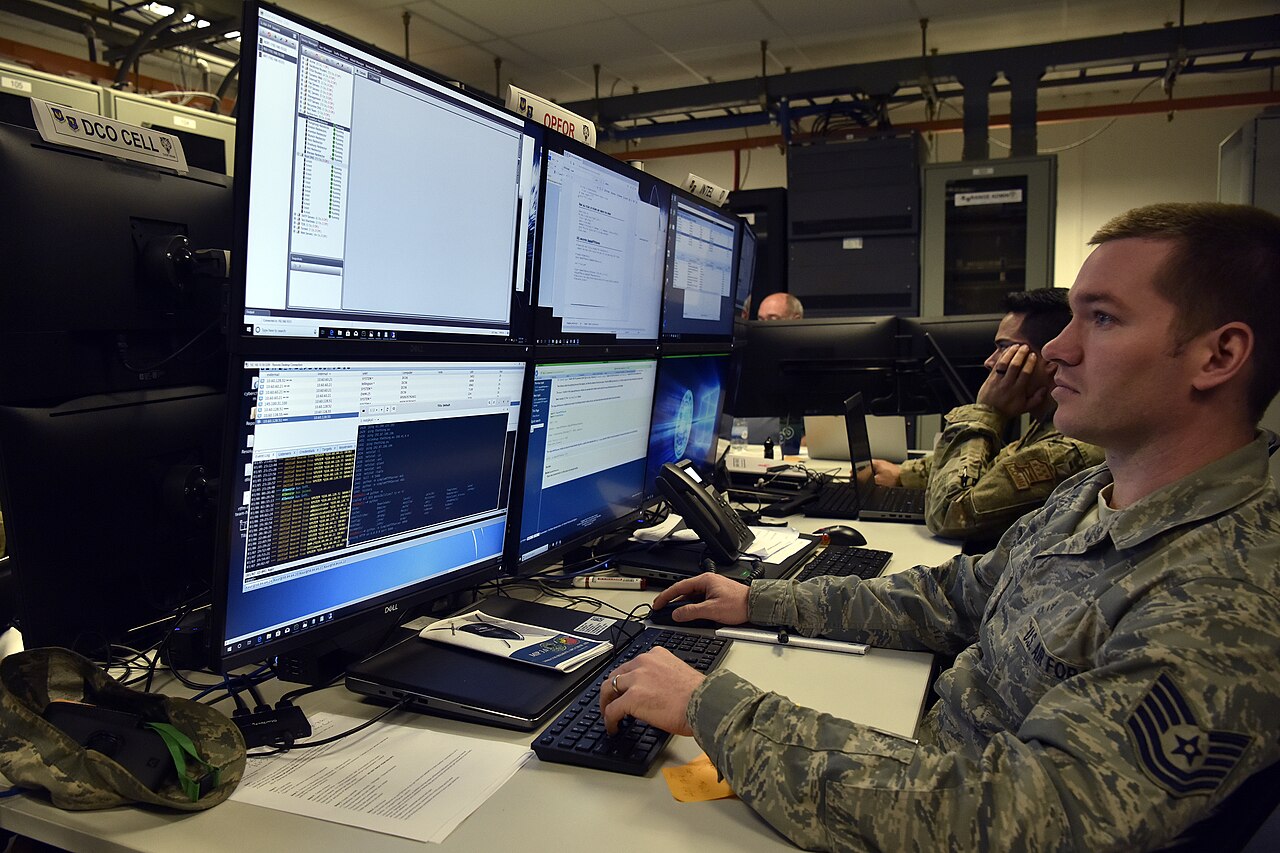
CACI International is the quiet giant of American signals intelligence and electronic warfare, a Reston, Virginia contractor with roughly $8.6 billion in annual revenue and about 25,000 employees, most of them cleared for classified work. Founded in 1962 to sell a simulation programming language, it has evolved into one of the few services companies that also builds and sells its own mission hardware.
What does CACI do
| Item | Detail |
|---|---|
| Full name | CACI International Inc |
| Headquarters | Reston, Virginia, USA |
| Founded | 1962, Santa Monica, California, as California Analysis Center, Inc. |
| Employees | About 25,000 |
| Revenue | Roughly $8.6 billion, fiscal year 2025 (ends June) |
| Listing | NYSE, ticker CACI |
| CEO | John Mengucci |
| Main fields | Signals intelligence, electronic warfare, cyber, C4ISR engineering, enterprise IT, photonics |
CACI describes its portfolio as expertise and technology, expertise meaning the cleared analysts, engineers and operators it places inside defense and intelligence agencies, and technology meaning a growing catalogue of company-funded products, SIGINT receivers, electronic-attack payloads, counter-drone systems and laser communications terminals. That second half distinguishes it from most services rivals, which sell labor and integration but little hardware of their own.
CACI history, from SIMSCRIPT to SIGINT
The company began as California Analysis Center, Inc., founded by Herb Karr and Harry Markowitz, the future Nobel economics laureate, to commercialize the SIMSCRIPT simulation language. Decades of steady federal IT work followed, along with a dark chapter, the company’s interrogation-support contracts at Iraq’s Abu Ghraib prison drew lawsuits and scrutiny in the 2000s, litigation that ran for nearly two decades.
Its modern shape comes from an acquisition streak, SIX3 Systems in 2013 brought intelligence and EW work, LGS Innovations, the former Bell Labs government arm, arrived in 2019 alongside tactical-radio house Mastodon Design, and Azure Summit Technology, a roughly $1.3 billion purchase in 2024, deepened the radio-frequency hardware bench. Each deal pushed CACI further from body-shop contracting toward product ownership.
CACI revenue and financials
CACI closed its June 2025 fiscal year with revenue around $8.6 billion, low-double-digit growth, and a backlog in the tens of billions, among the strongest organic performances in the federal services sector. Roughly three-quarters of revenue comes from Defense Department and intelligence customers. Management has kept acquiring while repurchasing shares, a balance the market has rewarded better than most of its peer group.
CACI SIGINT and electronic warfare products
| Line | What it is |
|---|---|
| SIGINT systems | Man-packable and vehicle-mounted signals collection and direction-finding kit for the Army and special operations |
| Electronic warfare | Electronic attack and support payloads for ground vehicles, aircraft and unmanned systems |
| Counter-UAS | CORIAN family of counter-drone electronic-attack systems |
| Photonics | Space laser-communication terminals for proliferated satellite constellations |
| Cyber and software | Offensive and defensive cyber tooling, agile software factories for border and defense agencies |
The Army’s rebuild of its electronic warfare corps after two decades of atrophy has been CACI’s biggest tailwind, with the company supplying kit to terrestrial-layer SIGINT/EW programs and counter-drone efforts. Its optical communications terminals ride the Space Development Agency’s constellation build-out, putting CACI in competition with traditional hardware primes like L3Harris as much as with services firms.
Counter-drone work is the newest leg. The CORIAN system uses electronic attack rather than interceptors to defeat small drones, and versions have been fielded with US forces at fixed sites and on vehicles. As services stand up layered counter-UAS architectures, a company that already owns the radio-frequency sensing and jamming stack starts each competition several steps ahead of integrators assembling one from parts.
CACI competitors and outlook
On the services side CACI fights Leidos, Booz Allen, SAIC and Peraton for the same task orders; on the product side it faces defense electronics primes and venture-backed entrants. The bet underneath the strategy is that electromagnetic spectrum warfare, invisible and unglamorous, will keep climbing the Pentagon’s priority list, and that a company owning both the cleared workforce and the radio-frequency hardware will be hard to displace.
CACI frequently asked questions
What does CACI stand for?
The company began in 1962 as California Analysis Center, Inc., later Consolidated Analysis Centers, Inc.; today it operates simply as CACI International.
How big is CACI?
Roughly $8.6 billion in revenue for the fiscal year ending June 2025 and about 25,000 employees.
What does CACI make?
Alongside services, it builds SIGINT collection systems, electronic warfare payloads, CORIAN counter-drone systems and space laser-communication terminals.
Who are CACI’s main competitors?
Leidos, Booz Allen Hamilton, SAIC, GDIT and Peraton in services; defense electronics primes in SIGINT, EW and photonics hardware.
Is CACI a defense company?
Yes, roughly three-quarters of its revenue comes from US defense and intelligence customers, with the remainder from federal civilian agencies.
- CACI investor filings and annual report (fiscal 2025 figures)
- Wikipedia – CACI (accessed October 2026)
- Trade-press reporting on the LGS Innovations and Azure Summit acquisitions
- Defence & Tech reporting on Army electronic warfare programs