
F-47 Engine: NGAP, the XA102 and XA103, and the Two-Year Gap
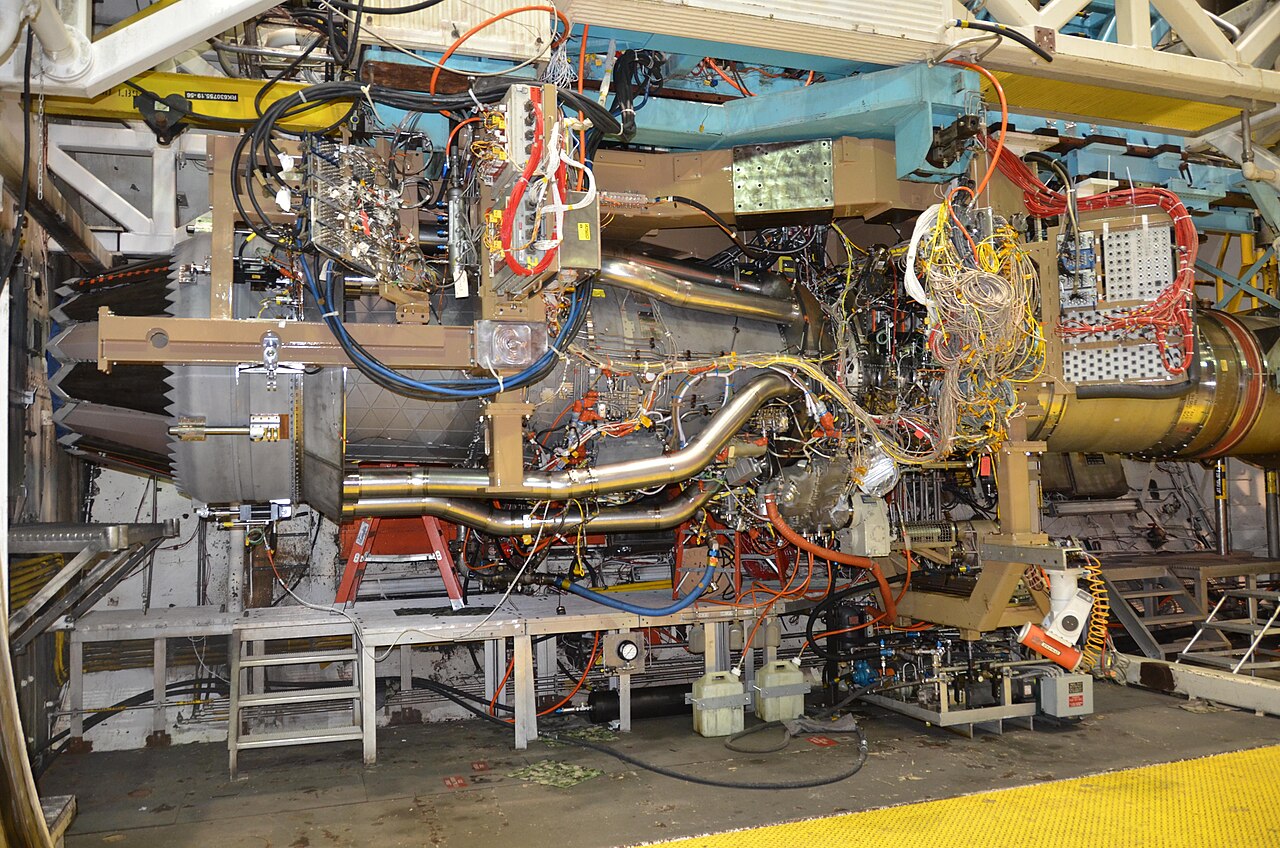
The F-47 is designed around a new kind of engine that does not yet exist in flyable form: an adaptive-cycle turbofan from the Next Generation Adaptive Propulsion (NGAP) programme. Two candidates are in development, GE Aerospace’s XA102 and Pratt & Whitney’s XA103, and neither is expected to be ready for integration before 2030.
That is two years after the fighter is due to fly. This article explains what an adaptive engine does, how the two designs stand, why the programme is late and what it means for the F-47.
What NGAP is
NGAP is the Air Force programme to develop the engine for its sixth-generation fighter. It began in 2022 with prototype-phase contracts and now funds two engine makers, GE Aerospace and Pratt & Whitney, each under a contract with a ceiling raised to $3.5 billion in 2025.
The engines are reported to be in the 35,000 to 40,000 lb thrust class, similar to the F119 that powers the F-22. The Air Force has not confirmed how many the F-47 has, though two are widely assumed. For the aircraft as a whole, see what the F-47 is.
How an adaptive engine works
A conventional fighter engine is a compromise. A design tuned for high thrust burns a lot of fuel in cruise, and one tuned for economy lacks power in combat. Its internal airflow is fixed when it is built.
An adaptive-cycle engine adds a third stream of air around the core, with a mechanism that changes how much air goes where. In cruise it sends more air through the outer streams and behaves like an efficient airliner engine. In combat it closes them down and pushes air through the core for maximum thrust.
The third stream has a second job. It is a large supply of cool air that can absorb heat from the aircraft’s electronics, which on a modern fighter is as much of a limit as thrust. Engine makers have claimed gains of about 25 per cent in fuel efficiency, 30 per cent in range and a doubling of cooling capacity from the technology. Those figures explain much of the F-47’s stated combat radius and are relevant to how fast it can cruise.
XA102 and XA103
| XA102 | XA103 | |
|---|---|---|
| Maker | GE Aerospace | Pratt & Whitney |
| Predecessor | XA100, tested for the F-35 | XA101, tested for the F-35 |
| Type | Three-stream adaptive cycle | Three-stream adaptive cycle |
| Status | Design reviews complete; prototype in build | Design reviews complete; prototype in build |
| Selected for the F-47? | No decision announced | No decision announced |
Both companies built larger adaptive engines, the XA100 and XA101, under an earlier programme intended to re-engine the F-35. That plan was dropped in 2023 in favour of upgrading the existing engine, but the test data carried over. The NGAP engines are smaller and tailored to the new fighter. Both designs passed assembly-readiness reviews in May 2026.
The Air Force has not said whether it will choose one engine or keep both in production. Keeping two suppliers costs more up front but preserves competition and spare capacity.
Why the engine is late
Budget documents published in 2025 showed NGAP had slipped by more than two years, with supply-chain problems given as the main cause. Prototype engines are now expected to be ready for integration in 2030.
| Fiscal year | Amount |
|---|---|
| 2027 | $513.7m (requested) |
| 2028 | $905.7m (planned) |
| 2029 | $865m (planned) |
| 2030 and 2031 | About $300m a year (planned) |
The funding profile shows the peak of development work still lies ahead, in 2028 and 2029.
What will the first F-47 fly with?
The Air Force has kept its target of a first flight in 2028, which means the first aircraft will take off without its intended engine. Officials have not said what will be fitted. Reporting refers to an interim or early non-production arrangement, and analysts have pointed to existing fighter engines of similar size as the obvious candidates.
Flying first with a substitute engine is not unusual and lets testing of the airframe, flight controls and software begin on time. The cost comes later: an aircraft designed around one engine has to be re-tested when it gets the real one, and its range, cooling and signature will not be representative until then.
What is still unknown
The open questions are the number of engines, the interim engine, the exact thrust, whether the nozzles vector thrust, and whether the Air Force will select one supplier. The biggest is timing. If NGAP slips again, the F-47 could enter service with an engine that limits what the aircraft was built to do. The prime contractor has little control over this, as we note in who builds the F-47.
Frequently asked questions
What engine does the F-47 use?
It is designed for an adaptive-cycle engine from the NGAP programme, either the GE Aerospace XA102 or the Pratt & Whitney XA103. No selection has been announced.
What is an adaptive-cycle engine?
It is a turbofan with a third airstream that can be adjusted in flight, so the engine can favour fuel efficiency in cruise and thrust in combat while also providing extra cooling.
When will the F-47’s engine be ready?
Prototype NGAP engines are expected to be ready for integration in 2030, more than two years later than first planned.
What engine will the first F-47 fly with in 2028?
The Air Force has not said. An interim arrangement is expected because the NGAP engines will not be ready in time.
How many engines does the F-47 have?
The number has not been confirmed. Two are widely assumed, as on the F-22.
Is the F-47 engine related to the F-35 engine programme?
Indirectly. GE and Pratt & Whitney built larger adaptive engines, the XA100 and XA101, for a planned F-35 re-engining that was cancelled. The NGAP engines draw on that work.
- Army Recognition – US Air Force’s first F-47 will take off in 2028, years before its next-gen engine is ready: armyrecognition.com
- The War Zone – Full F-47 Production Line Not Too Far Away: USAF General: twz.com
- The War Zone – First F-47 6th Generation Fighter Now Being Built: twz.com