
Mi-26 Helicopter Explained: The World’s Largest Production Helicopter, Payload and Specs
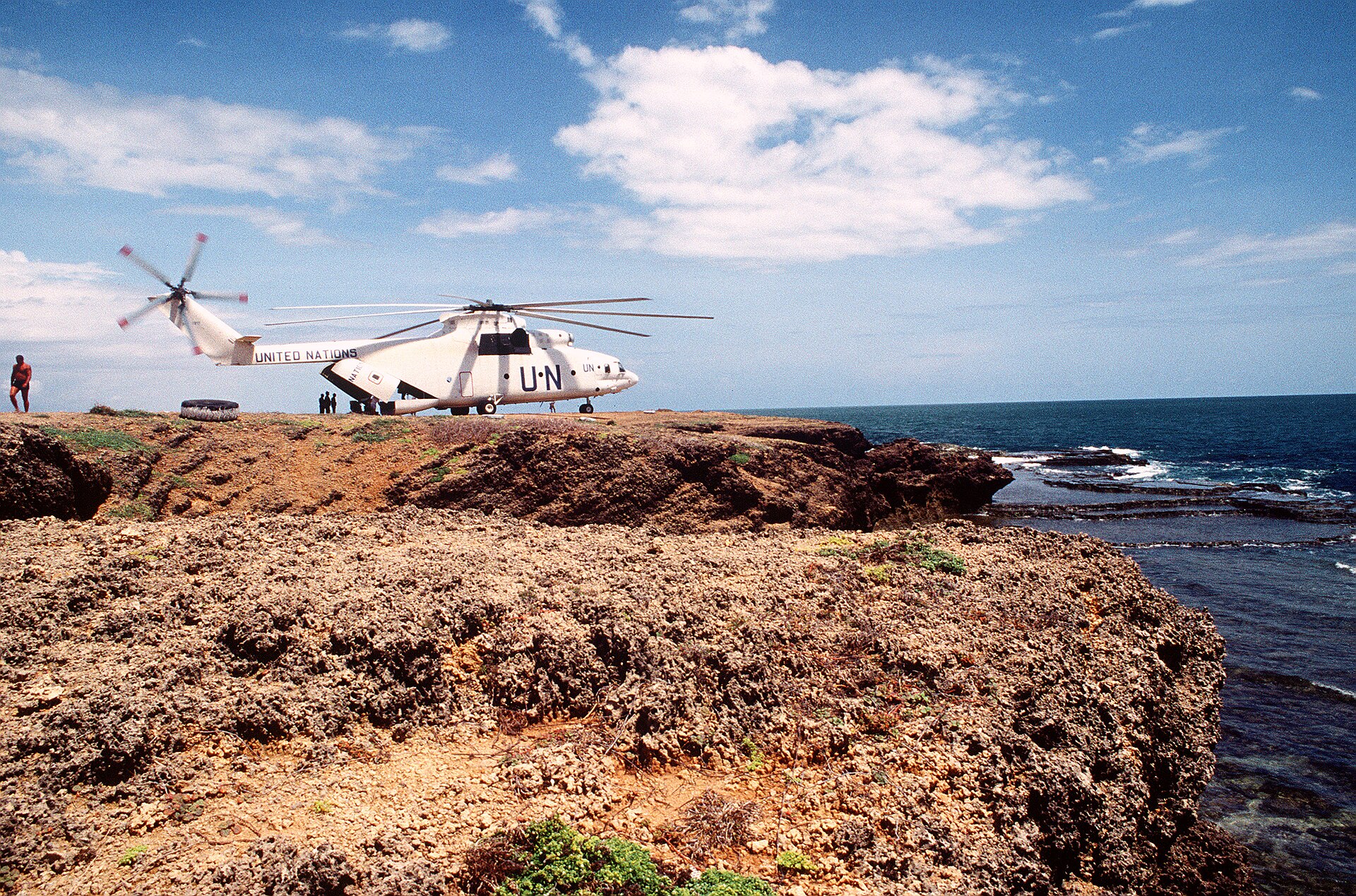

If you need to lift a fighter jet, a bulldozer or another helicopter, there is one machine for the job: the Mil Mi-26. The Soviet-designed giant is the largest and most powerful helicopter ever put into serial production, and more than four decades after its first flight it still has no real rival.
- Soviet heavy-lift helicopter; NATO reporting name “Halo”
- First flight in December 1977; entered service in 1983
- Eight-blade main rotor about 32 metres in diameter
- Can lift around 20 tonnes of cargo or carry about 80-90 troops
- Built by Rostvertol in Rostov-on-Don; latest military version is the Mi-26T2V
What is the Mi-26?
The Mi-26 was designed by the Mil Moscow Helicopter Plant in the 1970s to carry heavy equipment for the Soviet military and for oil and gas projects in Siberia. The requirement was ambitious: a helicopter that could move loads as heavy as those carried by a C-130 transport aircraft, but without needing a runway.
Specifications
The Mi-26 is powered by two Lotarev D-136 turboshaft engines, each producing more than 11,000 shaft horsepower. Its eight-blade main rotor spans about 32 metres. Maximum take-off weight is around 56 tonnes, and it can carry about 20 tonnes inside its cabin or as an underslung load. The cargo hold is roughly the size of a C-130’s, with a rear ramp and clamshell doors.
Famous missions
Mi-26s dropped sand, lead and boron onto the burning reactor at Chernobyl in 1986. In 2002 a civilian-operated Mi-26 was hired to recover damaged US Army CH-47 Chinooks in Afghanistan, an extraordinary sight: one heavy helicopter carrying another. The type has also moved a frozen mammoth carcass out of the Siberian tundra and fought forest fires with buckets holding about 15 tonnes of water.
Military role today
The Russian armed forces use the Mi-26 to move artillery, armoured vehicles, supplies and troops, and to recover downed aircraft. The modernised Mi-26T2V adds a digital cockpit, improved navigation and self-protection systems. In Ukraine the helicopter has been used for logistics behind the front lines.
Who else flies it?
Operators have included China, Venezuela, Algeria, Kazakhstan, Mexico and others. India flew Mi-26s for decades before retiring them in favour of the CH-47F Chinook. Civil versions have served in firefighting, construction and disaster relief.
Verdict
The Mi-26 remains in a class of its own. Western heavy-lift helicopters such as the CH-47F and CH-53K are more modern, but none can match its sheer lifting power. As long as militaries and disaster responders need to move outsized loads into remote places without runways, the Halo will be in demand.
Featured image: SGT. G. D. Robinson / Public domain, via Wikimedia Commons