How Big Is Russia’s Air Force? Aircraft, Personnel, Structure
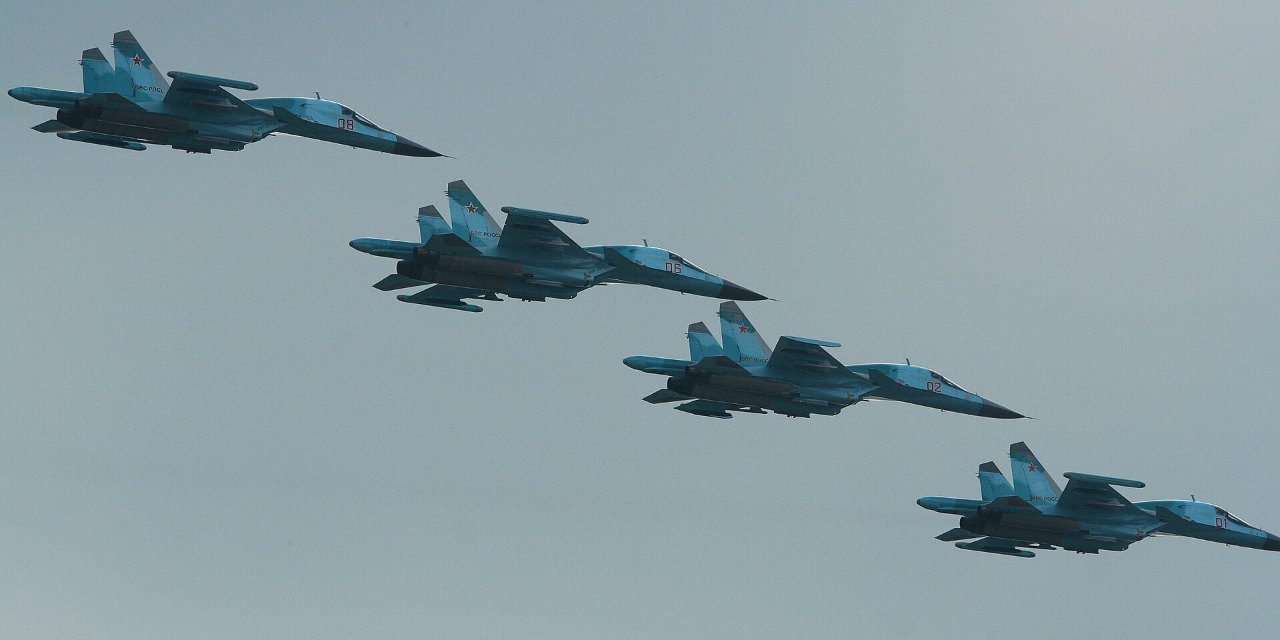
Russia has the second-largest air force in the world by total aircraft, with about 4,300 military aircraft of all types and roughly 1,200 combat jets. Its air arm, formally the Aerospace Forces, has about 170,000 personnel and also runs the country’s air defenses and military satellites.
Size has not translated into control of the sky over Ukraine. This guide explains how big the force is, how it is organized, where its real weaknesses lie and why a force this large has fought the war mostly from a distance.
How big is Russia’s air force?
There are two common ways to count. FlightGlobal’s World Air Forces directory counts every military aircraft, including transports, trainers and helicopters across all services. The IISS Military Balance counts combat aircraft only. Russia ranks second on the first measure and third on the second.
| Country | All military aircraft | Combat aircraft |
|---|---|---|
| United States | About 13,000 | About 2,400 active |
| Russia | About 4,300 | About 1,200 |
| China | About 3,300 | About 2,100 |
| Category | Number | Notes |
|---|---|---|
| Fighters and strike aircraft | About 1,000 | Su-27 family, Su-34, Su-57, MiG-31, Su-25, Su-24 |
| Long-range bombers | About 110 | Tu-160, Tu-95MS, Tu-22M3 |
| Helicopters | About 1,500 | Mi-8, Ka-52, Mi-28, Mi-24, Mi-26 |
| Heavy transports | About 130 | Il-76, plus a few An-124 |
| Tankers | About 20 | Il-78 |
| Airborne radar aircraft | Fewer than 10 | A-50 and A-50U |
How is the Russian air force organized?
Russia merged its air force with its space and air defense troops in 2015 to form the Aerospace Forces, known by the Russian initials VKS. The service has three branches: the Air Force, the Air and Missile Defense Forces and the Space Forces, which operate early-warning satellites and the GLONASS navigation system. Colonel General Viktor Afzalov has commanded it since 2023.
Combat aircraft are grouped into air and air defense armies attached to the military districts, with two separate commands for Long-Range Aviation and Military Transport Aviation. The navy has its own aviation. The ground-based missile systems are covered in Russia’s air defense systems.
Russia’s combat aircraft
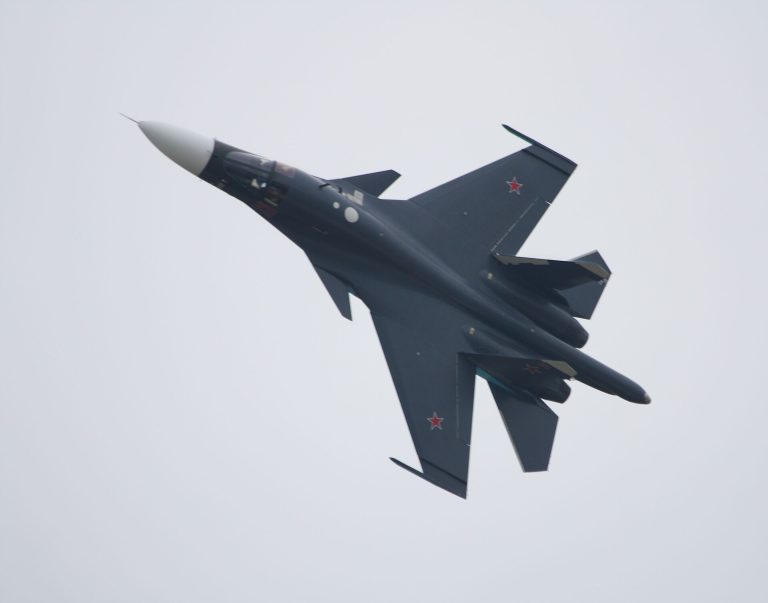
The modern core is about 400 aircraft: Su-35S and Su-30SM fighters, Su-34 strike jets and a small number of Su-57 stealth fighters. Behind them are MiG-31 interceptors and older Su-27, Su-25 and Su-24 types. Each is described in what fighter jets Russia has.
The bomber force of Tu-160, Tu-95MS and Tu-22M3 launches most of Russia’s air-launched cruise missiles and is covered in Russia’s strategic bombers. Army aviation flies the attack and transport fleet described in what helicopters Russia has.
Transports, tankers and radar aircraft
The support fleet is where Russia is weakest. It has about 20 Il-78 tankers, against several hundred in the US Air Force, which limits how far and how long its fighters can operate. Production of the new Il-76MD-90A transport and its tanker version runs at a handful a year.
Airborne early-warning aircraft are scarcer still. Russia began the war with roughly nine operational A-50 radar planes. Ukraine shot down two in early 2024, and others have been damaged on the ground. The replacement A-100 has been delayed for years. Without enough radar aircraft, Russian fighters and air defenses see low-flying targets later and coordinate less well.
How many aircraft has Russia lost?
Oryx has visually confirmed well over 150 fixed-wing aircraft and more than 150 helicopters destroyed or damaged since February 2022. Losses in the air were heaviest in the first year. Since then a growing share has come from drone and missile strikes on airfields, including Operation Spiderweb in June 2025.
Factories have delivered two to three dozen new combat aircraft a year, enough to hold fighter numbers roughly steady. Bombers, radar aircraft and experienced crews have not been replaced at the same rate.
Why has Russia not won control of the air?
Russia expected to destroy Ukraine’s air defenses in the first days and did not. Ukraine kept its mobile missile systems moving and later received Western ones, and Russia had neither the training nor enough specialized aircraft and munitions to hunt them down. Flying over Ukrainian-held territory became too costly.
The air force adapted by staying back. Su-34s release glide bombs from 40 km or more behind the front, at a rate that reached a reported 8,766 in August 2026, while bombers launch cruise missiles from inside Russia. This does great damage on the ground. It is not air superiority, and Ukrainian aircraft still fly.
Frequently asked questions
How many aircraft does Russia’s air force have?
About 4,300 military aircraft of all types, according to FlightGlobal, including about 1,200 combat aircraft and 1,500 helicopters.
Is Russia’s air force bigger than America’s?
No. The United States has about three times as many military aircraft and roughly twice as many combat aircraft.
How many people serve in the Russian air force?
About 170,000 in the Aerospace Forces, according to IISS estimates.
What is the VKS?
The Russian initials for the Aerospace Forces, the service created in 2015 that combines the air force, air and missile defense and space forces.
How many aircraft has Russia lost in Ukraine?
More than 300 aircraft and helicopters have been visually confirmed as destroyed or damaged, according to Oryx.
- FlightGlobal – World Air Forces directory: flightglobal.com
- IISS – The Military Balance 2026: iiss.org
- Oryx – Documenting Russian equipment losses during the invasion of Ukraine: oryxspioenkop.com
- Wikipedia – Russian Aerospace Forces: en.wikipedia.org
- MiGFlug – UMPK glide bombs, August 2026 figures from the Ukrainian General Staff: migflug.com