India’s Defence Export Strategy: From Arms Importer to Arms Seller
For decades India was the world’s largest arms importer, buying fighters, tanks and submarines from Russia, France, Israel and the US. That is changing. Under the Make in India and Atmanirbhar Bharat (self-reliant India) policies, New Delhi wants to become a major arms exporter. Here is how the strategy works and how far it has come.
- Record exports of about ₹23,600 crore in FY2024-25
- Target: ₹50,000 crore (about $6 billion) by 2029
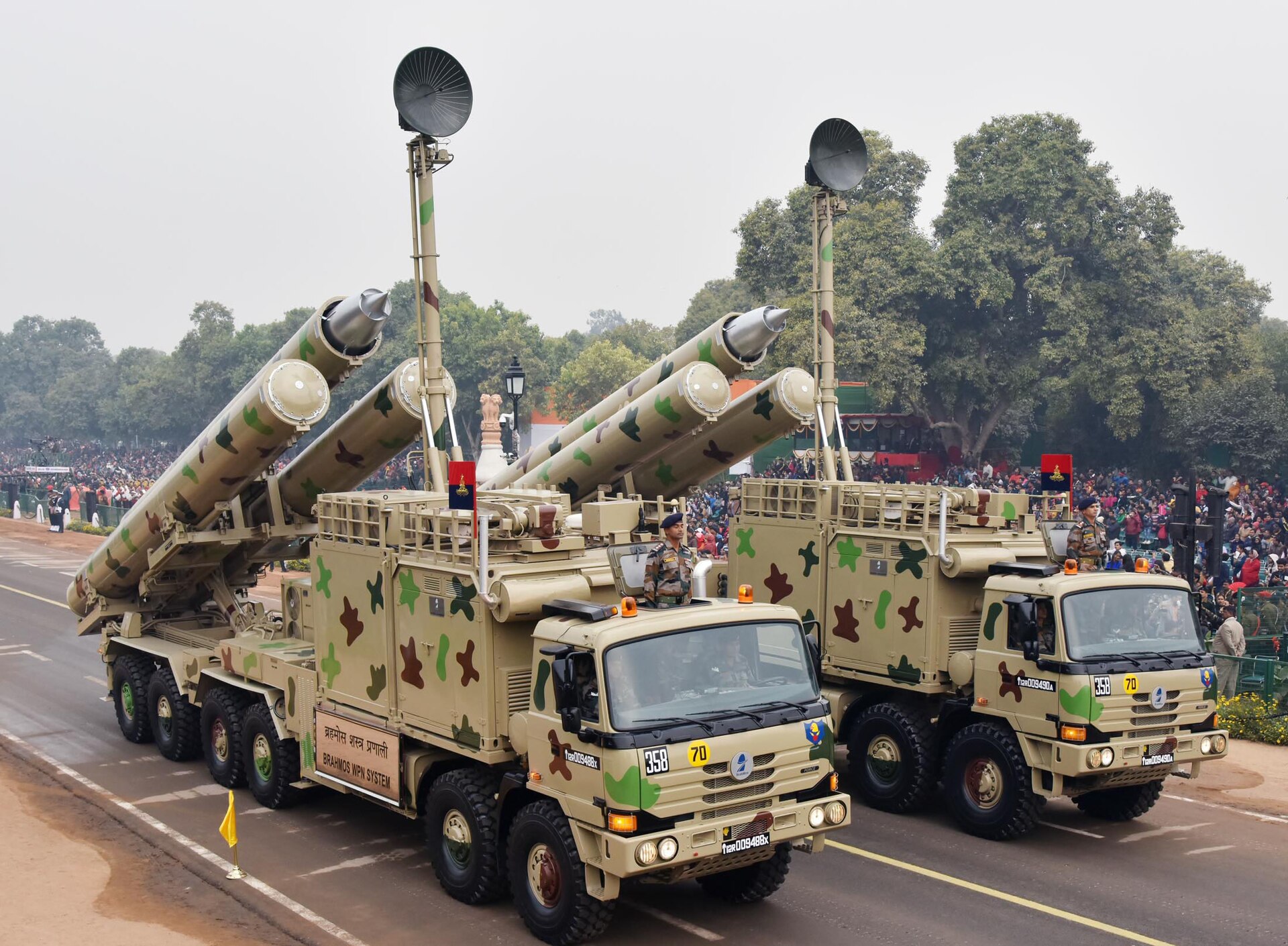
- BrahMos sold to the Philippines
- Armenia has bought Akash, Pinaka and Indian artillery
- Private firms now account for a large share of exports
The numbers
India’s defence exports have risen more than twentyfold in a decade. In the 2024-25 financial year they reached a record of about ₹23,600 crore, roughly $2.8 billion. The government’s target is ₹50,000 crore, around $6 billion, by 2029. Indian equipment, components and services now go to around 100 countries.
Flagship products
The BrahMos supersonic cruise missile, developed with Russia, is the best-known export. The Philippines bought shore-based BrahMos batteries in a deal worth about $375 million and received the first systems in 2024, and other Southeast Asian countries have shown interest. Armenia has become a key customer, buying the Akash air defence system, the Pinaka multiple rocket launcher and Indian artillery guns. India also sells offshore patrol vessels, Dornier aircraft, Dhruv helicopters, radars, body armour and large quantities of ammunition.
The role of the private sector
State-owned companies such as HAL, BEL and Bharat Dynamics still dominate big platforms, but private firms like Tata Advanced Systems, Larsen & Toubro, Bharat Forge and Solar Industries now generate a large share of exports. Many supply components to Western defence giants, which helps integrate India into global supply chains.
How the government is pushing
New Delhi has published “positive indigenisation lists” banning imports of hundreds of items, opened defence production to more foreign investment, set up defence industrial corridors in Uttar Pradesh and Tamil Nadu, and offered lines of credit to friendly countries to buy Indian weapons. Defence attachés are being posted to new regions, especially Africa and Latin America.
Combat credibility
Indian officials argue that the use of domestic systems such as BrahMos and Akash in the May 2025 clash with Pakistan has increased foreign interest. In the arms trade, combat use is a powerful selling point, and India is keen to market its systems as “battle-proven”.
Challenges
India still imports far more than it exports, and key components such as jet engines remain foreign. Programmes like the Tejas fighter have suffered from slow production, which makes export promises harder to keep. Competition is intense from South Korea, Türkiye, Israel and China, all of which offer fast delivery and generous financing.
Verdict
India is unlikely to rival the US or France as an arms seller soon, but it is quickly becoming a serious mid-tier exporter. If it can solve its production bottlenecks, its mix of affordable prices, political neutrality and combat experience could win it a large share of markets in Asia, Africa and Latin America.
Featured image: Ministry of Defence, Government of India / GODL-India, via Wikimedia Commons