R-37M Missile: Range, Speed and Why It Worries NATO Pilots
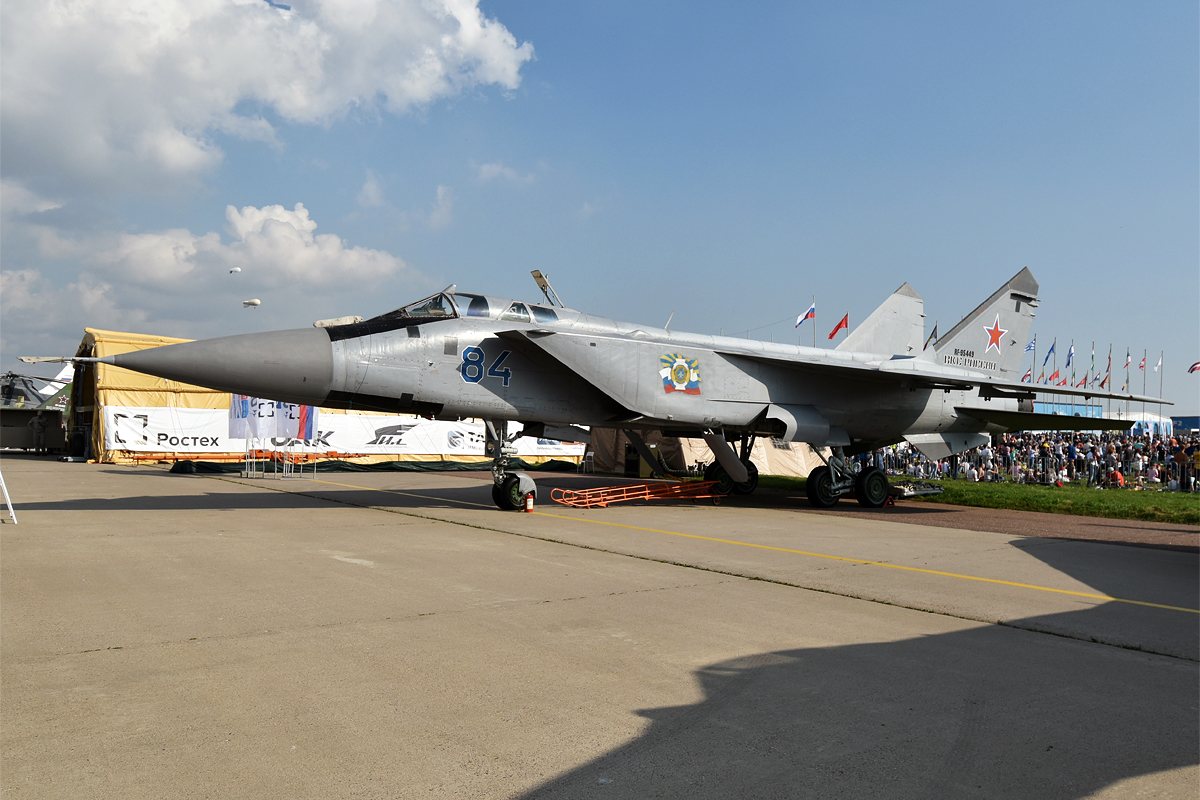
Most air-to-air missiles engage targets tens of kilometres away. Russia’s R-37M is designed to reach out far beyond that, threatening tankers, AWACS aircraft and fighters from distances where they once felt safe. In Ukraine it has become one of the Russian Air Force’s most effective weapons. Here is what it is and why it matters.
- Very long-range air-to-air missile made by Vympel
- NATO reporting name AA-13 Axehead
- Range widely reported at 200 km or more
- Speed around Mach 6 in a lofted trajectory
- Carried by MiG-31BM, Su-35S and Su-57
What is the R-37M?
The R-37M, known by NATO as AA-13 Axehead and offered for export as the RVV-BD, is a very long-range air-to-air missile made by Vympel, part of the Tactical Missiles Corporation. It grew out of the Soviet R-33 that armed the MiG-31 interceptor and was designed to kill large, high-value aircraft such as AWACS, tankers and bombers, as well as fighters.
Range and speed
The R-37M is a heavy missile, weighing around half a tonne. Russian sources claim a range of up to around 300 kilometres or more, while Western estimates usually cite 200 kilometres or more, depending on the launch altitude and target. The missile climbs high in a lofted trajectory, where the thin air reduces drag, then dives on the target at speeds of around Mach 6.
How it finds its target
For most of the flight the R-37M uses inertial navigation with mid-course updates from the launch aircraft’s radar. In the final phase its own active radar seeker locks on, so the launching fighter can turn away. That combination is what allows engagements at extreme range.
Carriers
The main carrier is the MiG-31BM, whose powerful Zaslon-M radar can track targets at very long range. The R-37M is also integrated on the Su-35S and Su-30SM2, and a version with folding fins has been developed for the internal weapons bay of the Su-57.
Combat record in Ukraine
Since 2022 Russian fighters have used R-37Ms to shoot down Ukrainian aircraft from long distances, often while staying over Russian-held territory, beyond the reach of Ukrainian air defences. This forced Ukrainian pilots to fly very low, limiting their sensors and weapons. Ukraine and Western analysts note that the missile is expensive and not produced in large numbers, but its effect on tactics has been significant.
Why NATO cares
High-value aircraft such as the E-7 Wedgetail, KC-46 tankers and RC-135 surveillance jets are essential to Western air power, and the R-37M is designed to push them further back. That is one reason the US is developing the AIM-260 JATM and Europe is upgrading the Meteor, and why China’s PL-15 and PL-17 attract similar concern.
Verdict
The R-37M is not a dogfight weapon but a long arm. Combined with the MiG-31BM and good targeting data, it gives Russia a credible way to threaten aircraft that used to operate safely far behind the front line.
Featured image: Anna Zvereva from Tallinn, Estonia / CC BY-SA 2.0, via Wikimedia Commons