Spike Missile Family Explained: SR, LR2, ER2 and NLOS Ranges and Users
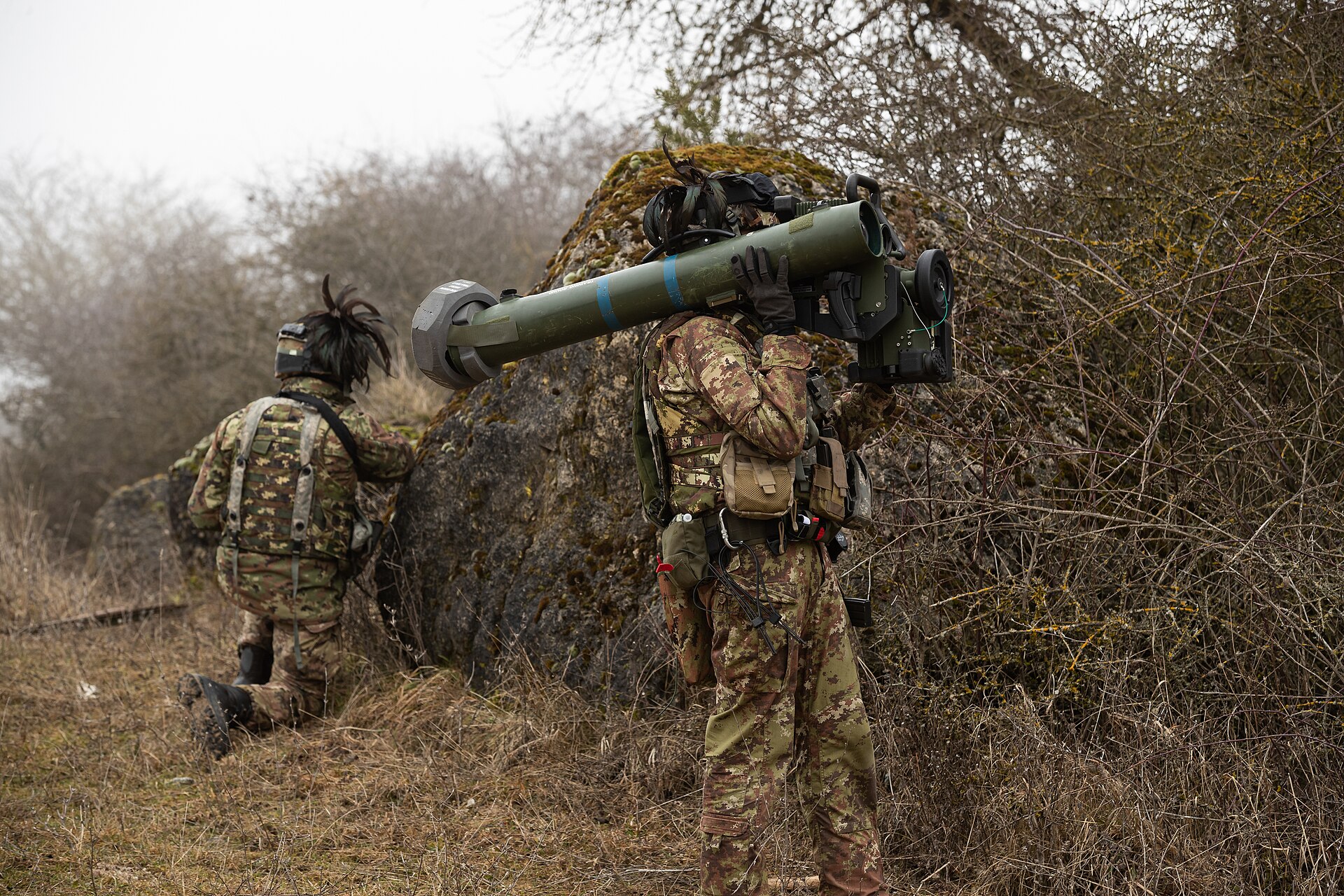
When people think of anti-tank missiles, the American Javelin usually comes first. But the most widely exported Western family of guided missiles of this type is Israel’s Spike. From infantry teams to helicopters, ships and armoured vehicles, Spike variants cover ranges from about a kilometre and a half to over 30 kilometres. Here is how the family works.
- Developed by Israel’s Rafael Advanced Defense Systems
- Ranges from about 1.5 km (SR) to over 30 km (NLOS)
- Fire-and-forget plus fire-observe-update via data link
- Used by more than 40 countries
- Built under licence in Germany, Poland and other countries
Who makes Spike?
Spike is developed by Rafael Advanced Defense Systems. Several European countries build it under licence, most notably Germany through the EuroSpike joint venture with Diehl and Rheinmetall, and Poland, where it is produced locally. More than 40 countries have bought one or more versions.
The key idea: fire, observe, update
Most Spike missiles have an electro-optical and infrared seeker. In short-range use they can be fired and forgotten like a Javelin. The longer-range versions, however, are connected to the launcher by a data link, originally a fibre-optic cable and now often radio. The operator sees what the missile sees and can change targets, hit a precise point such as a window, or abort the attack in flight. This “fire-observe-update” mode lets Spike hit targets the gunner could not see at launch.
The family, by range
Spike SR is a light, disposable fire-and-forget missile for infantry at about 1.5 to 2 kilometres. Spike MR reaches roughly 2.5 kilometres. Spike LR and the newer LR2 extend that to about 4 and 5.5 kilometres from the ground, with LR2 offering a stronger tandem warhead and a multipurpose option. Spike ER and ER2 are designed for vehicles, ships and helicopters, with ER2 reaching about 16 kilometres from a helicopter. Spike NLOS is a much larger missile with a range of more than 30 kilometres, fired from vehicles, ships and helicopters against targets far beyond line of sight.
Platforms and users
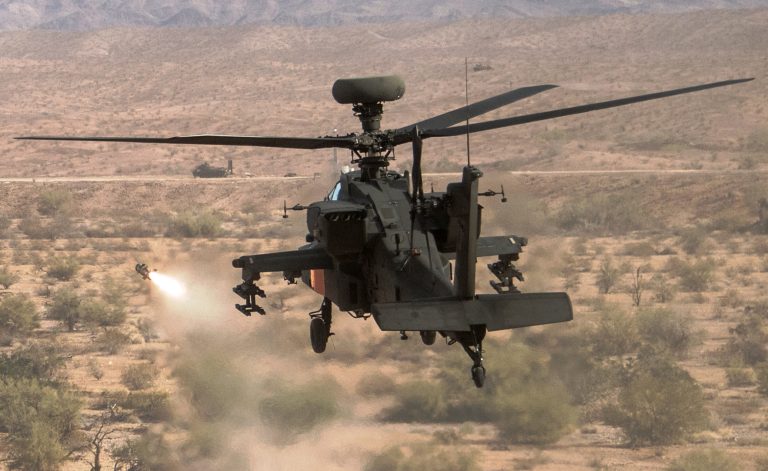
Spike arms infantry in countries such as Germany, Poland, Spain, Finland, Romania and India, armoured vehicles like the Puma and Boxer, AH-64 and Tiger helicopters, and fast patrol boats. The British Army uses Spike NLOS under the name Exactor, and South Korea deploys NLOS on its frontline islands.
Spike vs Javelin
Javelin is lighter and simpler for infantry at shorter ranges. Spike’s strength is flexibility: one family covers everything from a soldier’s shoulder to a helicopter, and its man-in-the-loop guidance gives more control in cluttered urban terrain. Many armies now operate both.
Verdict
Spike’s success comes from combat experience, constant upgrades and a willingness to share production with customers. As Europe rearms and armies seek long-range precision for small units, it is likely to remain one of the most important guided missile families in the world.
Featured image: U.S. Army JMRC by Spc. Uriel Ramirez / Public domain, via Wikimedia Commons