KM-SAM Cheongung: South Korea’s Air Defence System Taking the Gulf by Storm
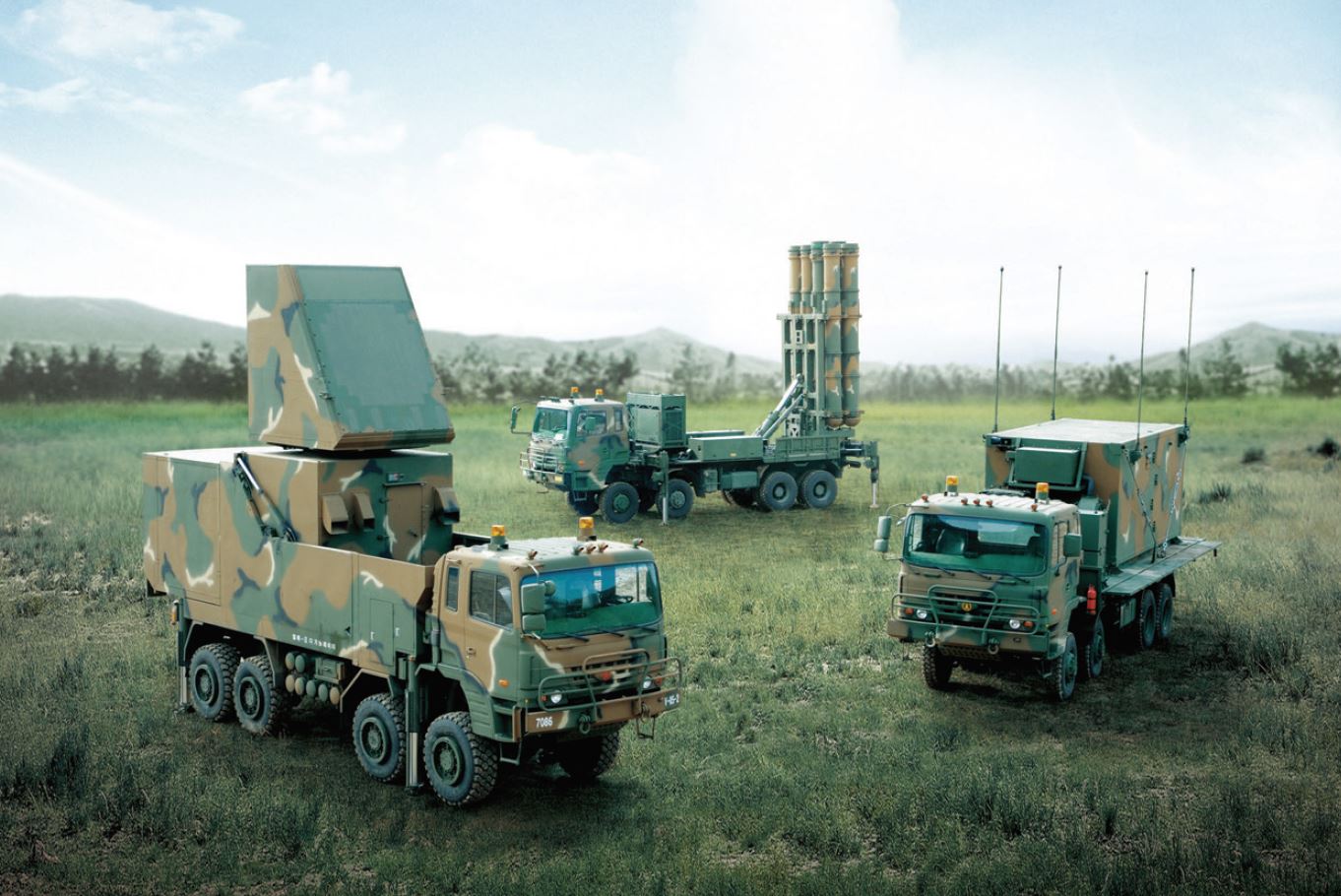
A decade ago few people outside South Korea had heard of KM-SAM. Today it is one of the most successful air defence exports in the world, with multibillion-dollar contracts in the Gulf. Known at home as Cheongung, or “Iron Hawk”, it fills the gap between short-range guns and long-range systems like Patriot. Here is what it is and why buyers are lining up.
- Medium-range surface-to-air system, also called M-SAM or Cheongung
- Block I targets aircraft; Block II adds ballistic missile defence
- Each launcher carries eight vertically launched missiles
- Exported to the UAE, Saudi Arabia and Iraq
- Block III with longer range is in development
What is KM-SAM?
KM-SAM (Korean Medium-range Surface-to-Air Missile), also called M-SAM, was developed by South Korea’s Agency for Defense Development with LIG Nex1 as the main missile contractor and Hanwha supplying launchers and radar. Early development drew on Russian technology from the 9M96 missile used in the S-350 and S-400 family, which South Korea received in the 1990s as partial repayment of Soviet-era debt. The system was built to replace ageing US-made Hawk batteries.
How it works
A KM-SAM battery combines a multifunction X-band AESA radar, a command post and several launchers, each carrying eight missiles in vertical canisters. The missiles are cold-launched, then ignite their motors in the air and turn towards the target. Side thrusters near the warhead give them sharp final manoeuvres, which is key to hitting fast, agile targets.
Block I, Block II and Block III
Block I, fielded in the mid-2010s, is designed against aircraft and cruise missiles at ranges of around 40 kilometres. Block II, which entered service around 2020, adds the ability to intercept short-range ballistic missiles in their final phase, an essential capability against North Korea’s growing missile arsenal. A Block III version with longer range and higher intercept altitude is under development.
An export success
KM-SAM’s big breakthrough came in the Middle East. The United Arab Emirates signed a deal worth about $3.5 billion in 2022, Saudi Arabia followed with roughly $3.2 billion in 2024, and Iraq ordered the system the same year. Buyers like its performance against ballistic missiles and drones, competitive price, fast delivery and the absence of the political conditions sometimes attached to American systems.
Where it sits in Korea’s shield
In South Korea, KM-SAM forms the middle layer of the Korea Air and Missile Defense system. Above it sit Patriot PAC-3 and the domestic L-SAM, which intercepts ballistic missiles at higher altitudes, while short-range guns and missiles protect individual sites.
Verdict
KM-SAM shows how quickly South Korea has become a top-tier arms exporter. It offers much of the capability of Western systems at a lower cost and with faster delivery. As missile and drone threats spread across the Gulf and Asia, demand for Iron Hawk is likely to keep growing.
Featured image: 방위사업청 – Defense Acquisition Program Administration (DAPA) / KOGL Type 1, via Wikimedia Commons