

Germany Plans €3.4B Tomahawk, Typhon Buy for 2,500-km Strike

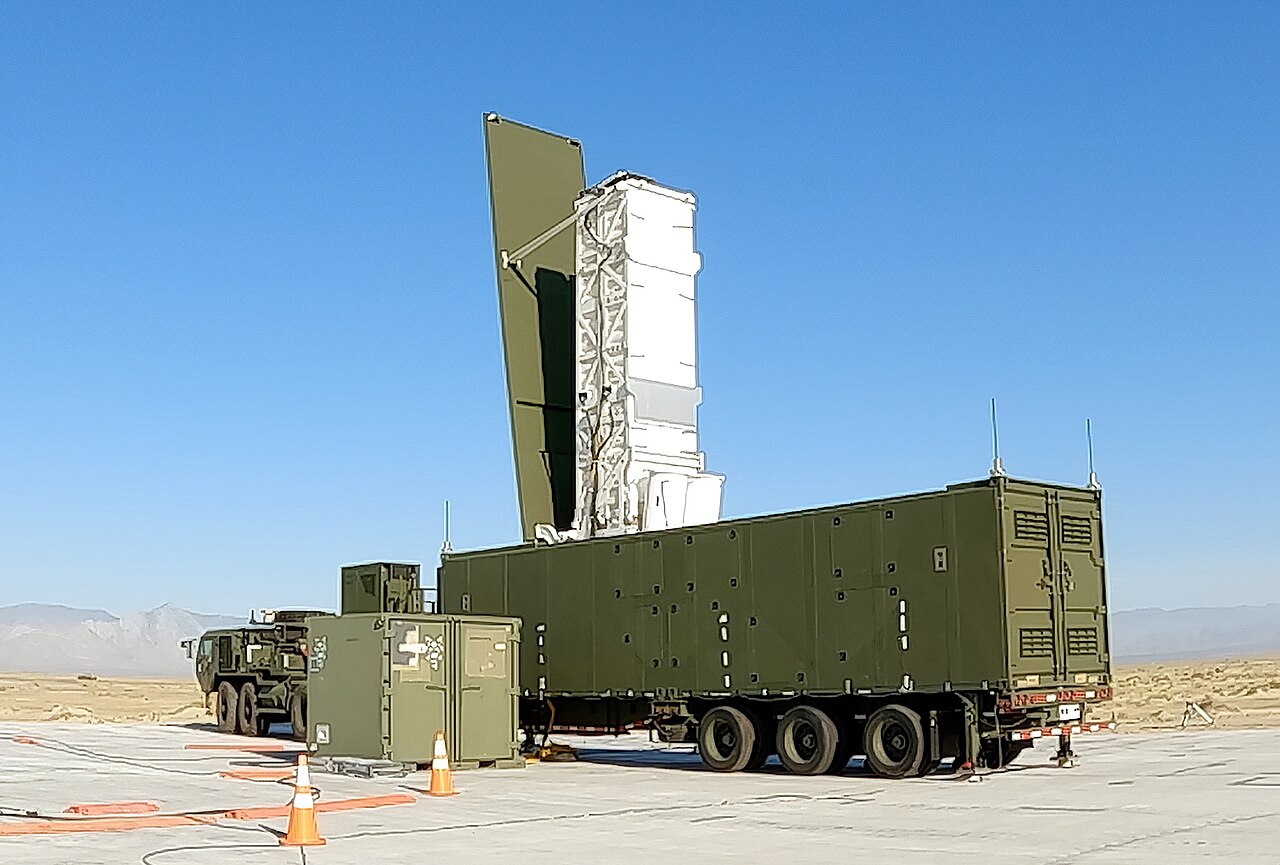
Germany’s defence ministry has set aside close to €3.4 billion ($4 billion) to buy American Tomahawk cruise missiles and the ground launchers that fire them, a step that would give the Bundeswehr its first land-based deep-strike weapon since the Cold War and end a three-decade gap in German conventional firepower.
The figure appears in an internal ministry planning document reported on 14 September. It is a spending intention rather than a signed contract: the money is expected to be carried in the 2027 federal budget, which is still being drafted, and the purchase will need parliamentary approval before anything is ordered. Officials cautioned that the number could move.
What Berlin wants is the package the US Army calls Mid-Range Capability, better known by its launcher name, Typhon. The system pairs a Lockheed Martin launcher — essentially a containerised derivative of the Mk 41 vertical launching system mounted on a road-going trailer — with Raytheon’s Tomahawk. A standard US battery fields four launchers, a battery operations centre and support vehicles, and the same tubes can also hold the SM-6, which can be used against ships and aircraft as well as land targets.
A 2,500-Kilometre Reach
The attraction is range. Tomahawk variants reach roughly 2,500 kilometres, far beyond anything in German service today. The Bundeswehr’s longest-reaching air-launched weapon, Taurus KEPD 350, manages about 500 kilometres and must be carried by a Tornado. A Typhon battery based in Germany would hold targets across western Russia at risk without an aircraft leaving the ground.
That is precisely the capability NATO planners have been arguing about since the Intermediate-Range Nuclear Forces Treaty collapsed in 2019. The treaty had banned ground-launched missiles between 500 and 5,500 kilometres for both Washington and Moscow. Its demise reopened a category of weapon that European armies had not fielded since the Pershing II and ground-launched cruise missiles of the 1980s — an era whose political scars still shape German debate about missiles on German soil.
From American Deployment to German Ownership
The route to this purchase runs through a cancelled American plan. In July 2024, then-President Joe Biden and then-Chancellor Olaf Scholz announced that the US Army would begin episodic deployments of long-range fires to Germany from 2026, including Typhon, Tomahawk, SM-6 and developmental hypersonic weapons, all under US command. The announcement drew immediate criticism from the Social Democrats’ left flank and from Moscow.
The Trump administration scrapped the deployment. That left Berlin with the strategic problem the deployment had been meant to solve and none of the hardware. The response was to buy the system outright rather than host someone else’s.
The political opening came at the NATO summit in Ankara in July, where President Donald Trump and Chancellor Friedrich Merz reached an agreement in principle on a German purchase. Under Merz, who has made rebuilding the Bundeswehr the centrepiece of his security policy, Germany has moved faster on procurement than at any point since reunification, helped by a constitutional change exempting most defence spending from the country’s debt brake.
Industrial Participation
The package under discussion also includes German industrial participation in Tomahawk production. That matters more than it might appear. Tomahawk output has been a bottleneck for years, and the US Navy awarded Raytheon a large multi-year production deal in August to surge capacity. Bringing German suppliers into the chain gives Berlin some insulation against future American policy shifts — a lesson Germany has drawn repeatedly over the past two years — and gives domestic industry a stake in a weapon the Bundestag will be asked to fund.
It is also an argument Berlin will need. German lawmakers have historically been reluctant to buy American when a European option exists, and defence ministry officials have been careful to describe Typhon as an interim system.
The European Alternative, Eventually
Berlin’s stated long-term goal is a European long-range strike weapon. Germany, France, Italy, Poland, the United Kingdom, Sweden and the Netherlands have been working through the European Long-range Strike Approach, an initiative launched in 2024 to develop a ground-launched missile in the 1,000-to-2,000-kilometre class. Nothing from that effort will be fielded before the mid-2030s at the earliest.
Typhon fills the intervening decade. The logic mirrors decisions taken elsewhere in Europe: buy American now for capability that exists, build European later for autonomy that does not. Poland, the Netherlands and others have made the same calculation on air defence.
For NATO’s eastern members, a German deep-strike battery is a meaningful addition. Alliance planning documents have repeatedly identified long-range conventional fires as a shortfall, and until now the capability in Europe has been almost entirely American or air-delivered. A Bundeswehr unit operating Typhon would be the first European-owned ground-launched system of its kind.
It would also be a target. Typhon batteries are large, road-bound and dependent on heavy transport, and Russian doctrine treats such systems as priority objectives. Whatever Berlin buys will have to be survivable as well as long-ranged — a problem the budget line does not yet address.
Sources
- German defence ministry planning document, reported 14 September 2026
- Defence Industry Europe, “Germany turns to €3.4 billion Typhon and Tomahawk purchase to field 2,500-kilometre strike capability after U.S. cancels deployment,” 14 September 2026
- Kyiv Post, “Germany Plans €3.4B Tomahawk Missile Purchase,” 14 September 2026
- US Army Program Executive Office Missiles and Space, Mid-Range Capability (Typhon) programme materials
- White House and German Federal Government joint statement on long-range fires deployment, July 2024
- European Long-range Strike Approach (ELSA) letter of intent, 2024
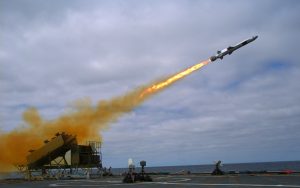


[…] The missile fits the Mk 41 Vertical Launch System on cruisers and destroyers, and submarines fire it from torpedo tubes or capsule launchers on Los Angeles and Virginia-class boats. The US Army now also fires it from the Typhon launcher, the Mid-Range Capability that pairs a Lockheed Martin launcher with Tomahawk and SM-6. Germany is weighing a Typhon and Tomahawk purchase, which we covered in a separate report. […]