
How Fast Is the F-47? Top Speed, Supercruise and What Mach 2+ Means
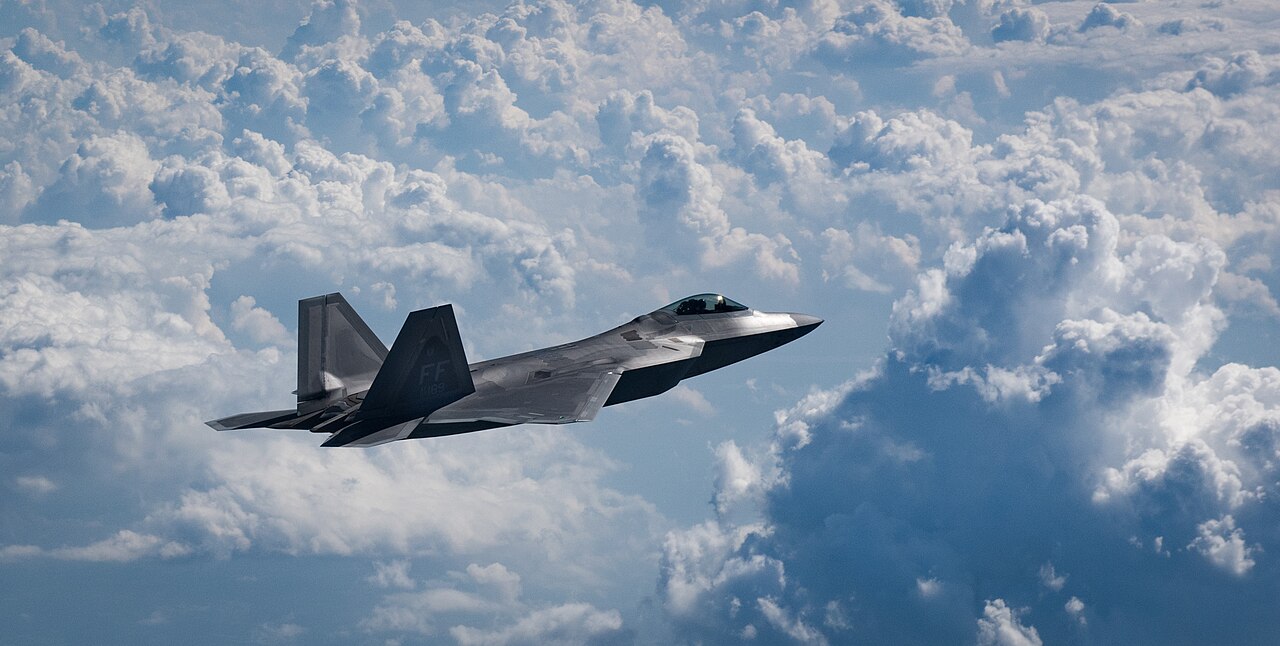
The US Air Force has given one speed figure for the F-47: Mach 2+, or more than twice the speed of sound. That is roughly 2,100 km/h (1,320 mph) at high altitude, about the same as the F-22 and well above the F-35’s Mach 1.6.
The more useful number, how fast the aircraft can cruise without afterburner, has not been released. This article explains what is known, why cruise speed matters more than top speed, and what the engine choice implies.
The official figure
The number comes from a graphic published in May 2025 by Gen. David Allvin, then Air Force chief of staff. It listed the F-47 at Mach 2+ alongside a combat radius of more than 1,000 nautical miles. The plus sign matters: the service has set a floor, not a ceiling, and has said nothing more precise since.
Mach numbers describe speed relative to sound, which travels more slowly in cold, thin air. At 11,000 metres Mach 2 is about 2,100 km/h; at sea level it would be nearer 2,450 km/h, though no fighter flies that fast so low. For the other published figures, see what the F-47 is.
How the F-47 compares
| Aircraft | Top speed | Supercruise |
|---|---|---|
| F-47 | Mach 2+ | Not disclosed |
| F-22 Raptor | Mach 2 class | Above Mach 1.5 |
| F-35A | Mach 1.6 | No |
| F-15EX | Mach 2.5 | No |
| J-20 (China) | About Mach 2 (est.) | Claimed with WS-15 engine |
| Su-57 (Russia) | Mach 2 (claimed) | Claimed |
On top speed alone the F-47 is in the same class as the F-22 and slower than the 1970s-designed F-15. That is not a weakness. Top speed is reached rarely, in afterburner, and for a few minutes at most. Our F-47 vs F-22 comparison looks at the wider picture.
Supercruise is the figure that matters
Supercruise means sustained supersonic flight without afterburner. Afterburners roughly triple fuel consumption and create a large infrared signature, so a fighter that can cruise supersonically on dry thrust covers ground faster, gives its missiles more launch energy and stays harder to see with heat-seeking sensors.
The F-22 does this at above Mach 1.5, and it remains the standard. A successor designed three decades later would be expected to match or exceed it, and the F-47’s adaptive engines are suited to the task. The Air Force has not confirmed that the F-47 supercruises, let alone at what speed.
What the engines imply
The F-47 is designed for the Next Generation Adaptive Propulsion engine, either GE Aerospace’s XA102 or Pratt & Whitney’s XA103. Reporting puts both in the 35,000 to 40,000 lb thrust class. The renderings and the aircraft’s role suggest two engines, as on the F-22, but the Air Force has not confirmed the number.
Adaptive engines add a third stream of air that can be directed for either thrust or efficiency. In practice that means one engine can behave like a fuel-sipping turbofan in cruise and like a high-thrust fighter engine in combat. The same airflow also cools the aircraft’s electronics. As we explain in when the F-47 will fly, these engines will not be ready until around 2030, so early aircraft may not show the type’s full performance.
Why not Mach 3?
Because speed is expensive in every sense. Above about Mach 2, friction heats the airframe enough to damage radar-absorbent coatings and to make the aircraft easier to detect by infrared. Engines optimised for very high speed burn fuel quickly, which cuts range, and range is the F-47’s main requirement.
Modern air combat is also decided at long distance by sensors and missiles. A fighter that reaches the fight unseen, with fuel in hand, has a bigger advantage than one that arrives faster. The Air Force appears to have chosen a design that is fast enough and can stay that way for longer.
What is not yet known
The list includes supercruise speed, acceleration, service ceiling and whether the aircraft has thrust vectoring. It is also unclear how the interim engine arrangement on the first aircraft will affect early performance. None of these figures is likely to be published before flight testing is well under way.
Frequently asked questions
How fast is the F-47?
The US Air Force has stated a top speed above Mach 2, which is roughly 2,100 km/h or 1,320 mph at high altitude. No more precise figure has been released.
Is the F-47 faster than the F-22?
Both are listed at about Mach 2 or above. Whether the F-47 is faster in practice, particularly in supercruise, has not been disclosed.
Can the F-47 supercruise?
It has not been confirmed. Given its role and adaptive engines it is widely expected to cruise supersonically without afterburner, but no speed has been published.
Is the F-47 faster than the F-35?
Yes. The F-35’s top speed is Mach 1.6, against Mach 2+ for the F-47.
How many engines does the F-47 have?
The Air Force has not confirmed the number. Two engines are widely assumed, as on the F-22.
Is the F-47 hypersonic?
No. Hypersonic flight begins at Mach 5. The F-47 is a Mach 2-class fighter.
- The War Zone – First F-47 6th Generation Fighter Now Being Built: twz.com
- Army Recognition – US Air Force’s first F-47 will take off in 2028, years before its next-gen engine is ready: armyrecognition.com
- US Air Force – F-22 Raptor fact sheet: af.mil