China Tightens Export Controls on Drone Engines and Radios

Lead
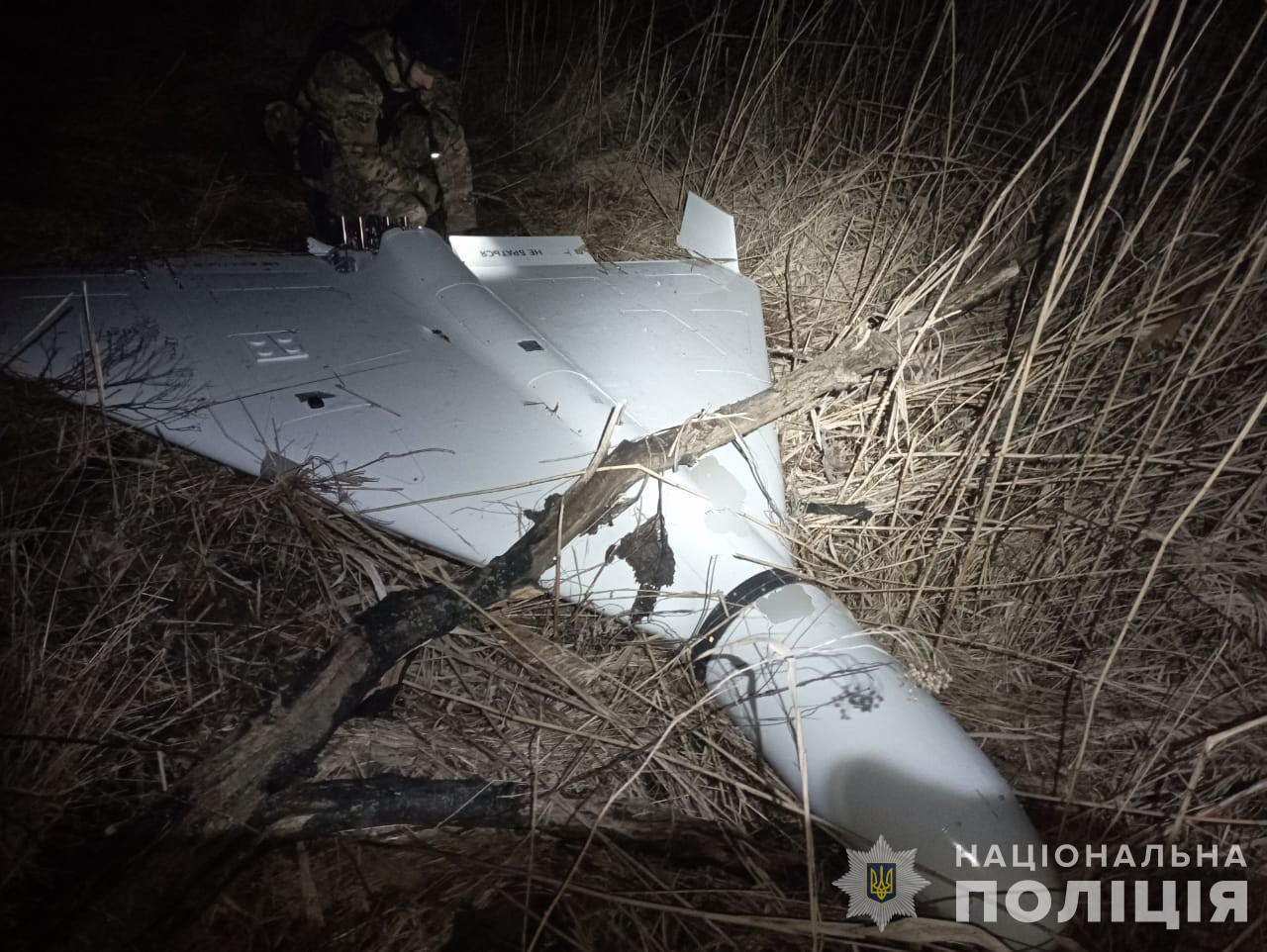
China’s Ministry of Commerce, General Administration of Customs and the Central Military Commission’s Equipment Development Department put a new round of export-control licensing requirements into force on November 18, 2026, covering drone engines, autopilots, radio control modules, high-power motors, speed controllers and large carbon-fiber propellers. The rules, published October 19 as Announcement No. 49 of 2026, do not name Russia, but the thresholds they set track closely with components used in the Shahed/Geran-series attack drones that Russia has fired at Ukraine by the thousands, and with the heavy-lift multirotors Ukraine’s own FPV industry depends on. Beijing has issued no public statement explaining its reasoning, and the announcement itself frames the changes as a dual-use trade-control update rather than a response to any single conflict.
What Happened
Announcement No. 49 adds thirteen categories of unmanned-systems hardware, plus certain complete drones, to China’s export control list, effective November 18. Items in these categories now require a government license before they can leave China, regardless of the buyer. The same revision loosens registration requirements for some lower-end civilian drones, so the measure tightens controls on military-relevant hardware while easing them elsewhere.
The timing drew attention on its own: the controls took effect the same day Russian President Vladimir Putin arrived in Shenzhen for talks involving Chinese President Xi Jinping and US President Donald Trump, according to The Moscow Times. Beijing has not linked the two events, and no Chinese official has commented publicly on the export-control announcement.
The New Controls: What’s Covered
The thresholds are narrow and technical, which analysts say is the point — they are calibrated to catch military-grade hardware while leaving most hobby and commercial drones untouched:
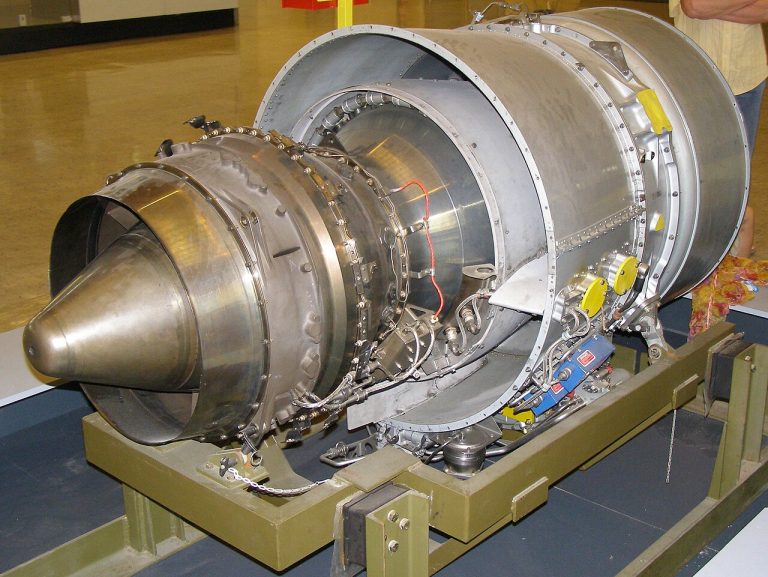
- Turbojet and piston engines: turbojets producing at least 400 newtons of thrust, and other drone engines rated above 16 kW, or designed to operate above 15,420 meters altitude, now require a license.
- Autopilots: autopilot systems “specially designed” for unmanned aircraft are controlled outright under category 7A103.b.
- Radio modules: UAV communications equipment is controlled once airborne radiated power reaches 30 dBm (about 1 watt), or once a single ground station can command more than ten aircraft.
- Brushless motors and speed controllers: motors rated at 48 volts or more, 3 kW or more, with a power density of at least 3 kW/kg and a rated speed no higher than 3,000 rpm, are covered, along with matching electronic speed controllers.
- Propellers: carbon-fiber blades of roughly 762 mm (about 30 inches) or longer from the rotation center to the tip, plus certain variable-pitch designs, are now controlled.
- Complete drones: fixed-wing or multirotor aircraft capable of beyond-visual-range flight for three hours or more, or with a range of at least 300 km, fall under the list, as do UAVs able to carry more than 80 liters of aerosol payload (up from a 20-liter threshold).
- Navigation and autonomy software: swarm-coordination, inertial-navigation, terrain-matching, anti-jam satellite-navigation and obstacle-avoidance technologies are separately controlled, along with specified unmanned ground vehicle capabilities.
Conventional 5-inch and 7-inch FPV racing drones generally fall below the new motor and propeller thresholds, and batteries, cameras and fiber-optic control cables are not newly controlled. Two Chinese suppliers, Shenzhen Hobbywing Technology and Nanchang Sanrui Intelligence Technology, were named by industry trackers as having product lines — including 48V-and-up motor families — that fall inside the new thresholds. DJI, the world’s largest civilian drone maker, was not named as directly affected; Ukrainian buyers reportedly accounted for roughly 60% of DJI’s global Mavic-line production in 2023, according to earlier reporting cited by Quwa.
Who Is Affected
Ukrainian presidential sanctions commissioner Vladyslav Vlasiuk welcomed the move, writing that Kyiv had shared “detailed information about these components and their Chinese manufacturers” with Beijing and that the new controls cover “only part of what matters for Russian weapons, but it is a start.” He said Ukraine was counting on “rigorous control of these exports.”
Vlasiuk and Ukrainian investigators, including the outlet UNITED24 Media, said several components documented in downed Russian drones remain outside the new list: anti-jamming CRPA antennas and navigation modules used in Geran-2 drones, HARXON-brand antennas, and the gimbal cameras and servo drives found in the newer Geran-4 variant. Bloomberg reported in 2026 that Russia now sources close to 90% of the critical components and technologies in its drone program from China, up from roughly 80% a year earlier, and that some Chinese-made hardware has also reached Russia indirectly through Thailand. Comparisons with the Shahed-136’s design and cost structure show why cheap Chinese-sourced propulsion and electronics have been central to Russia’s ability to mass-produce the type.
On the Ukrainian side of the war, the exposure runs the other way. Kyiv has said it aims to build 6–7 million small FPV drones domestically in 2026, a volume the new Chinese licensing rules are unlikely to touch directly since most of those airframes sit below the covered thresholds. Heavier multirotor platforms are more exposed: industry estimates cited by Army Recognition suggest that 2,000 Ukrainian heavy-lift hexacopters alone would require roughly 12,000 motors and 12,000 speed controllers, components for which China remains the dominant low-cost supplier. Domestic Ukrainian assembly does not remove the underlying dependence on imported semiconductors, magnets, batteries and propulsion hardware — a dependency shared by Russia’s own wartime drone production.
Precedent: A Second Tightening in 2026
This is not China’s first drone-related trade action this year. In August 2026, Beijing’s Ministry of Commerce issued Announcement No. 34, placing case-by-case licensing on drones and components bound specifically for the United States — a direct response, trade analysts said, to the US Federal Communications Commission’s July 2026 proposal to restrict “military-grade” drones made by DJI and Autel. DJI separately sued the FCC in February 2026, arguing the agency had not identified a specific security threat.
Announcement No. 49 is broader and not country-specific: it applies to any export destination and focuses on hardware categories rather than named companies or markets. Global Trade Alert describes the October revision as simultaneously tightening controls on higher-end components and technologies while loosening registration rules for low-end civilian drones — a dual-track approach consistent with Beijing’s broader civil-military fusion strategy of keeping its mass commercial drone export market open while asserting tighter control over militarily relevant hardware.
Why It Matters Beyond Russia and Ukraine
The new licensing regime lands on a global drone-manufacturing base that remains heavily dependent on Chinese supply chains regardless of the buyer’s politics. The European Parliament estimated in January 2026 that China and the United States together supply roughly 60% of the components used in European military drones, with Chinese firms providing an estimated nine in ten optical and sensor systems used for targeting; China is also estimated to hold around 85% of global lithium-battery manufacturing capacity and about 98% of rare-earth refining capacity. The European Union’s own drone manufacturers reportedly supply less than 30% of the drones used by EU member states’ armed forces.
European firms have begun responding independently of the new Chinese rules: Germany’s Quantum Systems acquired motor maker Hacker Motor in 2026, and US-based EUMOTORS has announced plans to establish its own domestic production line, both moves aimed at reducing reliance on Chinese propulsion components — part of a wider push, also visible in Europe’s drone-swarm programs and in deals like EDGE Group’s acquisition of Italian engine maker CMD, to build non-Chinese propulsion supply chains.
In the United States, the cost gap that has driven Pentagon drone-procurement planning is stark: Chinese-made brushless motors were selling for roughly $12–25 as of November 2025, against $100–225 for comparable American-made alternatives, according to industry pricing cited by Army Recognition. The Pentagon’s drone-scaling plans — initially targeting around 30,000 low-cost drones at roughly $5,000 each, with a later ambition of more than 200,000 aircraft by 2027 at closer to $2,300 apiece — were built against that cost backdrop. Washington had already moved to restrict the other side of the trade relationship, setting tariffs of 25% to 100% on imported Chinese UAVs and drone components effective September 2026.
What Happens Next
Enforcement, not the text of the announcement, will determine how much the new controls actually change. Vlasiuk’s own statement — welcoming the move while listing the components it leaves out — signals that Ukrainian officials expect Chinese customs enforcement to be the real variable, not the regulatory text itself. Western drone manufacturers, meanwhile, are likely to keep pursuing non-Chinese motor, battery and propulsion supply chains independent of how strictly Beijing enforces Announcement No. 49, given the structural exposure documented by the European Parliament and Western industry groups. Neither Moscow nor Beijing has indicated whether or how the November 18 rules will affect ongoing production at facilities such as Russia’s Alabuga drone plant in Tatarstan.
FAQ
What exactly changed on November 18, 2026?
China began requiring government export licenses for a defined list of drone engines, autopilots, radio control modules, high-power brushless motors, speed controllers, large carbon-fiber propellers and certain complete long-range or long-endurance drones, under Announcement No. 49 of 2026, issued October 19 by the Ministry of Commerce, General Administration of Customs and the Central Military Commission’s Equipment Development Department.
Is this aimed at Russia specifically?
The announcement does not name Russia or any other country. Its technical thresholds overlap with components documented in Russia’s Shahed/Geran-series drones, and Ukrainian officials have publicly credited their own data-sharing with Beijing for part of the move, but China has issued no public statement confirming that rationale.
Does this affect DJI or ordinary commercial drones?
DJI has not been named as directly affected, and the revision eases registration requirements for some civilian drone models even as it tightens rules on higher-end components. Typical 5-inch and 7-inch FPV racing drones generally fall below the new motor and propeller thresholds.
Will this stop Russia’s drone production?
Ukrainian officials say no, at least not on its own. Vladyslav Vlasiuk, Ukraine’s presidential sanctions commissioner, said the controls cover “only part of what matters for Russian weapons” and identified several components — including CRPA antennas and navigation modules reportedly used in Geran-2 and Geran-4 drones — that remain outside the restricted list.
How does this relate to China’s earlier 2026 drone export curbs?
In August 2026, Beijing imposed narrower, US-specific licensing controls (Announcement No. 34) after the FCC proposed restricting DJI and Autel hardware. November’s Announcement No. 49 is broader, applying globally rather than to one destination, and is framed around component categories rather than any single country or company.
Sources
- Militarnyi, “China Restricts Exports of Drone Components, Including Jet Engines, Autopilots and Radio Modules,” November 19, 2026 — initial report on the measure and its scope.
- The Moscow Times, “China Tightens Export Controls on Drone Parts Used by Russia,” November 19, 2026 — effective date, Putin-Xi-Trump Shenzhen context, Bloomberg component-sourcing figures.
- UNITED24 Media, “China Restricts Drone Component Exports, but Key Parts in Russian UAVs Remain Unaffected,” November 19, 2026 — Vladyslav Vlasiuk’s statement and the list of components left uncontrolled.
- Army Recognition, “China tightens drone export controls, raising supply chain risks for the US, Europe, and Ukraine,” November 2026 — full technical thresholds, named Chinese suppliers, US/Europe/Ukraine cost and supply-chain data.
- Quwa, “China Tightens Export Controls on Drone Engines, Autopilots and Communication Systems,” November 2026 — civilian-drone easing details and DJI production context.
- Global Trade Alert, entry on China’s Announcement No. 49 of 2026 — dual-track tightening/easing characterization and regulatory filing details.