China’s Military-Civil Fusion Strategy Explained: How Beijing Turns Industry Into Military Power
When analysts explain how China built the world’s largest navy in two decades, or why its drone and missile industries move so fast, one phrase keeps coming up: military-civil fusion. It is not a single programme but a national strategy to erase the line between China’s civilian economy and its armed forces. Here is how it works and why Washington sees it as a major threat.
- Elevated to a national strategy under Xi Jinping in 2015
- Overseen by a central commission chaired by Xi since 2017
- Shipyards, drone makers, AI and space firms all feed the PLA
- Civilian ferries train for amphibious landings
- The US uses blacklists and investment bans to counter it
What is military-civil fusion?
Military-civil fusion, or junmin ronghe, aims to make sure every advance in China’s civilian economy, from artificial intelligence to shipbuilding, can be used by the People’s Liberation Army. The idea is old, but Xi Jinping elevated it to a national strategy in 2015 and in 2017 created a Central Commission for Integrated Military and Civilian Development, which he chairs.
How it works in practice
State-owned giants are the core. China State Shipbuilding Corporation builds both container ships and aircraft carriers in the same yards, using the same workers and supply chains. Aviation and missile groups such as AVIC and CASC run civilian businesses alongside weapons programmes. Private companies are pulled in through funding, contracts and legal obligations: China’s laws require firms and citizens to support national security work when asked.
Technology priorities
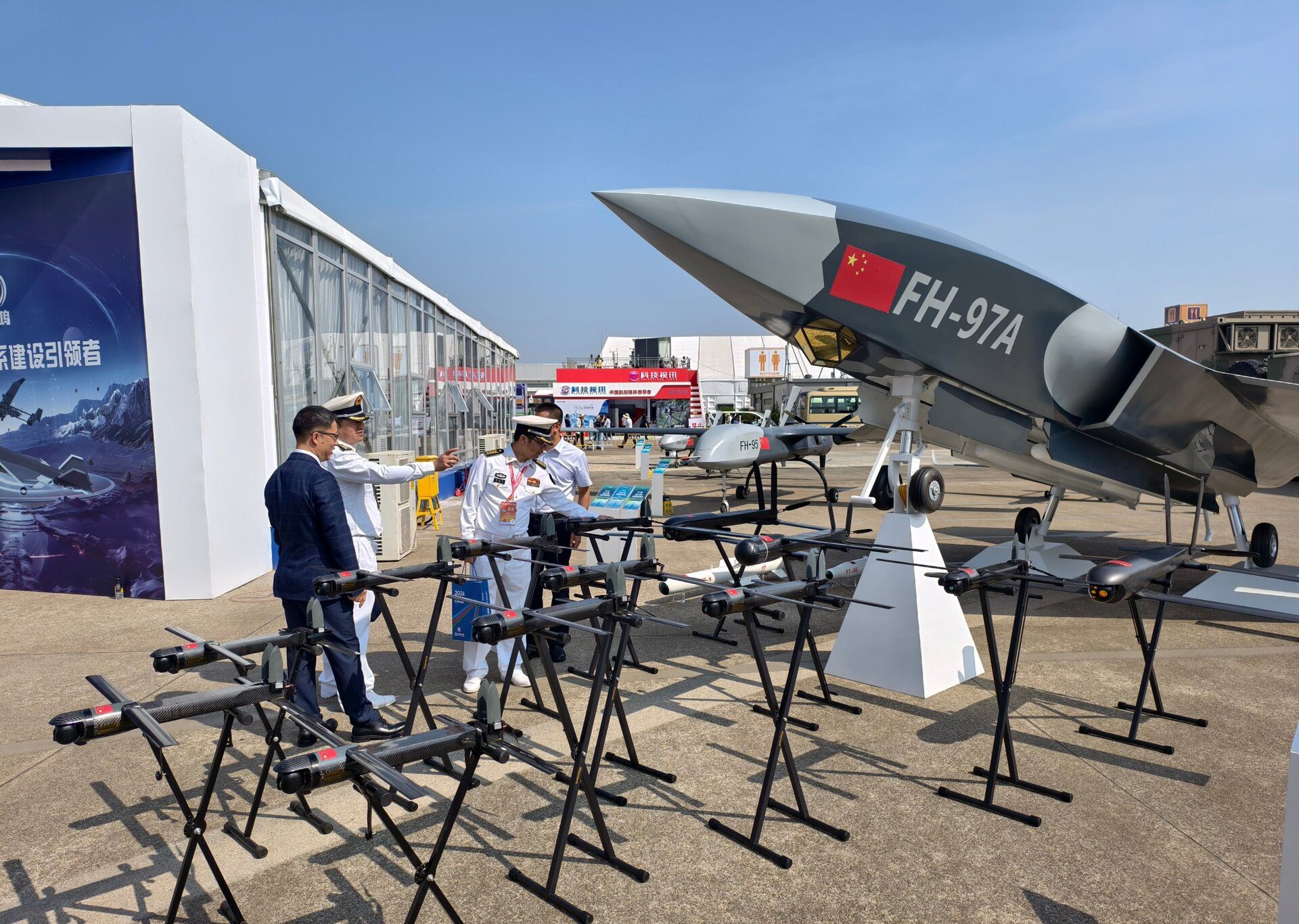
The focus is on dual-use technologies: AI, semiconductors, quantum computing, advanced materials, aerospace, biotechnology and big data. China’s commercial drone industry, the largest in the world, gives the PLA a huge base of engineers and components. Commercial satellite constellations add imagery and communications, and leading universities, including the “Seven Sons of National Defence”, run classified research for the military.
Civilian assets, military roles
Fusion also applies to infrastructure and logistics. Civilian roll-on/roll-off ferries regularly practise carrying tanks and troops in amphibious exercises, airports and ports are built to military standards, and fishing fleets act as a maritime militia in the South China Sea.
Why the US is worried
Washington argues that military-civil fusion means Western investment, research partnerships and technology exports to China can end up strengthening the PLA. In response, the US has added hundreds of Chinese firms to export blacklists and lists of Chinese military companies, restricted chip exports and, from 2025, limited American investment in Chinese AI, semiconductor and quantum firms.
Does it work?
Results are mixed. Shipbuilding, drones and missiles show clear success, and China’s industrial scale is a huge advantage over the US. But fusion also suffers from bureaucracy, corruption scandals in the PLA’s procurement system and reluctance among some private firms. Still, the strategy’s overall direction is clear: China intends to mobilise its whole economy, not just its defence industry, for military competition.
Featured image: Húrin / CC0, via Wikimedia Commons