Russia’s Weapons Production: How Many Tanks, Missiles and Drones Does It Build?
Russia’s defense industry now turns out more than 200 cruise and ballistic missiles and several thousand long-range strike drones every month, and produced about 7 million artillery rounds in 2025, according to Ukrainian and Estonian intelligence. Output of most weapons is several times higher than before the invasion of Ukraine, paid for by a military budget that absorbs more than 7% of national income.
None of these figures is published by Moscow. This guide gathers the best available estimates as of October 2026, shows where production has grown most and explains the limits the industry is now running into.
A war economy in numbers
Military spending reached $190 billion in 2025, or 7.5% of GDP, according to SIPRI, and the German Institute for International and Security Affairs calculated that in the first half of 2026 the military absorbed 43.8% of all federal spending. The background is in our guide to Russia’s military budget.
That money has bought capacity. Plants run in two or three shifts, the state conglomerate Rostec and its subsidiaries have added production lines, and the defense sector employs more than 3.5 million people by the government’s own account. The main companies are profiled in our Rostec company profile.
Missile production
Missiles show the sharpest growth. Ukraine’s military intelligence agency (HUR) estimated in mid-2026 that Russia was building more than 200 long-range missiles a month, against a few dozen before 2022. The Iskander-M and the Kh-101 account for most of the total, while hypersonic types remain scarce and expensive. Individual systems are described in our overview of Russia’s missiles.
| Missile | Type | Output per month | Estimated stock |
|---|---|---|---|
| Iskander-M | Ballistic | 50–65 | About 130 |
| Kh-101 | Air-launched cruise | 60–87 | About 100 |
| Kalibr | Sea-launched cruise | About 20 | About 450 |
| Oniks | Supersonic anti-ship | About 5 | About 600 |
| Kinzhal | Air-launched ballistic | About 5 | About 50 |
| Zircon | Hypersonic cruise | About 3 | About 120 |
Low stocks of the most-used types show that missiles are fired almost as fast as they are made. Production of air-defense interceptors has also been expanded, with more than 480 missiles for the S-400 planned for 2026, according to the same source.
Drone production
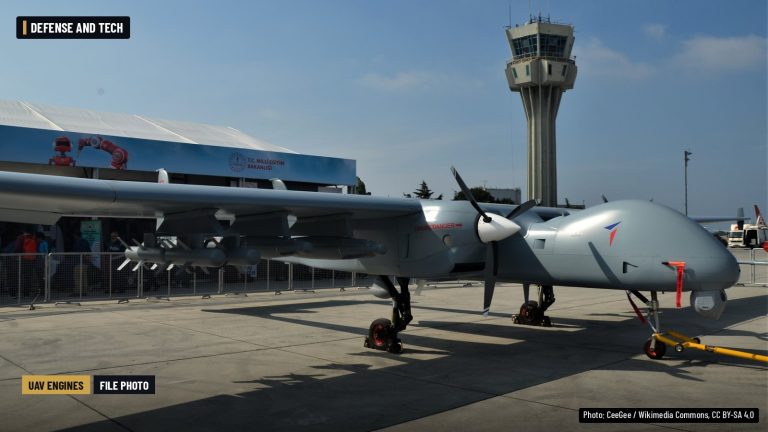
Drones are the area in which Russia started from almost nothing. The Alabuga plant in Tatarstan and a second site in Izhevsk now build Geran strike drones at a rate Ukrainian intelligence put at about 5,500 a month in spring 2026, with jet-powered versions making up a growing share by late summer. HUR counted 6,200 in stock in August 2026. The design is explained in our Shahed-136 and Geran-2 guide.
At the tactical level the numbers are far larger. Ukraine’s commander-in-chief said in March 2026 that Russian industry was making more than 19,000 FPV drones a day, a plan of roughly 7 million a year. Both programs depend on imported engines, electronics and cameras, most of them Chinese. The full range is covered in our guide to Russia’s military drones.
Tanks and armored vehicles
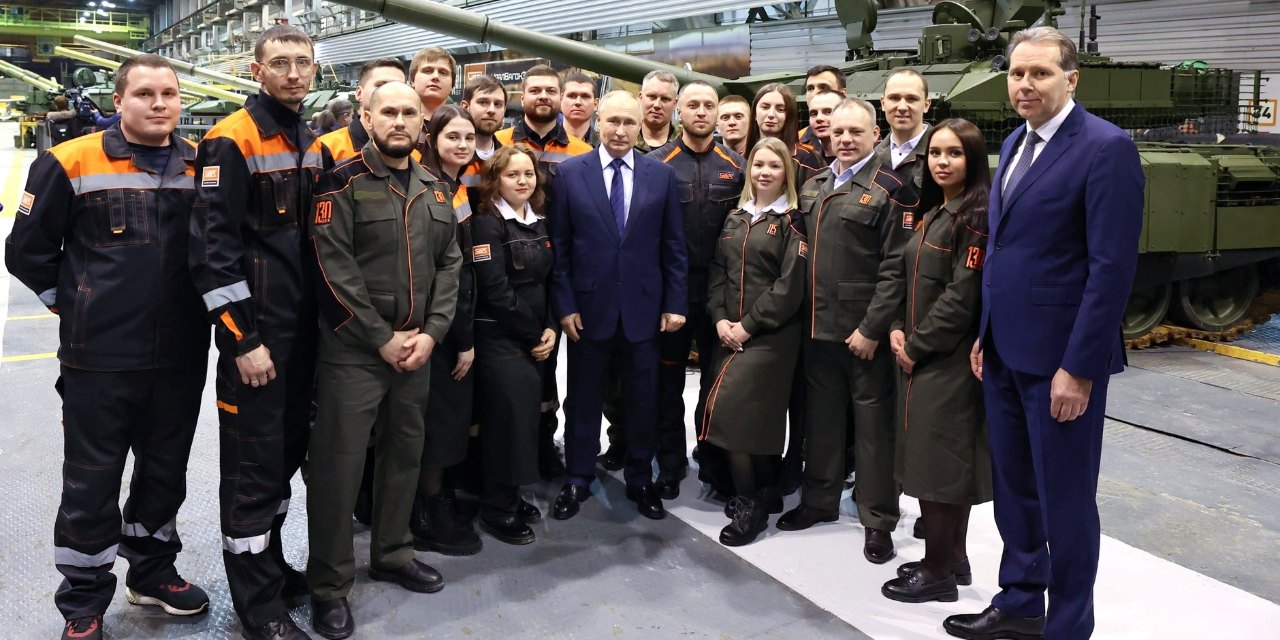
Heavy armor has grown least. Internal documents from Uralvagonzavod obtained by the research group Frontelligence Insight indicate that about 240 T-90M tanks were delivered in 2024, counting both new hulls and modernized older tanks, with a similar figure expected for 2025. The same documents show a plan for at least 1,783 T-90M and T-90M2 tanks between 2026 and 2036, peaking at 428 in 2028.
| Vehicle | Output per year | Source |
|---|---|---|
| T-90M tank, new and modernized | About 240 | Frontelligence Insight |
| BMP-3 infantry fighting vehicle | About 400 | Jakub Janovsky |
| BTR-82 armored personnel carrier | About 500 | Jakub Janovsky |
These numbers are well below annual losses, which is why refurbishing Soviet-era vehicles mattered so much and why its end matters now: open-source counts in June 2026 found 72% of stored tanks already withdrawn. See how many tanks Russia has, our T-90M guide and our Uralvagonzavod profile.
Artillery ammunition and bombs
Estonia’s foreign intelligence service estimated in February 2026 that Russia produced about 7 million artillery rounds of all kinds in 2025, including 3.4 million howitzer shells, compared with roughly 400,000 rounds in 2021. It also put imports from North Korea and Iran at 5–7 million rounds since 2022. That is several times the combined output of the United States and Europe, as noted in our Russia vs NATO comparison.
The bottleneck is no longer shells but barrels, which wear out and are harder to make; many guns at the front have been rebuilt with barrels taken from stored weapons, as described in our guide to Russian artillery. Production of UMPK glide-bomb kits has risen fastest of all, enough to support the record 8,766 bombs dropped in August 2026.
The limits: labor, components and money
Three constraints are visible. The first is labor: unemployment is at record lows, the army and the factories compete for the same men, and wages in the defense sector have risen sharply. The second is technology. Machine tools, microchips and optics still come largely from abroad, now mainly from or through China, which leaves production exposed to export controls and to price increases by intermediaries.
The third is money. The government raised value added tax to 22% in January 2026 to help cover the deficit, interest rates remain high and many defense firms are heavily indebted. Ukrainian long-range strikes on plants and refineries add disruption. Russia can sustain current output for now; raising it much further would mean taking still more from the civilian economy.
Frequently asked questions
How many missiles does Russia produce per month?
Ukrainian military intelligence estimated more than 200 cruise and ballistic missiles a month in mid-2026, including 50–65 Iskander-M and 60–87 Kh-101 missiles. Russia does not publish production figures.
How many tanks does Russia build each year?
Leaked factory documents point to about 240 T-90M tanks a year, counting both newly built and modernized vehicles. Plans show production rising to more than 400 in 2028.
How many artillery shells does Russia make?
Estonian intelligence put Russian output at about 7 million rounds of all types in 2025, including 3.4 million howitzer shells, up from around 400,000 in 2021.
How many drones does Russia produce?
Estimates in 2026 point to about 5,500 Geran long-range strike drones a month and more than 19,000 FPV drones a day, according to Ukrainian officials.
Can Russia keep up this level of production?
For the time being, yes, but at rising cost. Labor shortages, dependence on imported components and budget pressure limit further growth, and reserves of Soviet-era equipment that supplemented new production are close to exhausted.
- Frontelligence Insight – Inside Russia’s 2026–2036 tank production plans: frontelligence.substack.com
- Estonian Foreign Intelligence Service – International Security and Estonia 2026: valisluureamet.ee
- Kyiv Independent – Ukraine’s HUR reveals size of Russia’s Geran attack drone stockpile: kyivindependent.com
- German Institute for International and Security Affairs (SWP) – analysis of Russian federal budget spending, 2026: swp-berlin.org
- SIPRI – Trends in World Military Expenditure, 2025: sipri.org