How Strong Is Greece’s Military in 2026?
Greece is a small country with a big military. For decades tensions in the Aegean and Eastern Mediterranean have pushed Athens to spend far more on defence, as a share of its economy, than almost any other European country. Under a long-term plan called Agenda 2030, the Hellenic Armed Forces are now going through their most ambitious modernisation in a generation. Here is how strong they are in 2026.
- Global Firepower 2026 rank: 30th
- Defence spending around 3% of GDP, among NATO’s highest
- About 140,000 active personnel and 12-month conscription
- 24 Rafales in service, 20 F-35As on order
- New FDI HN Belharra frigates and Achilles Shield air defence
Budget and ranking
Greece spends around 3 percent of GDP on defence, one of the highest ratios in NATO, even through years of economic crisis. Global Firepower ranks it 30th in the world in 2026, but its air force and navy are considerably stronger than that number suggests, especially in its own region.
Manpower
The armed forces have around 140,000 active personnel, backed by a large reserve. Greece keeps compulsory military service, generally 12 months for most conscripts, and many units are stationed on the Aegean islands close to the Turkish coast.
Air force: Rafale, Vipers and F-35s
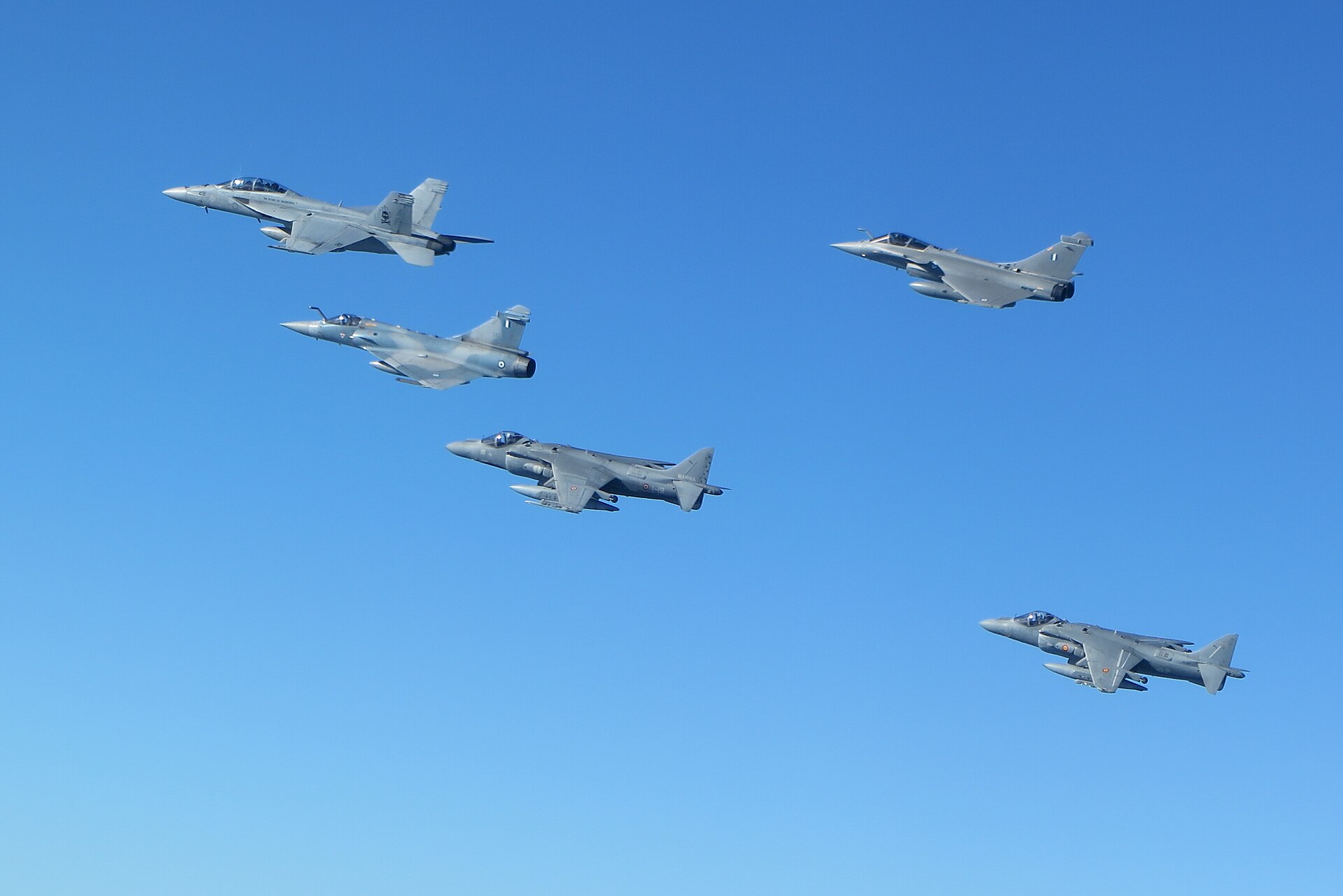
The Hellenic Air Force is the backbone of Greek deterrence. It operates 24 Dassault Rafales, has upgraded more than 80 F-16s to the Block 72 Viper standard and still flies Mirage 2000-5s. In 2024 Greece signed for 20 F-35A Lightning IIs, with deliveries expected from the end of the decade, making it one of the first countries in south-east Europe with fifth-generation fighters.
Navy: Belharra frigates and submarines
The navy is receiving three French FDI HN frigates, known as Belharra class, with powerful radars and Aster missiles; the first, Kimon, is entering service. Four Type 214 Papanikolis-class submarines with air-independent propulsion give Greece a strong underwater force, and a programme to upgrade its MEKO frigates is under way.
Achilles Shield and drones
In 2025 Athens unveiled Achilles Shield, a multi-layer air and missile defence network meant to protect the mainland and islands against aircraft, missiles and drones. Greece has also developed a domestic counter-drone system, Centaur, which was deployed on a Greek frigate in the Red Sea. A new defence innovation centre is meant to bring more of the country’s engineers into military projects.
Strengths and weaknesses
Greece’s strengths are a modern air force, a capable submarine fleet and strong political commitment to defence. Its weaknesses are a smaller defence industry than its rivals, ageing army equipment such as older Leopard tanks and M113 carriers, and the challenge of staffing a large conscript army as the population ages. Even so, by the end of the decade Greece will field one of the most modern militaries in southern Europe.
Featured image: U.S. Navy photo / Public domain, via Wikimedia Commons