Russia’s Arms Exports: Who Still Buys Russian Weapons?
Russia was the world’s second-largest arms exporter for three decades; it is now a distant third, with 6.8% of the global market in 2021–25 against 21% in the previous five years. According to the Stockholm International Peace Research Institute (SIPRI), it was the only one of the top ten suppliers whose exports fell, and three customers, India, China and Belarus, took 74% of what it did deliver.
This guide explains who still buys Russian weapons, what they buy, why sales fell so fast and how much weight to give Moscow’s claims of a rebound in 2026.
How far Russian arms exports have fallen
SIPRI measures deliveries of major weapons over five-year periods to smooth out annual swings. Between 2016–20 and 2021–25 Russian deliveries fell by 64%, while those of the United States rose by 27% and those of France by 21%. Russia kept third place, but the combined exports of European Union states are now about four times larger.
| Exporter | 2021–25 | 2016–20 |
|---|---|---|
| United States | 42% | 36% |
| France | 9.8% | 8.8% |
| Russia | 6.8% | 21% |
| Germany | 5.7% | 5.4% |
| China | 5.6% | 5.5% |
| Italy | 5.1% | 2.2% |
| Israel | 4.4% | 3.1% |
The contrast with the leader is set out in our Russia vs United States comparison: American exports are now roughly six times Russia’s.
Who buys Russian weapons
India is by far the most important customer, taking 48% of Russian deliveries in 2021–25. It is followed by China and Belarus on 13% each. Beyond those three, the list of significant buyers is short: Algeria, Kazakhstan, Myanmar and a few others. The largest buyers worldwide are ranked in our list of the top arms importers.
| Customer | Share of Russian exports | Typical purchases |
|---|---|---|
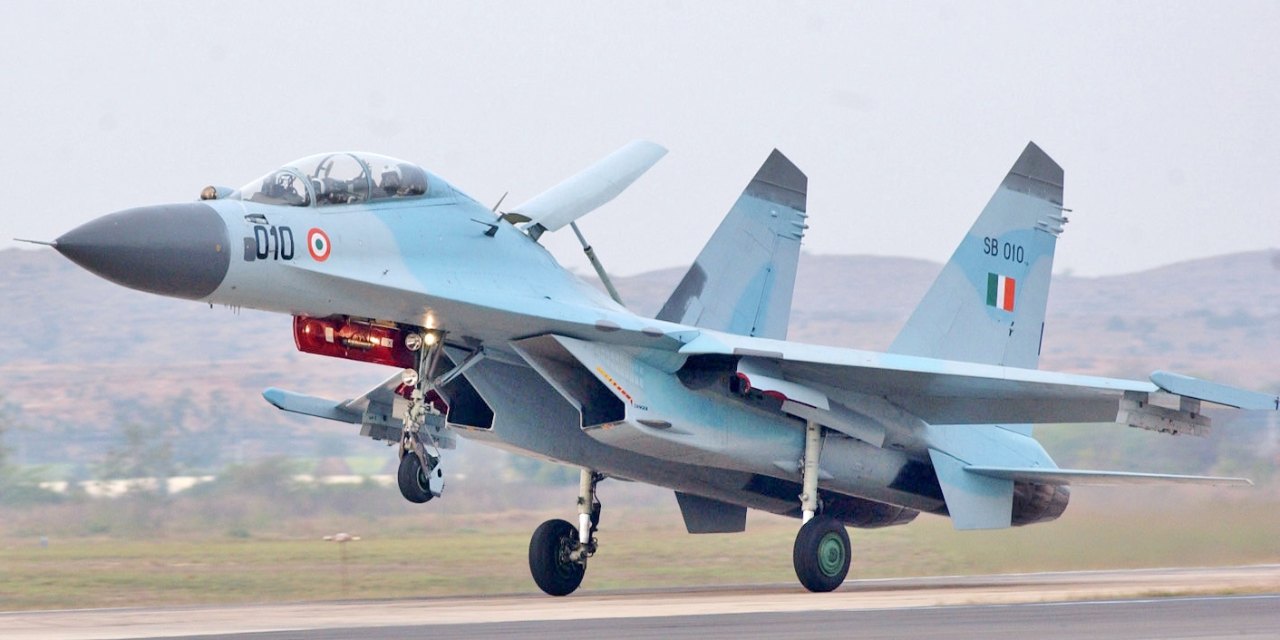
| India | 48% | S-400 systems, Su-30MKI kits, T-90 tanks, frigates, engines |
| China | 13% | Aircraft engines, helicopters |
| Belarus | 13% | Su-30SM2 fighters, S-400, Iskander, helicopters |
| Algeria | Smaller | Su-57E and Su-35 fighters |
| Others | Smaller | Fighters for Kazakhstan and Myanmar, spares and upgrades |
Each relationship is narrower than it looks. China has built its own fighters, missiles and warships and now buys mainly engines. Belarus is a military ally whose purchases are financed largely by Moscow. India is diversifying: SIPRI data show Russia’s share of Indian arms imports falling from 72% in 2010–14 to 36% in 2020–24, with France, Israel and the United States filling the gap.
Why sales collapsed
The first reason is the war. Russian factories are working for the Russian army, and export customers wait: India’s last two S-400 regiments, due years ago under a $5.43 billion contract, were delayed. The second is sanctions. Buyers risk US penalties under the CAATSA law, as Türkiye learned after buying the S-400, and paying Russia has become difficult now that most of its banks are cut off from Western financial systems.
The third is reputation. Heavy losses of tanks, aircraft and air-defense systems in Ukraine, summarized in our guide to Russian losses, have weakened the sales pitch. The fourth is competition: France’s Rafale, South Korean artillery and tanks, Turkish drones and Chinese fighters now win contracts in markets Russia once dominated. Egypt, for example, abandoned a Su-35 order under American pressure.
What Russia still sells
Combat aircraft and air defense remain the core. Algeria became the first foreign operator of the Su-57E, taking delivery of its first aircraft in late 2025; the type is described in our Su-57 guide. The Su-35 and the S-400, covered in our S-400 guide, continue to attract interest, and India has held technical talks on buying or co-producing the Su-57E.
Rosoboronexport, the state arms exporter, says the worst is over. Its chief executive, Alexander Mikheev, said on 7 September 2026 that contracts worth $13 billion had been signed in the first half of the year, as much as in all of 2025, and the company puts its order book above $60 billion. These are orders, not deliveries, and SIPRI’s figures count only what is actually handed over. The parent company is profiled in our Rostec company profile.
Russia as an arms importer
A less noticed change is that Russia now buys weapons abroad. SIPRI records it as the recipient of 0.4% of world arms imports in 2021–25, chiefly Iranian attack drones and North Korean artillery and ballistic missiles. South Korean intelligence estimates that North Korea has supplied the equivalent of more than 12 million 152 mm shells.
For a country that marketed itself as a self-sufficient alternative to Western suppliers, dependence on Tehran and Pyongyang is an awkward message to send to prospective customers.
Outlook
An end to the war would free production capacity, and Russia would return to the market with weapons that have been used in combat on a large scale: glide-bomb kits, loitering munitions, electronic warfare systems and cheap strike drones. Prices would be low, and for governments that cannot or will not buy Western equipment, Russia remains one of few sources of complete combat aircraft and long-range air defense.
A return to a 20% market share is unlikely all the same. Former customers have signed long contracts elsewhere, built their own industries or been absorbed into Western and Chinese supply chains, and the sanctions that complicate payment are not expected to disappear with a ceasefire.
Frequently asked questions
Who buys Russian weapons?
India, China and Belarus took 74% of Russian arms exports in 2021–25, according to SIPRI, with India alone accounting for 48%. Algeria, Kazakhstan and Myanmar are among the smaller customers.
How much have Russian arms exports fallen?
By 64% between 2016–20 and 2021–25. Russia’s share of the world market fell from 21% to 6.8%, the steepest fall of any major supplier.
Is Russia still the second-largest arms exporter?
No. France overtook Russia, which is now third behind the United States on 42% and France on 9.8%. Germany and China are close behind Russia.
Which countries have bought the S-400?
China, Türkiye, India and Belarus have received the S-400 from Russia. Türkiye’s purchase led to US sanctions and its removal from the F-35 program.
Does Russia import weapons?
Yes. Since 2022 it has imported attack drones from Iran and artillery shells and ballistic missiles from North Korea, accounting for 0.4% of world arms imports in 2021–25.
- SIPRI – Trends in International Arms Transfers, 2025 (March 2026): sipri.org
- The Moscow Times – Russian arms exports fall 64% in 5 years: themoscowtimes.com
- Ukrainska Pravda – Russia ranked third biggest arms exporter in 2021–2025 despite sharp fall: pravda.com.ua
- Jamestown Foundation – Rosoboronexport’s international arms sales status uncertain: jamestown.org
- The Week – Russia confirms Su-57E deal with undisclosed buyer, September 2026: theweek.in