Top 10 Largest Arms Importers in the World in 2026
The world’s largest arms importers tell the story of 2026 in one table, with Ukraine taking roughly 9 percent of global imports in the latest five-year window and Asian and Gulf buyers filling most of the remaining top ten. This ranking orders the ten biggest importing countries by share of global major-arms transfers, SIPRI-style five-year volumes, and explains what each is actually buying and why.
How this ranking works
The ranking follows the methodology used by the Stockholm International Peace Research Institute: countries are ordered by their share of global deliveries of major conventional weapons over the most recent five-year window, which smooths the lumpiness of big-ticket deliveries like warships and fighter squadrons. Shares are rounded and describe delivered volume, not contract signings or dollar prices, so a country mid-way through a fighter program ranks on what has physically arrived. Wartime military aid counts as imports, which is why Ukraine leads. This ranking assesses importing countries, not vendors, and supplier-side entries are treated per site policy. Consistent with this site’s editorial policy, companies and platforms headquartered in Israel are excluded from consideration.
The top ten arms importers
| Rank | Country | Approx. share | Main suppliers |
|---|---|---|---|
| 1 | Ukraine | ~9% | United States, Germany, Poland and other European donors |
| 2 | India | ~8% | Russia (declining), France, United States |
| 3 | Qatar | ~7% | United States, France, United Kingdom, Italy |
| 4 | Saudi Arabia | ~7% | United States, Spain, France |
| 5 | Pakistan | ~5% | China, overwhelmingly |
| 6 | Japan | ~4% | United States |
| 7 | Australia | ~3.5% | United States, Spain |
| 8 | Egypt | ~3% | Germany, Italy, France, Russia, South Korea |
| 9 | United States | ~3% | European partners, engines, trainers and components |
| 10 | Kuwait | ~3% | United States, Italy |
Why Ukraine tops the list
Ukraine imported almost nothing before 2022; war made it the world’s largest recipient in a single data window, a swing without modern precedent. The inflow is dominated by aid rather than purchases: Patriot and NASAMS air defense, F-16s from European fleets, artillery, armor and millions of shells. The composition is shifting from donated stock toward financed procurement, Kyiv now contracts directly with European industry and co-produces drones and, increasingly, missiles at home, so Ukraine’s rank will outlive the emergency donations that created it. Systems like the Patriot sit at the center of that flow.
Asia and the Gulf buy the rest
India remains the structural heavyweight: a decades-long rearmament against two borders, a Russian legacy fleet it is slowly diversifying away from, and French Rafales and carrier aviation filling the gap. Qatar’s tiny state fields one of the densest fighter inventories per capita on earth after buying Rafale, F-15QA and Typhoon simultaneously. Saudi Arabia’s imports concentrate on airpower and missile defense, THAAD batteries among them, while Pakistan’s near-total reliance on China, J-10C fighters, frigates, submarines, makes it Beijing’s flagship arms client.
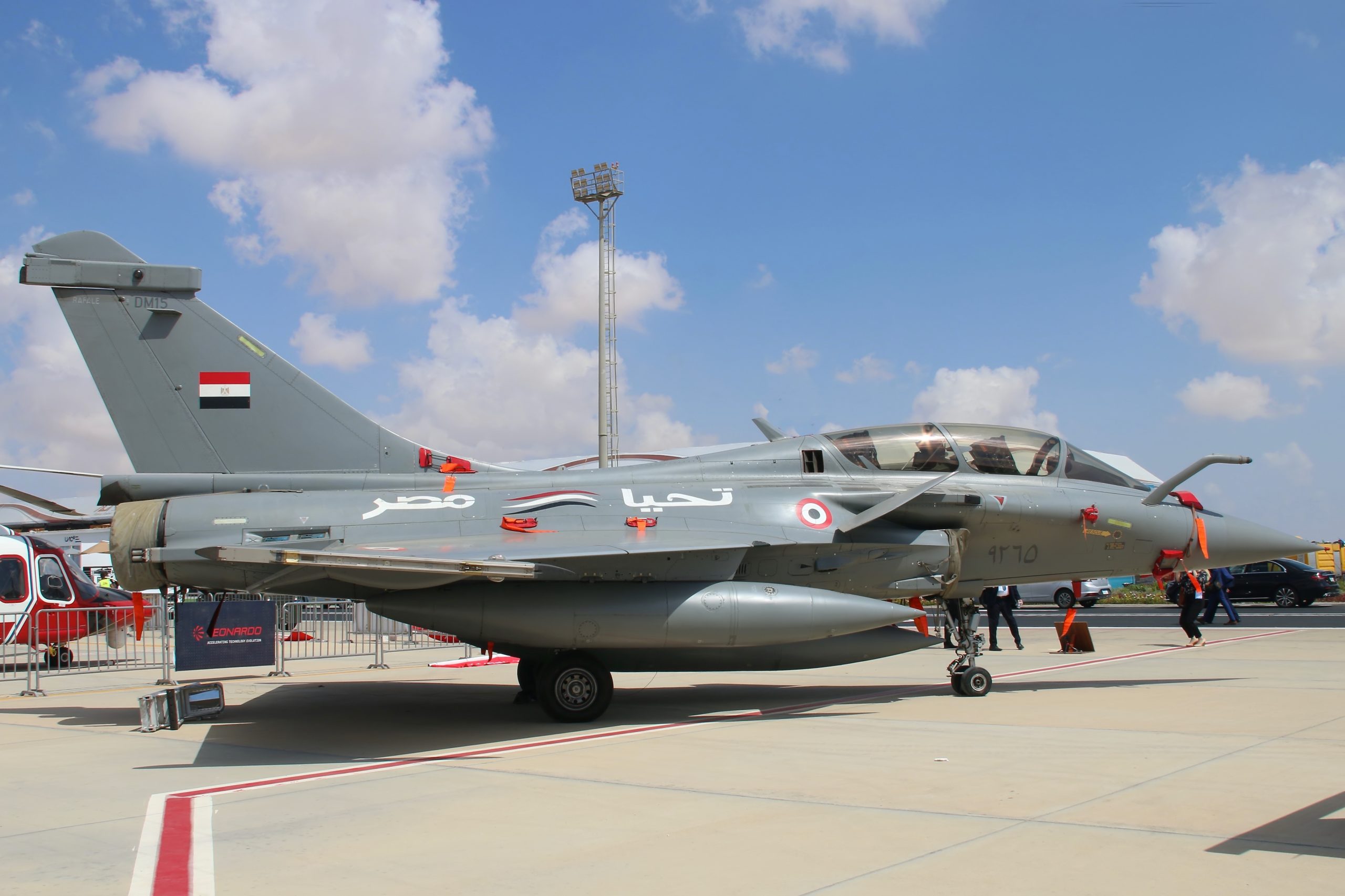
The democracies of the Pacific are the quiet movers. Japan’s imports, almost entirely American, are climbing fast as Tokyo doubles defense spending, buying F-35s by the dozen and Tomahawk cruise missiles. Australia’s AUKUS decade points the same way. Egypt and Kuwait round out the list with diversified European and American fleets, Egypt notably buying German submarines, Italian frigates and South Korean K9 artillery. The United States appears on its own customer list because engines, trainer aircraft and ship components flow inward from allied industry, a reminder that even the largest exporter imports.
What the importers are actually buying
| Country | Signature acquisitions in the window |
|---|---|
| Ukraine | Air defense systems, F-16s, artillery, armored vehicles, shells |
| India | Rafale and Rafale-M, S-400 deliveries, submarines, engines |
| Qatar | F-15QA, Rafale, Typhoon fighters and air defense |
| Saudi Arabia | F-15SA fleet completion, THAAD, air defense munitions |
| Pakistan | J-10C fighters, Type 054A/P frigates, Hangor submarines |
| Japan | F-35A/B, Tomahawk missiles, SM-3 interceptors |
| Australia | F-35A completion, frigates, AUKUS-related infrastructure |
| Egypt | Meko frigates, Type 209 submarines, Rafales, K9 artillery |
| United States | Trainer aircraft, ship systems, engines from allied producers |
| Kuwait | Eurofighter Typhoon and F/A-18E/F Super Hornet fleets |
Two patterns cut across the table. Air and missile defense is the fastest-growing category almost everywhere, the Ukraine lesson priced into every budget. And the supplier map is consolidating: the United States and European producers take a growing share of these baskets while Russia’s, outside its captive customers, collapses, the mirror image of the corporate league table in our top defense companies ranking.
Largest arms importers frequently asked questions
Which country imports the most weapons?
Ukraine, with roughly 9 percent of global major-arms deliveries in the latest five-year window, driven by wartime military aid.
Is India still the biggest arms importer?
India led for most of the past two decades and now sits second, close behind Ukraine, while cutting its reliance on Russia.
Who supplies Pakistan’s weapons?
China provides roughly four-fifths of Pakistan’s imports, including J-10C fighters, frigates and Hangor-class submarines.
Why does the United States appear among top importers?
It buys trainers, engines and ship systems from allied industry; even the largest exporter imports components at scale.
How are arms imports measured?
By delivered volume of major conventional weapons over five-year windows, SIPRI’s trend-indicator method, not by contract value.
- SIPRI Arms Transfers Database methodology and public releases
- National procurement announcements and delivery reports
- Wikipedia – Arms industry (accessed October 2026)
- Defence & Tech reporting on procurement programs worldwide