Turkey’s DASAL to Arm Nigeria With 100,000 Loitering Munitions
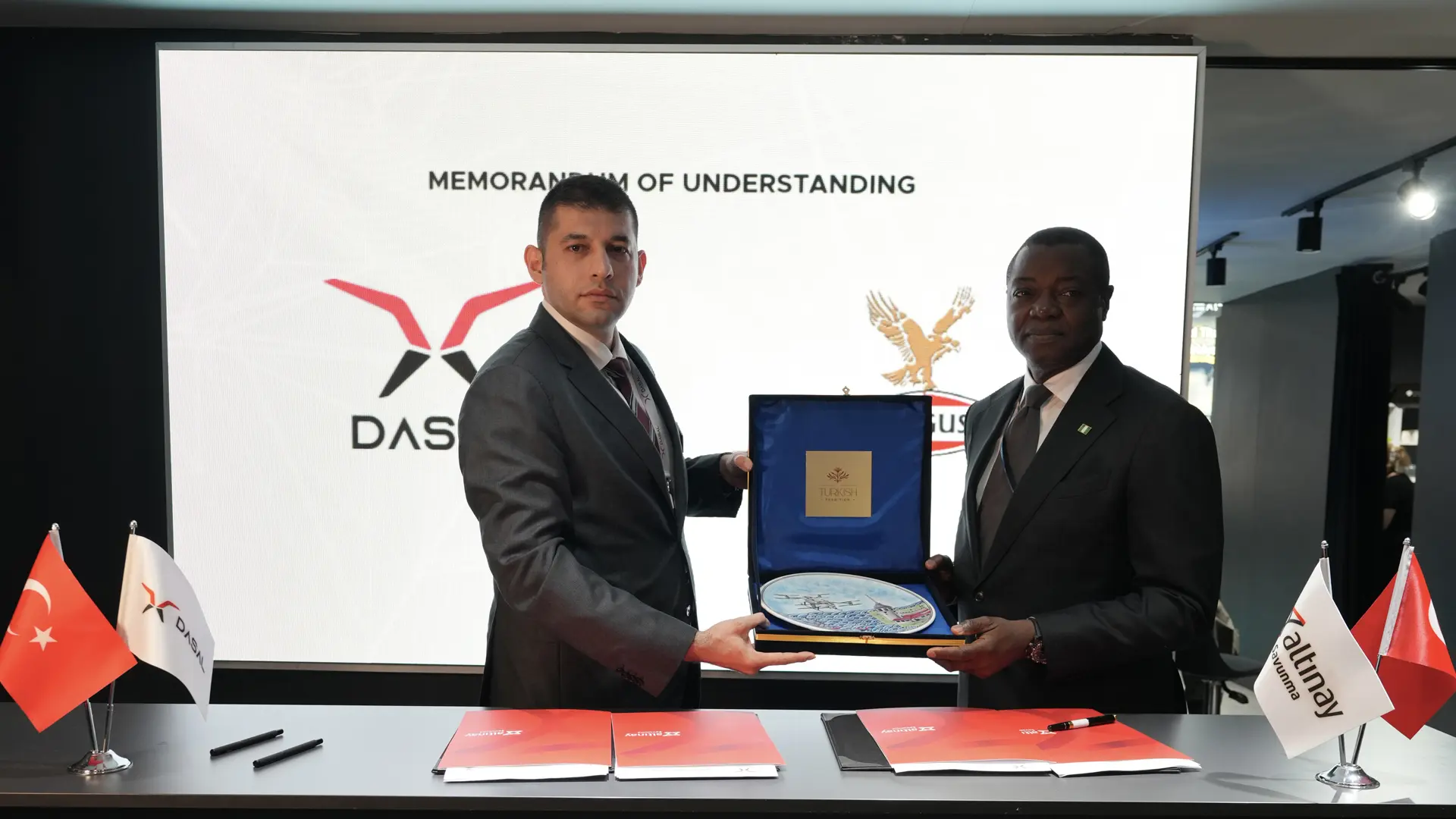
Turkish unmanned-systems manufacturer DASAL Aviation Technologies and Nigerian investment firm NIGUS International Investment Limited have signed a framework agreement to supply and, eventually, locally assemble as many as 100,000 MIKON loitering munitions in Nigeria, according to DASAL’s own statement on the deal. The agreement, struck at SAHA Expo 2026 in Istanbul in May, has since been folded into a broader Ankara-Abuja push to convert a growing arms-trade relationship into joint production on Nigerian soil — a shift Nigerian officials made explicit at a defense-industry forum in Abuja in late August.
What Happened
DASAL and NIGUS signed what both sides describe as a “Supply, Local Assembly, and Conditional Technology Cooperation Framework Agreement” during SAHA Expo 2026, Turkey’s largest defense-industry trade fair, held in Istanbul in May. Under the framework as DASAL has publicized it, the package covers up to 100,000 MIKON loitering munitions, 200 FALCON R556 rifle-mounted multirotor systems, and 100 PUHU-series cargo UAVs (the C75 and C100 variants) intended to resupply forward operating bases. NIGUS is named as the Nigerian-side coordinator responsible for building local assembly, system-integration, and maintenance, repair and overhaul (MRO) capacity inside Nigeria rather than importing complete rounds indefinitely.
No Nigerian government agency has independently confirmed the unit numbers or disclosed a contract value, and DASAL’s own release does not specify a delivery timeline. The figures above should be read as the manufacturer’s stated scope, not a verified government procurement record.
The deal resurfaced in a more official context on August 26, when Nigeria and Türkiye held the 7th Defence Industry Cooperation Committee (DICC) meeting at the Defence Industry Business Forum in Abuja. Nigeria’s Minister of Defence, Gen. Christopher Gwabin Musa (retd.), told the forum the two countries needed to move “beyond a predominantly buyer-seller relationship,” framing continued drone purchases as pointless unless Nigerian personnel can sustain and improve the equipment themselves. Minister of State for Defence Dr. Bello Mohammed Matawalle said policy commitments “must become working factories and production lines,” while Maj. Gen. Babatunde Ibrahim Alaya, Director-General of the Defence Industries Corporation of Nigeria (DICON), argued that combining Turkish technical expertise with Nigerian labor was where the real value lay. Gökhan Uçar, Vice President of Türkiye’s Presidency of Defence Industries, led the Turkish delegation. Military Africa’s reporting on the forum, which it updated on October 4, links the meeting’s language directly to the earlier DASAL-NIGUS supply package, though it does not explicitly name the May agreement as “the” drone contract referenced in the forum coverage — the connection is implied by timing and context rather than stated outright by either government.
The Product/System
DASAL Aviation Technologies is a privately held Turkish unmanned-systems manufacturer whose product line spans fixed-wing and multirotor platforms, loitering munitions, and logistics drones. Public technical detail on the MIKON loitering munition itself is limited: DASAL’s own marketing material names it as part of the package but, unlike several of the company’s other platforms, does not publish specifications or imagery for it. The FALCON R556 is described as a rifle-mounted multirotor system, while the PUHU C75 and C100 are twin cargo-UAV variants the company positions for resupplying troops at forward bases without road convoys — a relevant capability given the ambush risk convoys face in Nigeria’s northeast and northwest.
Who Uses It
Nigeria, through NIGUS, is the only operator named in connection with this framework agreement, and even that status is prospective: the agreement covers future supply and local assembly, not confirmed deliveries. No independent reporting identifies another confirmed MIKON operator. General Musa’s own framing at the August forum — questioning whether Nigeria can “sustain and improve” imported systems — underscores that operational fielding, as distinct from the signed framework, has not been independently documented.
Export/Procurement History
The DASAL-NIGUS framework sits inside a fast-expanding Turkey-Nigeria defense relationship. President Bola Ahmed Tinubu signed a Defence Cooperation Agreement covering nine accords, including training and intelligence sharing, in Ankara on January 27, 2026. Turkey has separately provided counterterrorism training to more than 200 Nigerian special-forces personnel, and Turkish Aerospace Industries agreed in 2022 to supply six T129 ATAK attack helicopters to Nigeria. At SAHA Expo 2026, the DICON-D7G joint venture displayed indigenous infantry equipment and armored vehicles built with electronics-integration support from Turkish defense electronics firm ASELSAN, which separately told Nigerian officials in October it is scouting a local manufacturing partner. Türkiye has pursued a similar pattern elsewhere in the region, signing a military financial-cooperation agreement with Cameroon in June 2026.
Global Competitors
Nigeria’s loitering-munition shopping has not been exclusive to Turkey. Neighboring security forces in the Sahel and Horn of Africa have turned to a range of suppliers: Sudan’s army has received Pakistani Shahpar-2 drones, Chad has fielded Chinese CH-4 combat drones, and Ivory Coast operates Chinese Wing Loong II systems. Nigeria itself has also been building a domestic counter-drone capability, with local firm BabaSky unveiling an integrated counter-drone system to the army and air force in September. Baykar, DASAL’s larger and better-known Turkish competitor, remains the dominant Turkish UAV exporter across Africa with its Bayraktar TB2 and Akıncı lines, meaning DASAL’s Nigeria framework is as much a bid for market share against other Turkish suppliers as against non-Turkish ones. For context on how MIKON compares with other systems in this class, see our ranking of the world’s top loitering munitions in 2026.
Why It Matters
Nigeria’s military has spent much of the past two years absorbing large quantities of imported strike drones, trainer-attack jets and attack helicopters to confront ISWAP and Boko Haram in the northeast and banditry in the northwest, a reliance that leaves readiness hostage to foreign supply chains and foreign currency. A framework built around local assembly, integration and MRO — if it survives the transition from MoU language to a funded, delivered program — would mark a genuine shift from Nigeria as a pure drone importer toward a prospective regional manufacturing and maintenance hub serving the wider ECOWAS bloc. For Türkiye, it extends a defense-export strategy that has already made it one of the most visible foreign suppliers to African militaries, competing directly with Chinese, Pakistani and domestic African producers for a market that is scaling up quickly but remains price-sensitive and politically fluid.
What Happens Next
The framework agreement’s next real test is whether it converts into a funded contract with a disclosed value and delivery schedule, and whether the local-assembly and MRO facilities the companies describe actually break ground in Nigeria. The August DICC meeting set a direction rather than a timeline; neither DASAL nor the Nigerian government has published one since. Evidence of physical production lines, a signed state-to-state contract, or a Nigerian Ministry of Defence confirmation of unit numbers would be the clearest indicators that the relationship has moved from framework to delivery.
FAQ
What exactly did DASAL and NIGUS sign?
A framework agreement covering supply, local assembly, and conditional technology cooperation for loitering munitions and cargo drones, signed at SAHA Expo 2026 in Istanbul in May 2026. It is not, on current public evidence, a funded state-to-state procurement contract.
How many loitering munitions is Nigeria actually getting?
DASAL’s own statement cites up to 100,000 MIKON units, plus 200 FALCON R556 systems and 100 PUHU cargo UAVs. No Nigerian government source has confirmed these figures or a dollar value, so they should be treated as the manufacturer’s stated scope rather than a verified order.
What is the MIKON loitering munition?
DASAL markets MIKON as part of its loitering-munition line, but the company has not published detailed specifications or imagery for the system, unlike several of its other platforms.
Is this connected to the January 2026 Turkey-Nigeria defense pact?
It sits within the same broader relationship. President Tinubu and Turkish officials signed a nine-accord Defence Cooperation Agreement in Ankara in January 2026, and the DASAL-NIGUS framework and the August DICC meeting both build on that foundation.
Will the drones be built in Nigeria or imported from Türkiye?
Both companies describe a phased plan: initial supply from Türkiye, followed by local assembly, integration and MRO capability built up inside Nigeria under NIGUS’s coordination. No facility opening has been confirmed yet.
Sources
- DASAL Aviation Technologies, “DASAL and NIGUS Sign Strategic Partnership at SAHA EXPO 2026,” company statement — dasal.com.tr. Primary source for deal scope, platform names and company quotes.
- Military Africa, “Nigeria and Turkey advance defence industrial ties,” published September 11, 2026, updated October 4, 2026 — military.africa. Source for the August 26 DICC meeting, official quotes, and background on the Turkey-Nigeria defense relationship.
- Military Africa, “Nigeria NIGUS signs MoU with Turkish DASAL Aviation Technologies,” published May 2026 — military.africa. Independent confirmation of the original May signing.
- Aerohaber, “Massive Defence Deal from DASAL to Nigeria: Export of 100,000 Kamikaze UAVs” — aerohaber.com. Secondary Turkish trade-press confirmation of unit figures.