AHS Krab, the Polish Howitzer Proven the Hard Way in Ukraine

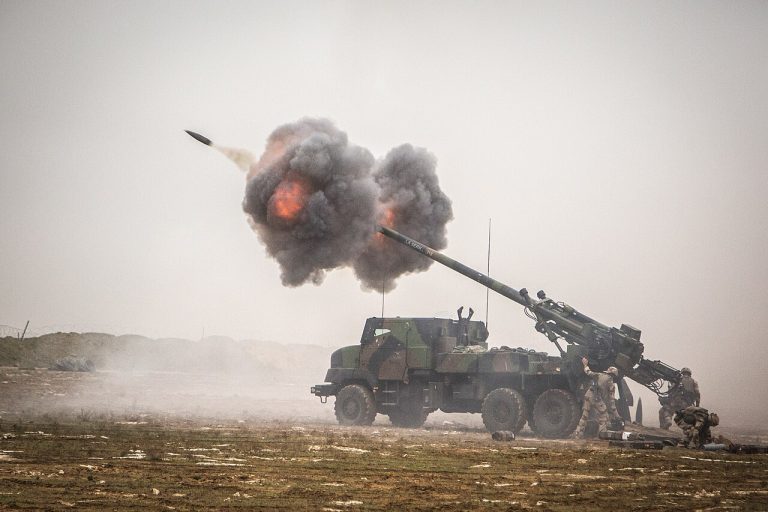
The AHS Krab is Poland’s 155mm self-propelled howitzer, a 48-ton hybrid that mates a British-designed turret to a South Korean chassis and has fired more rounds in anger than almost any Western-standard gun of its generation. Donated and then sold to Ukraine from 2022, the Krab turned a troubled domestic program into Poland’s biggest artillery export story.
AHS Krab at a glance
The Krab, Polish for crab, is built by Huta Stalowa Wola (HSW), the state-owned arms plant inside the PGZ group. It is the centerpiece of Poland’s Regina program, which fields Krabs in full battery modules with command vehicles, ammunition carriers and the Topaz fire control system. The design philosophy is pragmatic borrowing: a licensed turret derived from the British AS-90 Braveheart with a 52-caliber gun, mounted since 2015 on a licensed variant of the South Korean K9 chassis.
How Poland built the Krab
The program began in the 1990s and nearly died twice. The original Polish UPG-NG chassis suffered persistent hull and engine problems, and by 2014 HSW faced a choice between redesign and replacement. It chose replacement, licensing the chassis of the K9 Thunder from what is now Hanwha Aerospace, a platform whose global track record is covered in our K9 Thunder guide. The first K9-hulled Krabs entered Polish service in 2017, and the type finally matured into serial production.
The result is a genuinely trilateral weapon: British turret lineage, Korean running gear and Polish integration, electronics and manufacture. That heritage also explains why Poland later ordered K9s directly from Hanwha Aerospace to fill the gap left by guns sent to Ukraine.
AHS Krab specifications
| Specification | Value |
|---|---|
| Role | 155mm tracked self-propelled howitzer |
| Manufacturer | Huta Stalowa Wola (HSW), Poland |
| Combat weight | About 48 tonnes |
| Crew | 5 |
| Main gun | 155mm L52, derived from the AS-90 Braveheart turret design |
| Chassis | Licensed K9 Thunder hull with a 1,000-hp class diesel |
| Rate of fire | Up to about 6 rounds per minute, reported |
| Range | Roughly 30 km with standard shells, about 40 km with base bleed |
| Fire control | Polish Topaz automated fire control system |
| Speed / range | About 60 km/h on road, several hundred kilometers of endurance |
AHS Krab range and firepower
The 52-caliber barrel puts the Krab in the same class as the German PzH 2000 and the K9: roughly 30 kilometers with conventional projectiles and around 40 with base-bleed ammunition, with rocket-assisted rounds reaching further. The Topaz system links each gun to reconnaissance drones and forward observers, allowing a battery to fire, displace and disappear before counterbattery radar can answer, the shoot-and-scoot rhythm that Ukraine’s artillery war has made mandatory. Western tube artillery of this class complements, rather than replaces, rocket systems like HIMARS.
How has the Krab performed in Ukraine
Poland donated 18 Krabs to Ukraine in mid-2022, and Kyiv followed with an order for 54 more worth roughly $700 million, then the largest arms export contract in modern Polish history. Ukrainian crews have used the type continuously since, from the Kherson counteroffensive onward.
Operator-reported feedback has been largely positive: crews praise the Topaz fire control, the automation and the gun’s accuracy at long range, while noting the maintenance burden of a heavily used barrel and the vulnerability of any howitzer in the drone era. A number of Krabs have been confirmed lost to Lancet loitering munitions and glide bombs, operator-reported and documented in open-source imagery; attrition is the tax every gun pays on that front, not a verdict on the design. Reported Ukrainian requests for further batches suggest the users want more, not fewer.
Who operates the AHS Krab
| Operator | Status |
|---|---|
| Poland | Main operator; well over 100 ordered across Regina squadron modules, deliveries continuing |
| Ukraine | 18 donated in 2022 plus 54 ordered; additional batches discussed publicly |
AHS Krab frequently asked questions
What is the AHS Krab?
A Polish 155mm self-propelled howitzer built by Huta Stalowa Wola, combining an AS-90-derived turret with a licensed K9 Thunder chassis.
What is the range of the Krab howitzer?
Roughly 30 km with standard shells and about 40 km with base-bleed ammunition from its 52-caliber gun.
How many Krabs does Ukraine have?
Poland donated 18 in 2022 and Ukraine ordered 54 more; further batches have been publicly discussed.
Is the Krab based on the K9 Thunder?
Its chassis is a licensed K9 hull; the turret and gun derive from the British AS-90 Braveheart design, integrated in Poland.
How has the Krab performed in combat?
Ukrainian crews report good accuracy and fire control; losses to drones and glide bombs are operator-reported and typical for artillery on that front.
- Huta Stalowa Wola and PGZ program information
- Polish Ministry of National Defence statements on Regina and Ukraine deliveries
- Wikipedia – AHS Krab (accessed October 2026)
- Operator-reported accounts and open-source loss documentation from Ukraine
- Defence & Tech reporting on European artillery programs