Top 10 Arms Exporting Countries in the World in 2026
The United States sells roughly 43 percent of the world’s exported major weapons, more than the next four countries combined, and the rest of the 2026 top ten is being reshuffled by the Ukraine war, Asian rearmament and Europe’s scramble to rebuild. This ranking orders the ten largest arms-exporting countries by their share of global major-arms deliveries over the most recent five-year window.
How this ranking works
Rankings follow SIPRI-style trend data on deliveries of major conventional weapons, using each country’s share of global exports across the most recent five-year window, roughly 2020-2024, to smooth out single-year spikes. Shares are volume-based indicators of transferred military capability, not financial revenue, which is why they differ from contract-value headlines. One country that would otherwise hold a place in this table, with a share of roughly 3 percent, is excluded from the list below. Consistent with this site’s editorial policy, companies and platforms headquartered in Israel are excluded from consideration.
The top 10 arms exporters ranked
| Rank | Country | Share of global exports | Main customers |
|---|---|---|---|
| 1 | United States | ~43% | Saudi Arabia, Ukraine, Japan, Australia |
| 2 | France | ~9.6% | India, Qatar, Egypt |
| 3 | Russia | ~7.8% | India, China, Kazakhstan |
| 4 | China | ~5.9% | Pakistan, Bangladesh, Thailand |
| 5 | Germany | ~5.6% | Ukraine, Egypt, South Korea |
| 6 | Italy | ~4.8% | Qatar, Egypt, Kuwait |
| 7 | United Kingdom | ~3.6% | Qatar, Oman, United States |
| 8 | Spain | ~3.0% | Saudi Arabia, Türkiye, Australia |
| 9 | South Korea | ~2.2% | Poland, Philippines, India |
| 10 | Türkiye | ~1.7% | UAE, Qatar, Pakistan |
The order compresses quickly below the top. France’s near-10 percent rests heavily on Rafale fighters and submarines, Russia’s third place is a story of decline told below, and China’s share leans on one anchor client, Pakistan. Germany and Italy ride naval and air packages to the Middle East, Britain’s share flows largely through multinational programs like Typhoon, and Spain’s yards sell frigates and tankers worldwide. South Korea and Türkiye, the two newcomers, are the ranking’s momentum plays.
Why the US lead keeps growing
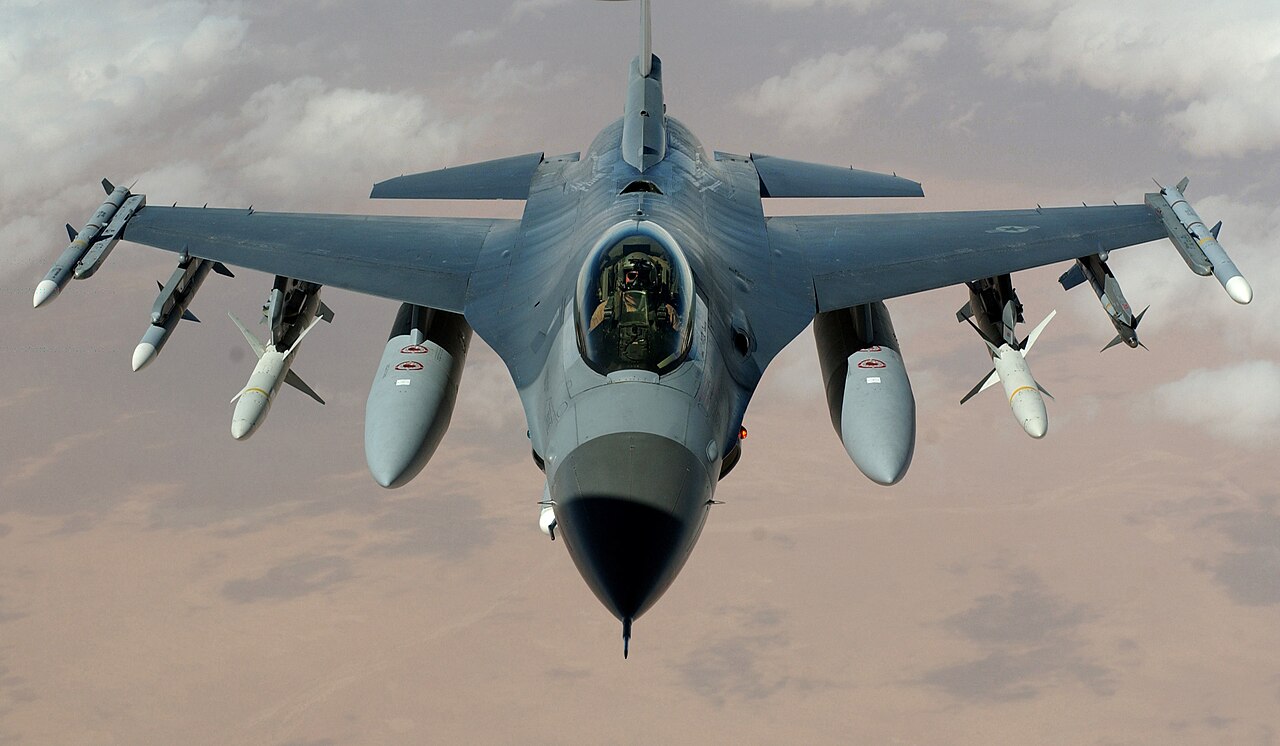
America’s share has climbed several points over the past decade for structural reasons. The F-35 program locks dozens of allies into decades of deliveries, Ukraine aid backfilled by new European orders pulled NATO procurement toward US lines, and the Lockheed Martin-led missile and air-defense complex is running multi-year backlogs, as any ranking of the world’s largest defense companies shows. Washington also treats arms transfers as alliance architecture, packaging training, sustainment and upgrades that keep customers inside the ecosystem for thirty years.
The risers, France, South Korea and Türkiye
France overtook Russia for second place on the strength of Rafale exports to India, Indonesia and the Gulf, exactly the unaligned-buyer market Moscow is losing. South Korea’s share understates its trajectory, the delivery pipeline from Poland’s K2 tank and K9 howitzer mega-deals will lift Seoul’s numbers through the late 2020s. Türkiye’s rise is the most dramatic in percentage terms, driven by Baykar drones, armored vehicles and a widening naval and missile catalogue selling from the Gulf to Central Asia.
| Country | Direction | Main driver |
|---|---|---|
| United States | Up | F-35 deliveries, Ukraine-driven European orders, air defense backlogs |
| France | Up | Rafale and submarine exports to India, Indonesia and the Gulf |
| Russia | Down sharply | War consumption, sanctions, client diversification |
| South Korea | Up | Poland package and growing Southeast Asian sales |
| Türkiye | Up | Drone, armored vehicle and naval exports |
Russia and the shrinking middle
Russia’s export share has roughly halved since the five-year window before the full-scale Ukraine invasion, its factories feeding the front rather than foreign customers, sanctions complicating payment and spares, and marquee systems’ battlefield reputations taking damage that manufacturer claims cannot repair. India, the anchor client, is visibly diversifying toward France, the US and its own industry. The middle of the table is tightening as a result, the gap between third and ninth place now spans barely five percentage points, and a single fighter or submarine deal can move a country two places between editions of this list.
Arms exporters frequently asked questions
Which country exports the most weapons?
The United States, with roughly 43 percent of global major-arms deliveries over the latest five-year window, about four times second-placed France.
Is Russia still a major arms exporter?
Yes, but diminished. Its share has roughly halved to about 7.8 percent as the Ukraine war absorbs production and clients diversify.
How is arms export share measured?
Rankings use SIPRI-style trend indicators, which track the volume of delivered major conventional weapons over five-year windows rather than contract values in dollars.
Why do five-year windows matter?
Deliveries of ships and aircraft are lumpy; a five-year average smooths spikes so shares reflect sustained export capacity rather than one big handover.
Which arms exporters are growing fastest?
South Korea and Türkiye in relative terms, with France the biggest gainer among the established top five.
- SIPRI Arms Transfers Database, trend-indicator data (2020-2024 window)
- Wikipedia – Arms industry and arms export rankings (accessed October 2026)
- Government export announcements and program reporting
- Defence & Tech reporting on the global arms trade