Turkey’s Air Defense Systems: Siper, Hisar, S-400 and Korkut
For most of the Cold War and three decades after it, Turkey defended its airspace with American missiles designed in the 1950s. That is changing fast. Since 2021 the armed forces have taken delivery of three Turkish missile systems, Hisar-A+, Hisar-O+ and the long-range Siper. They also still hold the Russian S-400 that cost Turkey its place in the F-35 programme.
This guide goes through each system: what it is, how far it reaches and how many Turkey has. The network that ties them together is covered in our guide to the Steel Dome.
What air defense systems does Turkey have?
Six Turkish systems, one Russian and three old American ones.
| System | Origin | Type | Range | Status |
|---|---|---|---|---|
| Siper Block 1 | Turkey | Long-range missile | About 100 km | In service since 2025 |
| Siper Block 2 | Turkey | Long-range missile | 150 km | Tested in June 2026 |
| Hisar-O+ | Turkey | Medium-range missile | 25 km; 40 km for the radar-guided version | In service |
| Hisar-A+ | Turkey | Short-range missile on tracked vehicle | 15 km | In service since 2021 |
| Sungur | Turkey | Shoulder-fired and vehicle-mounted missile | 8 km | In service |
| Korkut | Turkey | Twin 35 mm self-propelled gun | About 4 km | In service |
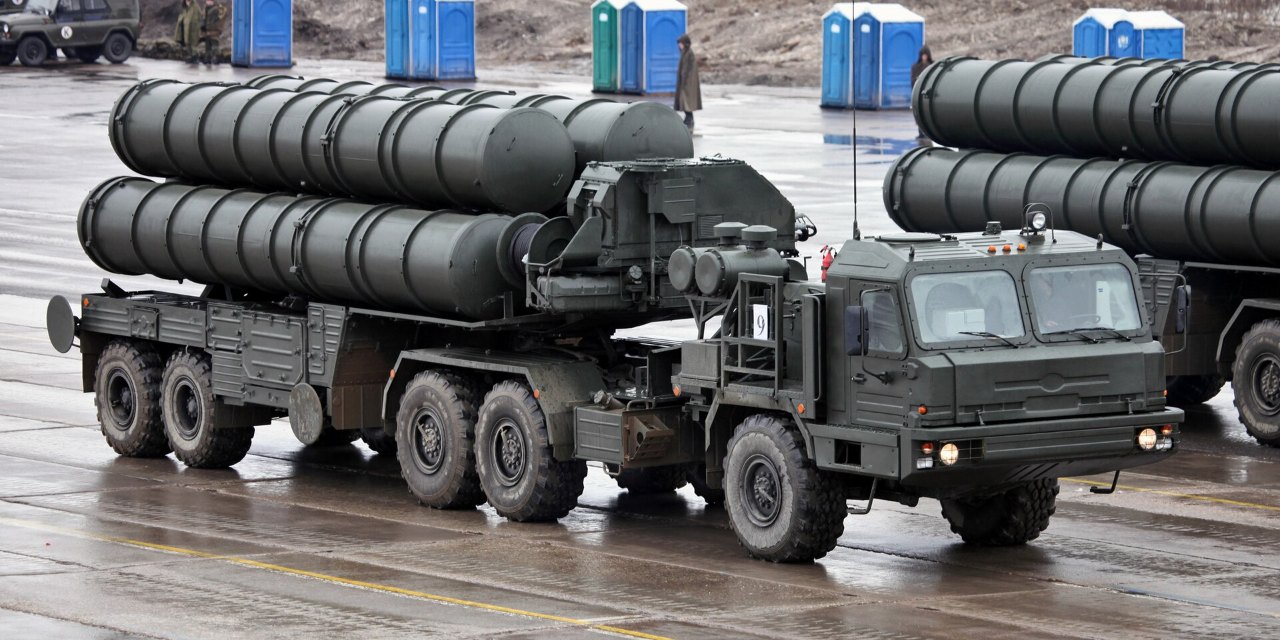
| S-400 | Russia | Long-range missile | Up to 400 km, depending on the missile | Delivered in 2019; not integrated |
| Hawk XXI | United States | Medium-range missile | About 40 km | Being phased out |
| Nike Hercules | United States | Long-range missile | About 140 km | Being retired |
| Stinger | United States | Shoulder-fired and vehicle-mounted missile | About 5 km | In service |
Siper: the long-range missile
Siper began in 2016 under the name Hisar-U and went to contract in January 2018 with Aselsan, Roketsan and TÜBİTAK SAGE. Roketsan builds the missile, which is believed to be a two-stage solid-fuel round with an active radar seeker. Aselsan supplies the search radar, the fire-control radar and the command post. The launcher is a truck with vertical launch canisters, so a battery can engage in any direction.
The first battery, ten vehicles, was handed over in August 2025, and the first battery from serial production passed its acceptance firing at Sinop on the Black Sea around the turn of 2026. In that test the battery had to pick a hostile target out of a group of manoeuvring friendly and enemy aircraft. Block 1 reaches about 100 km. Block 2, which destroyed a manoeuvring target in June 2026, extends that to 150 km and to higher altitude. Block 3, intended to stop ballistic missiles, is in development.
Hisar-A+ and Hisar-O+: the short and medium layers
The Hisar family came first. Hisar-A+ is a 15 km missile carried on a tracked armoured vehicle that moves with tank and mechanised units, and it entered service in 2021. Hisar-O+ covers 25 km from truck-mounted launchers that defend bases and cities. A version with a radar seeker in place of the infrared one extends the reach to about 40 km. Both launch vertically. The first Steel Dome delivery in August 2025 included three Hisar batteries, 21 vehicles in all, and further serial-production contracts were signed in July 2026. Naval versions of both families are planned for the navy’s new frigates and destroyers.
The S-400: bought, tested and set aside
Turkey agreed in 2017 to buy the Russian S-400 for $2.5 billion, more than half of it financed by a Russian loan. Deliveries began on 12 July 2019. The purchase covered two systems with four batteries and 32 launchers. Turkey has fired the system once in public, at Sinop on 16 October 2020, when three missiles were reported to have hit their targets.
The cost was far higher than the price. Washington removed Turkey from the F-35 programme in 2019 and placed sanctions on its defence procurement agency in December 2020. The S-400 cannot be connected to NATO’s air defence network, so it has never been part of Turkey’s integrated system, and American law blocks any F-35 sale while Turkey keeps it.
That may be about to end. After meeting President Recep Tayyip Erdoğan at the NATO summit in Ankara on 7 July 2026, President Donald Trump said Washington would lift the sanctions. Turkish media then reported that the system would be sold to a Gulf state. The Kremlin said on 10 July that it was in contact with Ankara about the missiles’ fate and called the matter extremely sensitive. The Turkish Defence Ministry said only that work on several tracks was under way.
Why did Turkey buy it? In 2017 it had no long-range system of its own. Talks on the American Patriot had failed over price and technology transfer, and a Chinese offer had been abandoned under NATO pressure in 2015. The S-400 was available, came with credit and arrived within two years.
Guns, shoulder-fired missiles and counter-drone weapons
The lowest layer is the busiest, because it is the one that meets drones. Korkut is a twin 35 mm gun on a tracked chassis that fires programmable airburst shells to about 4 km. It works in platoons of three guns and a command vehicle with its own radar. Sungur is a Turkish replacement for the American Stinger, with an 8 km range and an imaging infrared seeker, fired from the shoulder or from vehicle launchers. Gürz combines guns and missiles on one truck.
Alongside these are the weapons that use no ammunition at all: the Gökberk laser and the Ejderha microwave system described in our guide to Turkish electronic warfare.
What is being replaced?
Until the Turkish missiles arrived, the air force’s long-range defence was the Nike Hercules, a missile that entered American service in 1958 and was organised in four squadrons near Istanbul. Its medium-range defence was four batteries of Hawk XXI. Both are being retired as Siper and Hisar-O+ batteries are delivered. For protection against ballistic missiles Turkey has depended on allies. NATO Patriot batteries were sent to its southern border from 2013, and the alliance’s missile-defence radar at Kürecik has operated since 2012.
How strong is Turkish air defence today?
Stronger than at any time in its history, and still thin. Aselsan says more than ten Hisar and Siper batteries are on order for the air force. That is enough to protect the largest cities, the main air bases and the straits. It is not enough to cover a country of 780,000 square kilometres, and nothing in service can yet stop a ballistic missile. The war with Iran this year showed how quickly interceptors are used up, which is why the contracts signed in 2026 are mostly about production capacity.
Frequently asked questions
Does Turkey have the S-400?
Yes. It received two systems with four batteries in 2019. Turkish media reported in July 2026 that Ankara was preparing to sell them, which has not been confirmed.
What is Turkey’s longest-range air defence missile?
Of its own designs, Siper: Block 1 reaches about 100 km and Block 2, tested in June 2026, reaches 150 km. The Russian S-400 reaches further.
Does Turkey have Patriot missiles?
No. Negotiations with the United States failed, and Turkey bought the S-400 in 2017. NATO allies have at times deployed Patriot batteries on Turkish soil.
What is the range of the Hisar-O+?
25 km with the infrared-guided missile and about 40 km with the radar-guided version.
Can Turkey shoot down ballistic missiles?
Not with its own systems yet. The Siper Block 3 interceptor intended for that role is in development.
Who makes the Siper missile system?
Aselsan, Roketsan and TÜBİTAK SAGE. Roketsan builds the missile and Aselsan the radars and command system.
- Army Recognition – Türkiye integrates Siper-1 into Steel Dome network (January 2026): armyrecognition.com
- Türkiye Today – Delivery of additional Siper long-range system (January 2026): turkiyetoday.com
- Daily Sabah – Siper comes of age (June 2026): dailysabah.com
- Defence Turkey – S-400 and Turkey’s air and missile defence capability: defenceturkey.com
- CSIS Missile Threat – Turkey tests S-400 air defense system (October 2020): missilethreat.csis.org
- Turkish Minute – Turkey says work on S-400 continues amid reports of possible sale (July 2026): turkishminute.com
- Quwa – Aselsan signs €1.47 billion Steel Dome contract (July 2026): quwa.org
- Wikipedia – Steel Dome (system ranges and delivery details): en.wikipedia.org