
CSTO’s Rubezh 2026 Drills Test Russian Ulan Buggies, 115 Drones in Kazakhstan


Russia showcased two purpose-converted tactical buggies and a 115-drone reconnaissance-and-strike package during the Collective Security Treaty Organization’s “Rubezh 2026” exercise in Kazakhstan this month, folding hard-won lessons from the Ukraine battlefield into a Central Asian counter-infiltration drill. The September 12–19 exercise at Kazakhstan’s Koktal training ground brought roughly 1,500 troops from Russia, Kazakhstan, Kyrgyzstan and Tajikistan together to rehearse repelling an armed group that had crossed a CSTO member’s border — a scenario explicitly framed around instability in Afghanistan — while doubling as a live demonstration of Russian-built, sanctions-resilient hardware to a bloc whose cohesion has been fraying since Armenia’s 2024 walkout.
What Happened
The Collective Security Treaty Organization (CSTO) ran its annual “Rubezh” (“Frontier”) exercise from September 12 to 19 at the Koktal training ground in Kazakhstan’s southeastern Zhetysu Province, deploying roughly 1,500 troops, more than 300 pieces of military and specialized equipment, and 115 unmanned aerial vehicles to rehearse the destruction of an armed group that has crossed into a member state’s territory. The drill drew forces from Kazakhstan, Kyrgyzstan, Russia and Tajikistan under the bloc’s Collective Rapid Deployment Force for Central Asia, plus operational groups from the CSTO Joint Staff and Secretariat, according to the organization’s own press service and Russian state agency TASS.
Two pieces of hardware anchored the ground phase: Ulan-1 and Ulan-2, a pair of lightweight tactical buggies built on modified Russian civilian-vehicle chassis, which reconnaissance and assault groups used alongside motorcycles and quad bikes to probe simulated militant positions. CSTO officials said the roughly 40 scenarios run over the week — checkpoint raids, populated-area defense, explosive-ordnance disposal and weapons-cache clearance, by day and by night — were built around “a rapidly evolving situation with a steady escalation,” in the words of exercise commander Makhsut Guseinov, to test how quickly units could adapt.
The Product/System
Ulan-1 is a stripped-down all-terrain buggy built on the drivetrain of the AvtoVAZ Lada Niva, fitted with a 1.7-liter engine, a five-speed manual gearbox and permanent four-wheel drive. It weighs about 620 kilograms, carries roughly 600 kilograms of payload, has a claimed top speed of 85 km/h and a range near 320 kilometers. Ulan-2 scales the same concept up onto the GAZ “Sobol” 4×4 commercial van chassis, adding load capacity to around 1.5 tonnes and, according to Russian military bloggers cited by state media, improving on the first model’s off-road mobility and endurance.
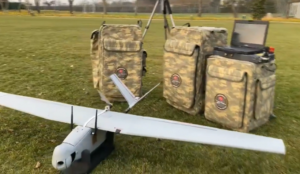
Neither vehicle is armored. The appeal is the opposite: a cheap, fast, low-signature platform that dismounted infantry, reconnaissance teams and resupply runs can use where armored vehicles are too slow, too conspicuous or too vulnerable to first-person-view (FPV) drones — the threat that has pushed Russian forces toward buggies and ATVs at scale since around mid-2024. The Rubezh 2026 drills paired that ground mobility with 115 UAVs described by CSTO’s press service as covering command-and-control relay, reconnaissance, and artillery and airstrike correction, reflecting doctrine drawn directly from drone-saturated battlefields elsewhere.
Who Uses It
Russia’s armed forces are the confirmed operator of both Ulan variants; the vehicles seen at Koktal came primarily from the 201st Guards Military Base, the Russian garrison permanently stationed in Tajikistan under the Central Military District. Ulan-2 deliveries to Russian frontline units began in autumn 2025, and Ukrainian forces have since claimed several kills, including a December 26, 2025 destruction of an Ulan-2 near Pokrovsk in Donetsk Oblast — giving the vehicle a combat record in Ukraine well before its appearance in Central Asia. There is no confirmed evidence of Ulan-1 or Ulan-2 in service with Kazakhstan, Kyrgyzstan or Tajikistan’s own armed forces; their presence at Rubezh 2026 reflects Russian participation in a multinational drill rather than adoption by other CSTO members.
Export/Procurement History
Neither Ulan model has a known export customer. Both were developed and fielded internally by Russian industry as low-cost conversions of existing civilian production lines — an approach that avoids the lead times of a purpose-built military vehicle and lets manufacturing scale quickly using parts already in Russian domestic supply chains, a relevant consideration under Western sanctions on defense-relevant imports. That logic mirrors moves elsewhere in the CSTO’s own back yard: Kazakhstan’s Air Assault Forces announced in September that they were standing up in-house FPV drone assembly for the same reason — insulating a battlefield-critical capability from import restrictions.
Global Competitors
The light tactical buggy segment Ulan competes in internationally includes the US-made Polaris MRZR and its many derivatives fielded by NATO special operations units, Ukraine’s own locally produced VOLS buggy built for its own dismounted and drone-evacuation units, and a wide range of improvised or semi-improvised ATV conversions now common on both sides of the Ukraine front. What sets the Ulan series apart is not performance — Niva- and Sobol-based platforms are considerably less capable off-road than a purpose-built MRZR — but the deliberate choice to industrialize a wartime improvisation into a standardized, factory-built type.
Why It Matters
Rubezh is nominally a counter-infiltration drill aimed at militant groups crossing from Afghanistan, a scenario CSTO has rehearsed annually and one Russian Defense Minister Andrei Belousov flagged again on September 8 when he said Moscow was giving Tajikistan’s border “special attention.” But the equipment on display tells a second story: Russia is exporting battlefield lessons from Ukraine — mass FPV-drone employment, dispersed light-vehicle mobility, and drone-corrected fire — into a Central Asian security structure it leads, at a moment when the bloc’s cohesion is already strained. Armenia froze its CSTO participation in 2024 after the organization did not intervene during Azerbaijan’s 2022 offensive, and CSTO has no mechanism to compel members to buy Russian equipment. Rubezh 2026 functions as much as a showcase for Russian-built hardware to Central Asian militaries as it does a counter-terrorism rehearsal.
What Happens Next
CSTO has not announced whether Ulan-series vehicles will be offered for sale or license production to Kazakhstan, Kyrgyzstan or Tajikistan, and none of the three has publicly signaled interest. Kazakhstan’s parallel push into domestic FPV drone manufacturing suggests Central Asian states may prefer building their own low-cost equipment over importing Russian designs. Rubezh exercises typically recur annually; a “Rubezh 2027” iteration, likely again framed around the Afghan border, would be the next opportunity to see whether other member states field their own versions of the light-buggy-plus-drone-swarm approach Russia demonstrated this year.
FAQ
What is the CSTO Rubezh 2026 exercise?
Rubezh 2026 was a September 12–19 joint military exercise held at the Koktal training ground in Kazakhstan, involving the Collective Security Treaty Organization’s Rapid Deployment Force for Central Asia. It rehearsed repelling an armed group that had crossed into a member state’s territory, a scenario built around the risk of infiltration from Afghanistan.
What are the Ulan-1 and Ulan-2 vehicles?
They are lightweight Russian tactical all-terrain buggies converted from civilian vehicle platforms — the Lada Niva for Ulan-1 and the GAZ Sobol van for Ulan-2 — used for fast, low-signature reconnaissance, assault and resupply tasks where armored vehicles are impractical.
Which countries took part in Rubezh 2026?
Kazakhstan, Kyrgyzstan, Russia and Tajikistan contributed forces, with additional coordination groups from the CSTO Joint Staff and Secretariat. Armenia, also a nominal CSTO member, did not participate; it has frozen its participation in CSTO activities since 2024.
Has the Ulan-2 been used in Ukraine?
Yes. Russian forces began fielding Ulan-2 on frontline logistics and reconnaissance tasks in autumn 2025, and Ukrainian units have reported destroying multiple examples, including one near Pokrovsk in Donetsk Oblast on December 26, 2025.
Why does a Central Asian counter-terrorism drill matter for defense industry watchers?
Because it doubles as a live demonstration of Russian-built, sanctions-resilient hardware — cheap buggies converted from civilian production lines and mass FPV-drone tactics refined in Ukraine — to the militaries of CSTO’s Central Asian members, several of which are separately investing in their own low-cost drone and light-vehicle production.
Sources
- CSTO Joint Staff press service, “Staff talks on the organization of the joint exercise… Rubezh-2026,” en.odkb-csto.org, published ahead of the exercise — official confirmation of exercise planning and participants.
- TASS, “Active phase of CSTO Rubezh 2026 exercise begins in Kazakhstan,” tass.com/defense/2187381, September 14, 2026 — named officials, location and stated objective.
- TASS, “Second phase of CSTO Rubezh 2026 exercise begins in Kazakhstan,” tass.com/world/2188397, September 16, 2026 — equipment figures (300+ pieces, 115 UAVs), Ulan-1/Ulan-2 mention, commander’s quote.
- Eurasianet, “Kazakhstan: CSTO military exercises scheduled for September,” eurasianet.org — exercise dates, location (Koktal, Zhetysu Province) and Afghanistan-infiltration framing.
- AKIpress News Agency, “CSTO ‘Rubezh-2026’ exercise enters active phase in Kazakhstan” and “CSTO joint military exercise ends in Kazakhstan” — independent confirmation of start and conclusion.
- New Voice of Ukraine (nv.ua), “Ukraine eliminates Russia’s newly deployed Ulan-2 all-terrain vehicle,” english.nv.ua — Ulan-2 combat loss near Pokrovsk, December 26, 2025, and fielding timeline.
- Defenseandtech.com, “Kazakhstan’s Air Assault Forces Launch In-House FPV Drone Production,” September 17, 2026 — regional context on parallel Central Asian drone manufacturing push.