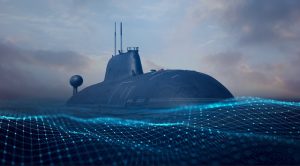

China Builds Suspected XXLUUV Mothership in Shanghai
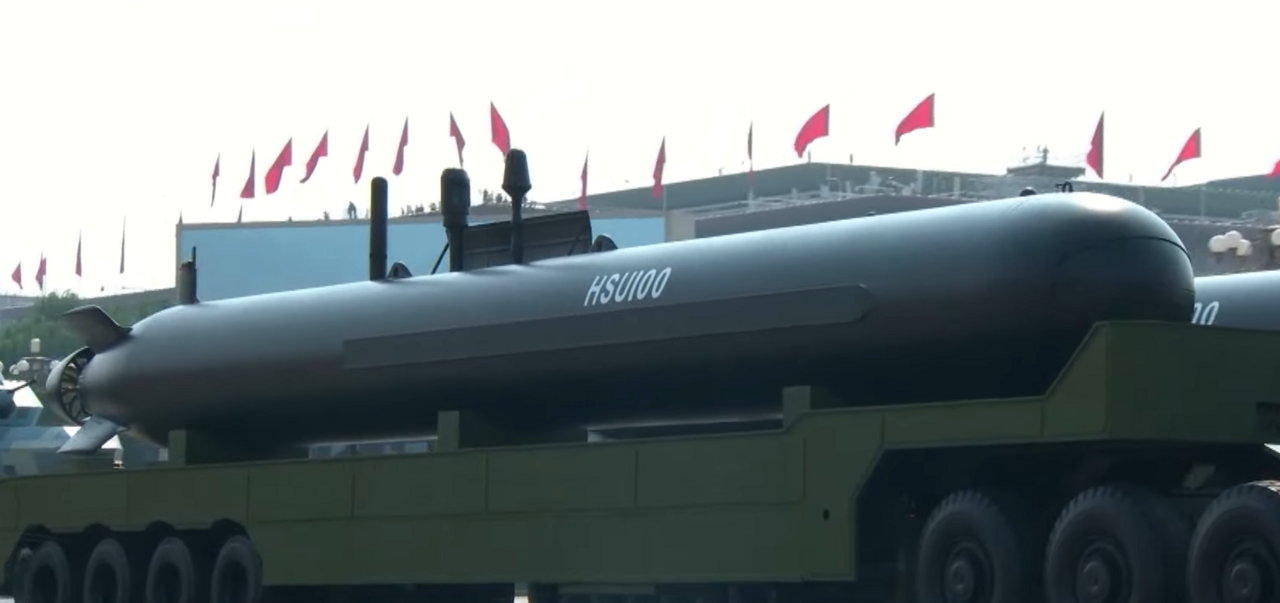
Commercial satellite imagery shows China building an unusually shaped roughly 200-metre vessel at the Hudong-Zhonghua shipyard in Shanghai that open-source naval analysts believe may be the world’s first dedicated mothership for extra-extra-large uncrewed underwater vehicles (XXLUUVs). Neither the Chinese government nor the shipyard, part of state-owned China State Shipbuilding Corporation (CSSC), has confirmed the vessel’s designation, operator or mission, and analysts caution that the assessment rests on imagery interpretation rather than official disclosure.
What Happened
Imagery captured by the commercial provider Vantor on August 24, 2026, and cited by Baird Maritime, showed a roughly 200-metre-long, 27-metre-wide hull under construction at Hudong-Zhonghua that does not match any previously known Chinese naval or commercial ship class. A separate set of images dated September 10, 2026, and reported by the South China Morning Post on September 18, showed the hull further along in construction, with an unnamed military imagery analyst pointing to what they identified as “the apparent stern launch-and-recovery system.”
Naval historian and open-source analyst H.I. Sutton, who tracks uncrewed underwater vehicle programs through his Covert Shores project, assessed the drone-mothership role as the “most plausible” explanation for the design. Alessandro Arduino, an associate fellow at the Royal United Services Institute (RUSI), told SCMP the imagery does not prove the assessment but makes it difficult to dismiss. Both analysts stressed that China has not acknowledged the vessel, and its designation, intended operator and in-service date remain unconfirmed.
Baird Maritime also reported that the vessel has been publicly associated, through shipping-registry-style documentation, with a project for a Russian fishing company tied to Kama River operations — a cover story analysts consider inconsistent with the ship’s actual design and dimensions.
The System: What an XXLUUV Mothership Would Do
Based on the imagery, analysts describe a hull configured less like a warship and more like an amphibious landing ship, but with a critical difference: rather than a conventional flooded well deck for landing craft, the stern reportedly opens above a lifting well with no solid bottom, built around a transport cradle suspended by twelve vertical jack-up arms that can lower a large vehicle below the hull for launch and recovery at sea. Baird Maritime described an internal hangar roughly 95 by 17 metres spanning multiple decks, with a stern handling area around 55 metres long — dimensions analysts say could accommodate two to four XXLUUVs, submersibles in the 35-to-45-metre class, alongside a larger number of smaller tactical UUVs.
A purpose-built mothership would address a structural limitation of extra-large underwater drones: their size and endurance make them impractical to launch from a pier or a standard submarine, but a dedicated carrier could transport, maintain, launch and recover them far from China’s coast, extending their operational reach without requiring each vehicle to transit long distances under its own power.
Who Might Operate It
No branch of the People’s Liberation Army has been officially linked to the vessel. Some specialist outlets have speculated the ship could ultimately support PLA Navy undersea operations or China’s newer joint information and reconnaissance structures, but these are analyst inferences rather than confirmed assignments, and Defense & Tech was unable to independently verify any specific command linkage. Readers should treat operator claims as speculative until Beijing or CSSC provides official confirmation.
Global Competitors: The Race for Extra-Large Underwater Drones
China’s apparent approach — a dedicated carrier ship rather than a stand-alone vehicle — would be distinct from how other navies have pursued large uncrewed submersibles so far. The U.S. Navy’s Boeing-built Orca XLUUV, a diesel-electric vehicle with a modular payload bay and a stated range beyond 6,000 nautical miles, has moved from prototype delivery into planned fleet acquisition under the Navy’s May 2026 shipbuilding plan, with procurement funding for two additional Orcas in fiscal year 2027 toward a target of 16 vehicles through fiscal year 2031. Australia’s Ghost Shark extra-large autonomous undersea vehicle, developed with Anduril in under three years under a roughly AUS$1.7 billion (about US$1.1 billion) program, is expected to begin entering service in early 2026. Both programs, however, rely on land- or dock-based launch and recovery rather than a purpose-built support ship of the kind reportedly taking shape in Shanghai.
Why It Matters
If the analysts’ assessment holds up, a dedicated XXLUUV mothership would mark a new category of naval support vessel, one built specifically around the logistics of operating extra-large underwater drones rather than adapting an existing hull type. That would let China sustain uncrewed submersible operations — potentially including surveillance, seabed mapping, or mine warfare, roles publicly discussed for XXLUUV-class vehicles elsewhere — over greater distances and for longer periods than a vehicle limited to its own battery endurance. It would also signal that Chinese naval planners see enough operational value in large uncrewed submersibles to invest in dedicated fleet infrastructure for them, ahead of similar moves by other navies.
At the same time, the story illustrates the limits of open-source naval intelligence: every detail beyond the ship’s physical dimensions — its mission, its operator, even its designation — is inference from hull geometry, not confirmed fact. Readers and other outlets should be cautious about treating “mothership” as established rather than the leading open-source hypothesis.
What Happens Next
Analysts will be watching for the vessel’s launch, sea trials and any accompanying XXLUUV sightings at Hudong-Zhonghua or other CSSC yards, which would help confirm or rule out the drone-carrier hypothesis. A formal PLA Navy commissioning, a state-media unveiling similar to Uzbekistan’s recent disclosure of its Chinese J-10CE fighters, or continued official silence would each carry different signals about how far along the program is and how much of a role Beijing wants to publicize.
FAQ
What is an XXLUUV?
An extra-extra-large uncrewed underwater vehicle is a submersible drone typically in the 35-to-45-metre range — far larger than tactical UUVs and approaching the size of a small crewed submarine — designed for long-endurance missions such as surveillance, seabed operations or mine warfare.
Has China confirmed this is a drone mothership?
No. Chinese authorities and Hudong-Zhonghua have not acknowledged the vessel’s existence, designation or purpose. The assessment comes from independent analysts interpreting commercial satellite imagery, and is described by its own proponents as plausible rather than proven.
How does this compare to the U.S. Orca or Australia’s Ghost Shark?
The Orca and Ghost Shark are the underwater vehicles themselves, launched from docks or piers. The Shanghai vessel, if the mothership assessment is correct, would be a separate surface ship built to transport, launch and recover large underwater drones at sea — a support-ship concept not yet fielded by the U.S. or Australian programs.
Where is the ship being built, and when might it be operational?
It is under construction at the Hudong-Zhonghua Shipbuilding yard in Shanghai, part of China State Shipbuilding Corporation. No launch date, commissioning date or in-service timeline has been disclosed or independently confirmed.
What would China use large underwater drones for?
Publicly, XXLUUV-class vehicles elsewhere have been associated with roles such as long-range surveillance, seabed and infrastructure monitoring, and mine warfare. No mission has been officially assigned to any Chinese XXLUUV program, and any specific application remains speculative pending further disclosure.
Sources
- H.I. Sutton / Baird Maritime, “Vessel photographed by satellite may be China’s first mothership for large underwater drones,” September 21, 2026 — imagery dating, hull dimensions, analyst assessment. Link
- South China Morning Post, “Could mystery Shanghai vessel be mothership for China’s underwater drones?” September 18, 2026 — later-stage imagery, unnamed analyst quote, RUSI comment. Link
- The Defense News, “U.S. Navy Allocates $1.13 Billion for 16 Boeing Orca XLUUVs Under 2026 Fleet Expansion Plan” — Orca program status for comparison. Link
- Interesting Engineering, “Ghost Shark: Australia to field monster stealth drone subs in 2026” — Ghost Shark program timeline and cost, used for comparison context. Link