France Boards Suspected Russian Shadow Fleet Tanker DF Peak South of Réunion

France’s navy boarded a sanctioned, Russia-linked oil tanker far out in the southern Indian Ocean this week, in the latest and most remote in a growing series of European interdictions targeting Moscow’s “shadow fleet” of sanctions-evading tankers.
What Happened
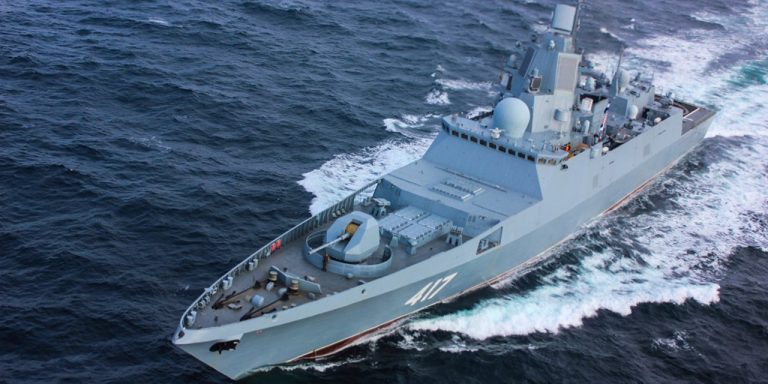
On the morning of Monday, October 12, 2026, the French Navy (Marine Nationale) intercepted and boarded the oil tanker DF Peak approximately 450 nautical miles south of Réunion, the French island territory in the Indian Ocean east of Madagascar. The boarding was carried out by naval commandos who rappelled onto the tanker’s deck from an AS365 Dauphin N3 helicopter of Flottille 34F, operating from a Floréal-class frigate assigned to the Armed Forces of the Southern Indian Ocean Zone (FAZSOI), based at Port-des-Galets on Réunion.
French President Emmanuel Macron announced the operation and said the tanker was suspected of sailing under a false flag and of “illicit fuel transportation activities” linked to Russia’s sanctions-evasion fleet. “France is determined to fight the shadow fleet, everywhere in the world,” Macron said. Armed Forces Minister Catherine Vautrin said the French Navy’s coordination had been professional, and that the ship was being escorted toward Réunion for further inspection under the authority of the island’s regional prefect and public prosecutor. French military spokesman Colonel Xavier Rival said doubts about the vessel’s flag “remain, and therefore the vessel is currently proceeding to Réunion Island by decision of the public prosecutor, so that we can examine the matter in detail.”
The French Armed Forces General Staff (EMA) said the boarding was conducted under Article 110 of the UN Convention on the Law of the Sea (UNCLOS), which allows a warship to visit a vessel on the high seas when there is reasonable suspicion it is stateless or improperly flagged. Additional FAZSOI assets reported involved in the operation included the frigates Floréal (F730) and Nivôse (F732), the overseas patrol vessels Auguste Techer (P781) and Le Malin (P701), and the support vessel Champlain (A623).
No cargo seizure or criminal charge has been announced. French authorities have said only that the inspection is continuing and that the tanker’s cargo destination and legal status remain under review.
The Vessel: Inside Russia’s “Shadow Fleet”
The “shadow fleet” is not a single program or weapons system but an improvised merchant-shipping network that Russia and its intermediaries have assembled since 2022 to keep oil and fuel exports flowing despite Western price caps and sanctions. Ships in the fleet typically change names and flags repeatedly, switch off their AIS transponders to mask their position, and transfer cargo ship-to-ship at sea to obscure its origin. Analysts and European navies have identified several hundred such tankers operating worldwide, most registered to small, loosely regulated flag states and managed through opaque shell companies.
DF Peak is a 110,000-deadweight-tonne crude and products tanker built in 2006. According to tracking data cited by Ukraine’s military intelligence directorate (HUR) and reported by the Maritime Executive, the vessel operated for years in the fleet of Russia’s state-owned shipping company Sovcomflot under the name NS Captain. It was renamed Kaliningrad in 2024 and took its current name, DF Peak, in 2025, around the time it was transferred into a Dubai-registered operating structure linked to Sovcomflot and is now managed by a company based in Hong Kong. Equasis shipping records cited by multiple outlets show the tanker currently claims registration in Benin — a flag registry that has itself moved to deregister vessels using its name without authorization, which is central to the French suspicion that the flag is fraudulent. Tracking data also shows a history of AIS “dark” periods and calls at the Russian oil export terminals of Primorsk and Ust-Luga.
Sanctions and Enforcement History
DF Peak was placed under sanctions by the United States in 2024, while it was still sailing as Kaliningrad, and was subsequently added to sanctions lists by the European Union, Switzerland, Canada, the United Kingdom, Ukraine and Japan. Ukraine has separately sanctioned one of the vessel’s former captains.
The October 12 boarding is not an isolated action. French authorities have carried out a string of shadow-fleet interdictions through 2026: the tanker Tagor was intercepted in the Atlantic in June, and the tanker Deliver was boarded near Sicily in the Mediterranean the same month. European navies more broadly have stepped up shadow-fleet operations since the start of 2026, following a wave of incidents in the Baltic Sea in which Finland, Estonia, Germany and other NATO members boarded or detained tankers suspected of sanctions evasion and, in some cases, of dragging anchors across undersea cables and pipelines — the same concern that earlier drove the UK and Norway to deploy a 13-ship patrol to shield Atlantic subsea cables from Russian “spy” submarines.
France’s own Indian Ocean intervention is notable mainly for its distance from Europe: at 450 nautical miles south of Réunion, maritime-security outlets described it as among the most remote interdictions of a Russia-linked tanker carried out by a European navy since the 2022 invasion of Ukraine, illustrating how far shadow-fleet routes — and the naval patrols chasing them — now extend beyond the Atlantic and the Baltic.
The Diplomatic Fallout
Russia’s embassy in Paris reacted sharply. Citing Russian state media (RIA Novosti), the embassy called the boarding “piracy” and said it was a “blatant violation of international law,” arguing that UNCLOS Article 110 did not justify the French action. The embassy also said France had not formally notified Moscow of the seizure and that it was trying to establish whether any Russian citizens were among the crew.
France has not disputed that the ship is suspected of Russian links; its position is that the suspected flag fraud, not the cargo’s origin alone, is what brings the boarding within UNCLOS. The timing drew additional attention because it came just days after the White House temporarily eased sanctions on Russian diesel exports, a move reported as intended to soften fuel prices ahead of the US midterm elections — a decision that put Washington’s near-term posture at odds with the tightening enforcement pursued by France and other European states.
Why It Matters
The DF Peak boarding underscores two trends that are reshaping naval activity far from traditional conflict zones. First, European navies — led by France, alongside Baltic and Nordic states — are increasingly willing to physically intercept merchant vessels on the high seas to enforce sanctions, using frigates, patrol vessels and helicopter-borne boarding teams normally associated with counter-piracy or interdiction missions. Second, Russia’s shadow fleet has pushed its routes into increasingly remote waters, including the southern Indian Ocean, as it seeks paths less exposed to patrols concentrated in the Baltic, North Sea and Mediterranean. That in turn is pulling French overseas forces based in Réunion and Mayotte — normally focused on regional security, fisheries protection and disaster response in the Indian Ocean — into a front-line role in sanctions enforcement against a Russian navy whose merchant-shipping arm is now drawing as much international scrutiny as its warships.
For shipping insurers, flag registries and oil traders, the episode is also a reminder that no single maritime region can now be considered outside the reach of sanctions enforcement, raising the operating risk — and insurance cost — for any tanker with an ambiguous ownership trail.
What Happens Next
DF Peak remains under French Navy escort toward Réunion, where the matter has been placed under the jurisdiction of the local prosecutor. French authorities have not said whether they intend to formally seize the vessel or its cargo, or whether any crew members will face charges; officials have stressed that the boarding and ongoing inspection do not by themselves establish criminal liability. Russia is likely to continue pressing its “piracy” characterization diplomatically, though it has limited legal recourse given the vessel’s disputed flag status. Analysts tracking the shadow fleet expect further interdictions, both in the Indian Ocean and along the Atlantic and Mediterranean routes France has already targeted this year, as European states continue testing how far UNCLOS’s flag-verification provisions can be stretched to counter sanctions evasion.
FAQ
What is Russia’s “shadow fleet”?
It is an informal, loosely tracked network of often-aging tankers that Russia and intermediary trading firms use to keep exporting sanctioned oil and petroleum products, typically by flying flags of small or poorly regulated registries, repeatedly renaming vessels, disabling tracking transponders, and conducting ship-to-ship transfers to obscure cargo origin.
Why did France board a tanker so far from its own coastline?
Réunion, a French overseas territory in the Indian Ocean, hosts French naval forces (FAZSOI) with frigates and patrol vessels that can range across the southern Indian Ocean. France says the boarding, 450 nautical miles south of the island, was carried out under UNCLOS Article 110, which permits warships to check a vessel’s flag on the high seas when fraud is suspected, regardless of distance from national territory.
What happens to a tanker after it is boarded like this?
Boarding and escort are not the same as seizure. The vessel is typically brought under naval escort to a port — in this case Réunion — where local prosecutors determine whether to pursue formal confiscation of the ship or cargo, or press charges, based on the inspection’s findings.
Is this the first time France has intercepted a Russia-linked tanker?
No. France intercepted the tanker Tagor in the Atlantic and boarded the tanker Deliver near Sicily, both in June 2026, and has carried out other shadow-fleet-related boardings since 2024, making DF Peak at least the fifth such French interdiction.
How has Russia responded?
Russia’s embassy in Paris called the boarding “piracy” and a violation of international law, said France had not notified Moscow, and said it was seeking to confirm whether Russian nationals were among the crew. France maintains the action was lawful under UNCLOS given the vessel’s disputed flag.
Sources
- Naval News, “French Navy Intercepts and Boards Shadow Fleet Tanker ‘DF Peak’ South of Réunion,” October 12, 2026 — operational details, French Navy assets, UNCLOS basis.
- The Maritime Executive, “French Navy Boards Russia-Linked Tanker in the Indian Ocean,” October 12, 2026 — vessel history, sanctions list, Macron and Vautrin quotes.
- Reuters via Kyiv Post / The Star Malaysia (citing RIA Novosti), October 13, 2026 — Russian embassy reaction, Colonel Xavier Rival quote, French interdiction history.
- Militarnyi, “France Intercepts DF Peak Tanker Linked to Russia’s Shadow Fleet,” October 2026 — EMA photo captions, Auguste Techer details, EU sanctions timeline.
- DefenceWeb / Africa Ports & Ships, October 16, 2026 — regional maritime security context in the Indian Ocean and Red Sea.
Editorial note: No featured image was used for this article. No image meeting Defense & Tech’s sourcing standards (official government or manufacturer release, DVIDS, or properly licensed Wikimedia Commons content, showing the correct vessel or unit) could be verified and safely sourced within this publishing cycle.