TransDigm, the Sole-Source Machine Behind Western Aviation
TransDigm Group is the most profitable company most people in aerospace have never examined, an $8 billion revenue collection of proprietary parts businesses whose components sit on virtually every Western military and commercial aircraft flying. Its model, buy sole-source niches, price for value, run them lean, has produced private-equity returns inside a public defense supplier, along with recurring friction with Pentagon auditors.
TransDigm at a glance
| Item | Detail |
|---|---|
| Full name | TransDigm Group Incorporated |
| Headquarters | Cleveland, Ohio, United States |
| Founded | 1993, by W. Nicholas Howley and Douglas Peacock via leveraged buyout |
| Listing | NYSE, ticker TDG |
| Revenue | Roughly $8 billion in fiscal 2024 |
| Employees | Roughly 16,000 worldwide, reported |
| Defense share | Around 40 percent of revenue, reported |
| Model | Proprietary, largely sole-source aerospace components with aftermarket focus |
How the TransDigm model works
TransDigm’s founders applied a simple filter: own only products that are proprietary, designed into an aircraft by certification, and ideally sole-source, meaning no one else is approved to make them. Roughly 90 percent of its sales meet the proprietary test and about three-quarters are sole-source, by the company’s own reporting. Once an aircraft flies, its parts demand becomes an annuity that lasts decades, and the certification moat keeps competitors out far more effectively than patents.
The second half of the model is operational: decentralized subsidiaries, relentless focus on price, productivity and new business, and leverage used aggressively to fund deals and shareholder returns. It is the same aftermarket logic that powers HEICO, executed with a harder pricing edge and more debt.
What does TransDigm make
| Product area | Examples | Known units |
|---|---|---|
| Mechanical and actuation | Actuators, latches, cockpit security systems, gear pumps | AeroControlex, Hartwell, Adams Rite |
| Power and ignition | Igniters, batteries, generators, motors | Champion Aerospace, Skurka, Securaplane |
| Avionics and interface | Displays, audio systems, keyboards, sensors | Korry, AmSafe restraints, Esterline units |
| RF, microwave and space | Traveling wave tubes, satellite communications amplifiers | CPI businesses acquired in 2024 |
| Test and mission systems | Flight test, aerodynamic research services | Calspan, acquired 2023 |
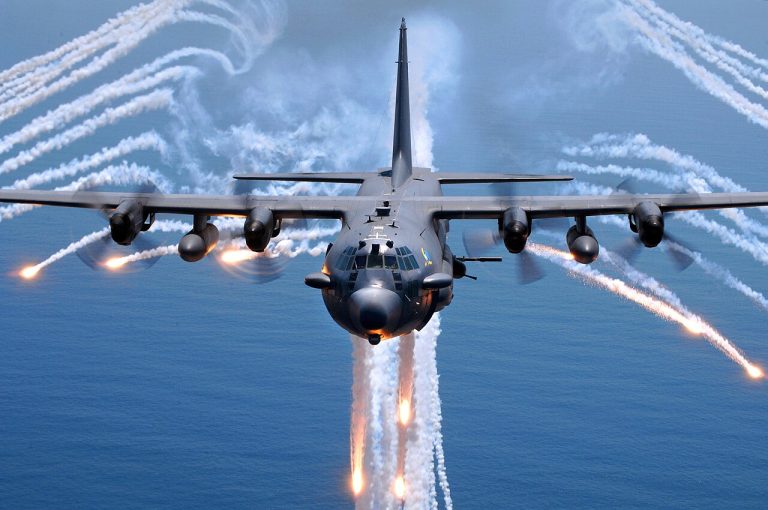
The portfolio spans commercial airliners, business jets and military programs alike; if a part ignites an engine, locks a cockpit door or moves a valve on a Western aircraft, there is a fair chance a TransDigm unit makes it. Military platforms from transports to fighters flown by customers of Boeing Defense and Lockheed Martin carry its content, and the 2019 Esterline purchase, at roughly $4 billion its largest, deepened the defense mix.
TransDigm and the Pentagon pricing fights
Sole-source pricing power cuts both ways. Department of Defense Inspector General reviews in 2019 and 2021 found that TransDigm earned what auditors deemed excess profit on a sample of sole-source spare parts, and the company twice made voluntary refunds, roughly $16 million and $21 million, while disputing the methodology. Congressional hearings followed, and the episodes became the reference case in debates over spare-parts pricing data rights. Nothing was found unlawful; the fight is structural, a company optimized for value pricing meeting a buyer with limited alternatives.
For the Pentagon the lesson has been to buy data rights early or qualify second sources, a slow and expensive remedy. For TransDigm the reputational cost has not dented the order flow; certified parts have no substitutes on a grounded jet.
TransDigm acquisitions and financials
TransDigm closed fiscal 2024 with roughly $8 billion in revenue and EBITDA margins north of 50 percent, extraordinary for a hardware company and the direct product of the sole-source portfolio. The deal engine keeps running: Calspan in 2023, CPI’s electron device businesses for about $1.4 billion in 2024, and a steady diet of smaller proprietary-parts firms, more than 80 acquisitions in three decades. Leverage stays high by design, with periodic special dividends returning cash to shareholders in private-equity style. Peers like Curtiss-Wright run the same aerospace niches with a fraction of the debt and the margin.
TransDigm frequently asked questions
What does TransDigm do?
It owns dozens of aerospace component businesses making proprietary, largely sole-source parts, from igniters to actuators, for commercial and military aircraft.
Why is TransDigm so profitable?
Certification makes its parts hard to replace, so aftermarket pricing power and lean operations yield EBITDA margins above 50 percent.
Is TransDigm a defense contractor?
Partly; around 40 percent of revenue is defense-related, flowing through subsidiaries onto US and allied military platforms.
What was the TransDigm Pentagon controversy?
DoD Inspector General reports in 2019 and 2021 flagged excess profits on sole-source spares; TransDigm refunded roughly $37 million combined voluntarily.
How big is TransDigm?
Roughly $8 billion in fiscal 2024 revenue, about 16,000 employees and a market value that ranks it among the largest US aerospace suppliers.
- Public TransDigm Group disclosures and investor materials (fiscal 2024)
- US Department of Defense Inspector General reports on spare-parts pricing
- Wikipedia – TransDigm Group (accessed October 2026)
- Defence & Tech reporting on aerospace supply chains