Why Was Turkey Removed From the F-35 Program?
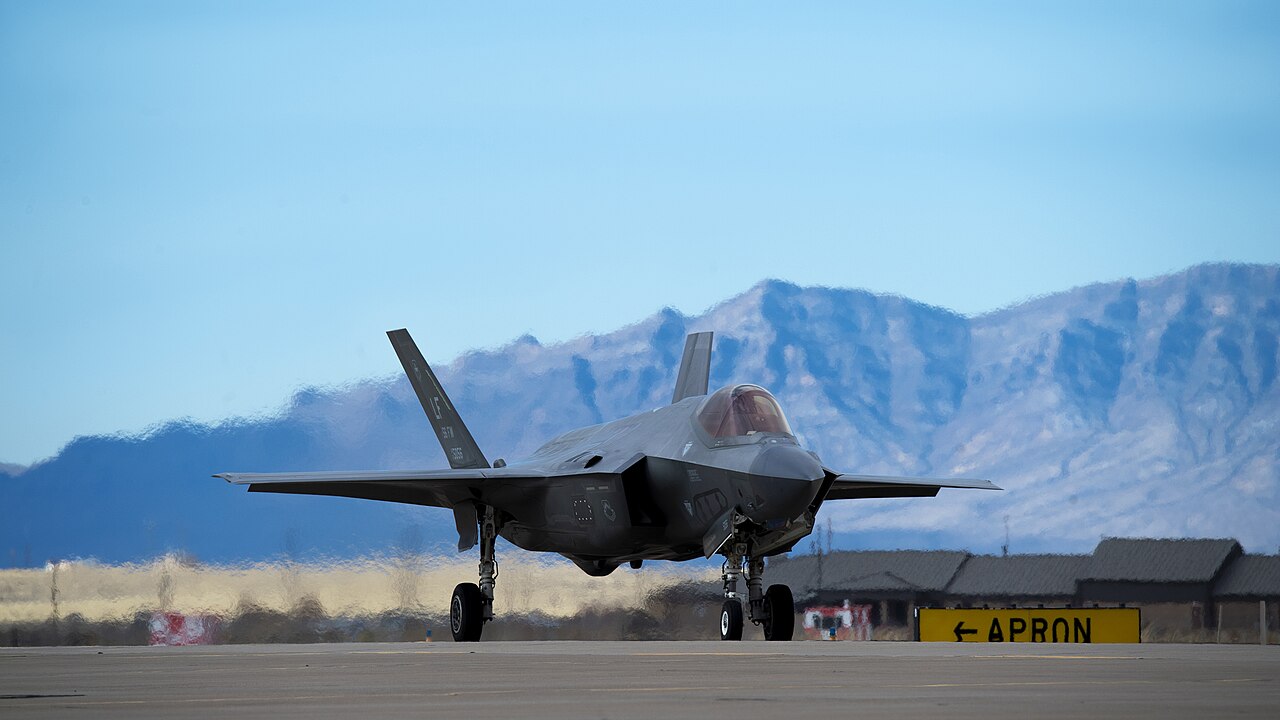
Turkey was removed from the F-35 programme in July 2019 because it took delivery of the Russian S-400 air defence system, which Washington said could not be operated alongside the stealth fighter. Ankara had been a partner since 2002, planned to buy 100 aircraft and made parts for every jet built.
Seven years on, the dispute is unresolved. President Donald Trump said in Ankara in July 2026 that he would lift sanctions and consider reversing the ban, but US law still blocks any transfer while Turkey keeps the S-400. This guide sets out the Turkey F-35 story: what happened, what each side argues and what would have to change.
What was Turkey’s role in the F-35 programme?
Turkey joined the Joint Strike Fighter programme as a Level 3 partner in 2002 and paid into its development. It intended to buy 100 F-35As to replace its F-4s and older F-16s. The first Turkish jet was rolled out at Fort Worth in June 2018, and Turkish pilots began training at Luke Air Force Base in Arizona.
Turkish industry was built into the supply chain. Turkish Aerospace was the second source for centre fuselages, and firms including Alp Aviation, Ayesas and Kale made about 900 different parts, from landing gear components to engine hardware and cockpit displays. An engine overhaul centre for European operators was planned at Eskisehir. How the work is shared is described in who builds the F-35.
Why was Turkey removed?
In December 2017 Turkey signed a contract reported at $2.5 billion for the Russian S-400. The first components arrived at Murted air base near Ankara on 12 July 2019. Five days later the White House announced that Turkey’s participation in the F-35 was over, saying the aircraft could not coexist with a Russian intelligence collection platform.
The American argument was technical. The S-400’s radars are designed to detect aircraft like the F-35. Operating both in the same air force, with Russian technicians supporting the system, could let Moscow learn how the jet appears to its radars and how to track it. The system is described in our guide to the S-400 Triumf.
Turkey rejected that. It said the S-400 would be a stand-alone system, not connected to NATO networks, and proposed a joint technical group to examine the risk. It also said it had turned to Russia only after years of failed talks on the US Patriot, where price and technology transfer could not be agreed.
| Date | Event |
|---|---|
| 2002 | Turkey joins the programme as a Level 3 partner |
| December 2017 | Turkey signs for the S-400 |
| June 2018 | First Turkish F-35A rolled out at Fort Worth |
| 12 July 2019 | First S-400 components delivered to Turkey |
| 17 July 2019 | United States announces Turkey’s removal |
| December 2019 | US defence law bars F-35 transfers while Turkey holds the S-400 |
| December 2020 | CAATSA sanctions imposed on Turkey’s defence procurement agency |
| January 2024 | United States approves sale of F-16 Block 70 aircraft to Turkey |
| 25 September 2025 | Erdogan and Trump discuss the F-35 at the White House |
| 7 July 2026 | Trump says in Ankara he will lift sanctions and consider reversing the ban |
What happened to Turkey’s jets and money?
Six F-35As built for Turkey and formally owned by it were never flown home. They remain in storage in the United States, Breaking Defense reported in July 2026. Aircraft further back on the production line were bought by the US Air Force in 2020.
Turkey says it paid about $1.4 billion for aircraft it did not receive; Breaking Defense puts the sum held by the United States at $1.7 billion. President Recep Tayyip Erdogan has said that keeping both the jets and the money would amount to robbery. Ankara has asked for the aircraft or a refund.
Removing Turkish suppliers was costly for the programme too. The Pentagon estimated the bill for moving production at $500 million to $600 million, and the work was not fully transferred until 2022.
Could Turkey return to the F-35 programme?
The political mood has shifted. After a two-hour meeting with Erdogan at the White House on 25 September 2025, Trump said he expected Turkey to succeed in buying what it wanted. On 7 July 2026, at the NATO summit in Ankara, he said the United States would be taking the CAATSA sanctions off and that readmission was something it would certainly consider.
The legal position has not. The defence authorisation act for fiscal 2020 prohibits transferring F-35s to Turkey unless the administration certifies that Turkey no longer possesses the S-400 and will not accept it again. According to MiGFlug, the State Department told Congress on 22 July 2026 that Turkey had not met those conditions. Senator Jim Risch, who chairs the Foreign Relations Committee, said the matter was at a standstill because the missiles had not been removed.
Ankara has refused to give the system up. Ideas reported in the press include moving it to a third country, storing it under inspection or leaving it inactive. None has been agreed, and members of Congress from both parties have said deactivation alone would not be enough. Israel and Greece have also lobbied against a sale.
What is Turkey doing instead?
It is buying and building alternatives. In October 2025 Turkey ordered 20 new Eurofighter Typhoons from Britain in a deal worth about 8 billion pounds, and arranged to take second-hand Typhoons from Qatar and Oman. The details are in our report on the Turkey and UK Eurofighter agreement. It is also modernising its F-16 fleet and has US approval to buy new F-16 Block 70s.
The long-term answer is the KAAN, a twin-engine stealth fighter developed by Turkish Aerospace that first flew in February 2024. Turkish officials describe it as the aircraft that will fill the role the F-35 was meant to have, with service entry targeted for the end of the decade. Until then Turkey remains the one original partner that is not among the countries that have the F-35.
Frequently asked questions
Why was Turkey kicked out of the F-35 programme?
Because it bought and took delivery of the Russian S-400 air defence system. The United States said the two systems could not be operated together without exposing the F-35 to Russian intelligence gathering.
When was Turkey removed from the F-35 programme?
The United States announced the decision on 17 July 2019.
Did Turkey pay for F-35s it never received?
Yes. Turkey says it paid about $1.4 billion; Breaking Defense reports $1.7 billion. Six jets built for Turkey are stored in the United States.
Can Turkey get the F-35 back?
Only if US law is satisfied. It bars any transfer while Turkey possesses the S-400, regardless of the president’s position.
How many F-35s did Turkey plan to buy?
100 F-35As.
What is Turkey using instead of the F-35?
Upgraded and new F-16s, Eurofighter Typhoons ordered in 2025 and, in future, its own KAAN stealth fighter.
- Breaking Defense – F-35 for Turkey? Trump says certainly we’ll consider reversing ban (July 2026): breakingdefense.com
- Euronews – Trump signals to Erdogan that US could lift ban on F-35 sales to NATO ally Turkey (25 September 2025): euronews.com
- MiGFlug – Turkey’s F-35 return is still frozen (August 2026): migflug.com
- Wikipedia – Lockheed Martin F-35 Lightning II operators: en.wikipedia.org