What Missiles Does India Have? Agni, BrahMos, Pralay and More
India has one of the most varied missile arsenals in the world, almost all of it developed by its Defence Research and Development Organisation (DRDO). It ranges from the Agni-V, which can carry several nuclear warheads more than 5,000 kilometres, to the BrahMos supersonic cruise missile built with Russia, the new Pralay battlefield missile and the K-4 submarine-launched missile. In May 2025, during Operation Sindoor, India used BrahMos and other missiles in combat against Pakistan for the first time.
This guide sets out India’s main missiles, what they can reach and what is coming next.
What missiles does India have?
India’s missile programme began in 1983 with the Integrated Guided Missile Development Programme, which produced the Prithvi, Agni, Akash, Trishul and Nag. Its strategic missiles are controlled by the tri-service Strategic Forces Command, while the army, navy and air force operate conventional missiles. Unlike China, India has focused its long-range missiles on nuclear deterrence, and its conventional strike power rests mainly on cruise missiles and short-range ballistic missiles.
| Missile | Type | Range (approx.) | Role |
|---|---|---|---|
| Agni-V | Intercontinental-range ballistic missile | 5,000 km+ | Nuclear; MIRV-capable, canister-launched |
| Agni-IV / Agni-III | Intermediate-range ballistic missiles | 3,000-4,000 km | Nuclear deterrence against China |
| Agni-Prime (Agni-P) | Medium-range ballistic missile | 1,000-2,000 km | New canisterised nuclear missile |
| Agni-I / Agni-II / Prithvi-II | Short- and medium-range ballistic missiles | 350-2,000 km | Older nuclear-capable missiles |
| K-4 / K-15 | Submarine-launched ballistic missiles | 3,500 km / 750 km | Arihant-class submarines |
| Pralay | Quasi-ballistic battlefield missile | 150-500 km | Conventional strike |
| BrahMos | Supersonic cruise missile | 290-500 km+ (in service) | Land, sea and air-launched |
| Nirbhay / LRLACM | Subsonic cruise missiles | About 1,000 km | Long-range land attack |
| Astra Mk1 / Mk2 | Air-to-air missiles | About 110-160 km | Fighter jets |
The Agni family
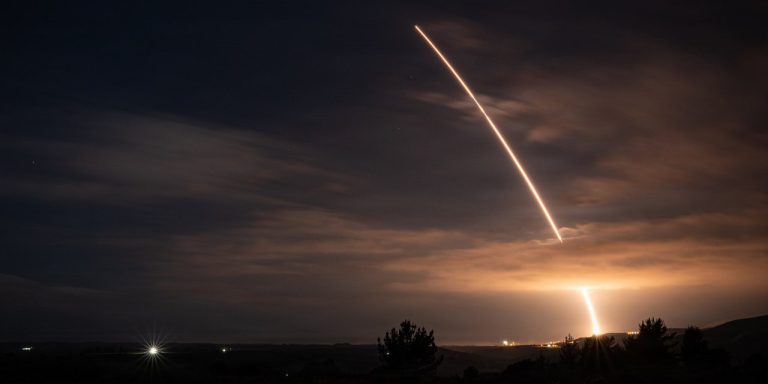
The Agni series is the backbone of India’s nuclear deterrent. The older Agni-I and Agni-II were designed with Pakistan in mind, while the longer-range Agni-III, Agni-IV and Agni-V can reach all of China, including Beijing and Shanghai. The Agni-V is carried in a sealed canister on a road-mobile launcher, which lets it be kept ready and moved quickly. In March 2024 India tested it with multiple independently targetable re-entry vehicles (MIRVs) in a test called Mission Divyastra, and a further MIRV test followed on 8 May 2026. The newer Agni-Prime, also canister-launched, is gradually replacing the older Agni-I and Agni-II. Agni-V has its own article later in this series.
BrahMos: the supersonic cruise missile
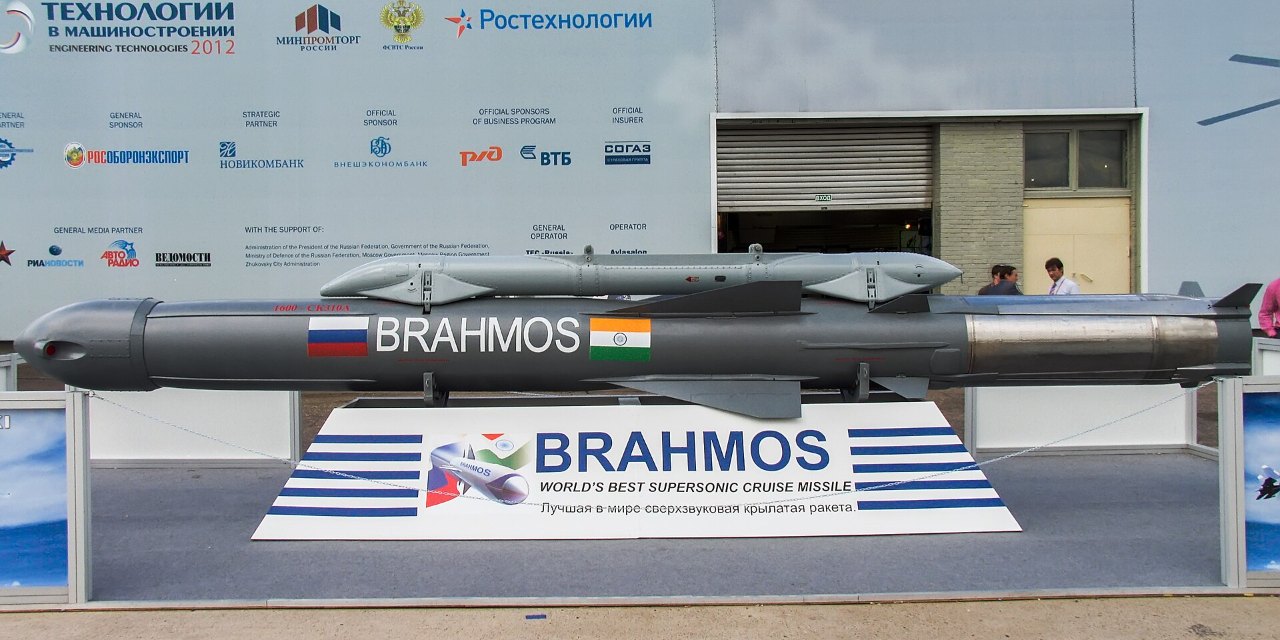
BrahMos, developed jointly with Russia’s NPO Mashinostroyeniya and named after the Brahmaputra and Moskva rivers, is the most famous Indian missile. It flies at almost three times the speed of sound, can be launched from ships, submarines, trucks and Su-30MKI fighters, and is accurate enough to hit a specific building. Its range was originally capped at 290 kilometres to comply with export rules; versions in service now reach about 450-500 kilometres, and longer-range variants are being tested. Our earlier guide to BrahMos explains its origins, and a full article on it follows in this series.
Pralay and the new conventional missiles
India is building up its conventional missile force, largely in response to China’s. The Pralay is a solid-fuel, quasi-ballistic missile with a range of 150 to 500 kilometres that can manoeuvre in flight, intended for the army and air force. Longer-range land-attack cruise missiles such as the LRLACM, derived from the Nirbhay, are in testing, and in November 2024 India tested a long-range hypersonic anti-ship missile. India’s air-to-air missiles have also matured: the Astra Mk1 arms the Su-30MKI and Tejas, and longer-range versions are in development, as our report on Astra and Akash-NG describes.
How does India compare?
India’s missile arsenal is smaller than China’s, which has thousands of conventional ballistic missiles, as our guide to Chinese missiles shows. Against Pakistan, India has longer-range missiles and a more advanced sea-based deterrent. Its strengths are BrahMos, which few countries can match, and steady progress on long-range and submarine-launched missiles. Its weakness is numbers: India has relatively few conventional long-range strike missiles for a country of its size.
Frequently asked questions
What missiles does India have?
India’s main missiles include the Agni series of ballistic missiles, the BrahMos supersonic cruise missile, the Pralay battlefield missile, the K-4 and K-15 submarine-launched missiles, the Nirbhay cruise missile and the Astra air-to-air missile.
What is India’s longest-range missile?
The Agni-V, with a range of more than 5,000 kilometres. It can reach all of China.
Does India have an ICBM?
The Agni-V is often described as an ICBM, though its stated range of more than 5,000 kilometres is at the lower end of the intercontinental class.
Has India tested MIRV missiles?
Yes. India tested the Agni-V with multiple warheads in March 2024 (Mission Divyastra) and again in May 2026.
Who makes BrahMos?
BrahMos Aerospace, a joint venture between India’s DRDO and Russia’s NPO Mashinostroyeniya.
Has India used its missiles in combat?
Yes. India fired BrahMos and other missiles at Pakistani targets during Operation Sindoor in May 2025.
- Air Power Asia – Indian missiles pushing ahead with precision and reach (August 2026): airpowerasia.com
- Overt Defense – India successfully tests advanced Agni missile with MIRV system (May 2026): overtdefense.com
- The Week – India’s nuclear arsenal estimated at 190 warheads (September 2026): theweek.in
- Federation of American Scientists / Bulletin of the Atomic Scientists – Indian nuclear weapons, 2026: thebulletin.org