
INDIA-RUSSIA JOINT SUPERSONIC CRUISE MISSILE: WHAT IS BRAHMOS?

In the realm of modern precision-guided munitions, speed and kinetic impact dictate control over the battlespace. While the majority of global armed forces rely heavily on subsonic cruise missiles for long-range strikes, a premier joint venture has consistently fielded a weapon that completely rewrites the timeline of naval engagement: the BrahMos supersonic cruise missile.
The World’s Fastest Operational Cruise Missile
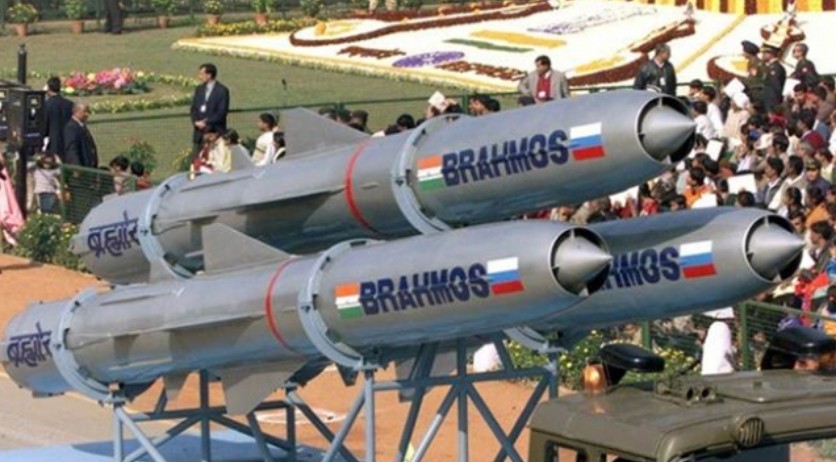
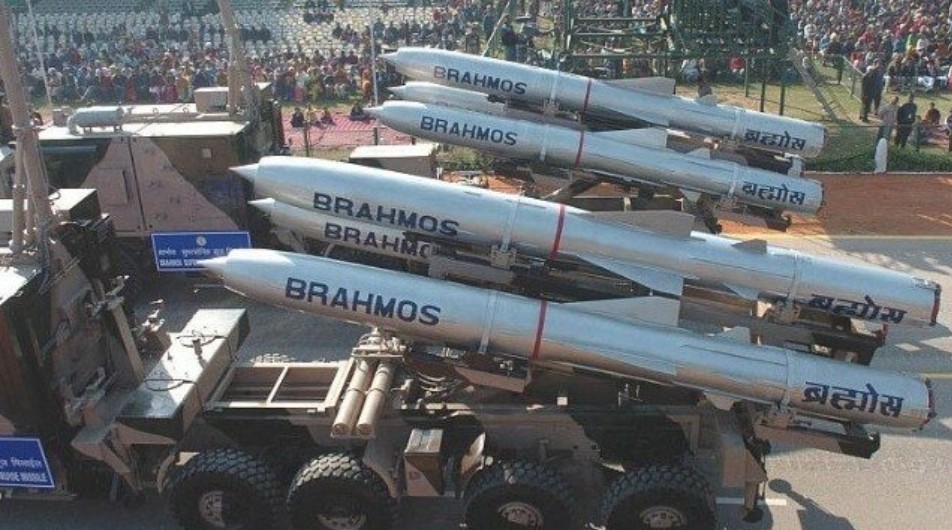
BrahMos is a highly advanced supersonic cruise missile produced by BrahMos Aerospace—a unique joint venture established between India’s Defence Research and Development Organisation (DRDO) and Russia’s NPO Mashinostroyeniya. The weapon’s distinct identity is captured even in its name, which seamlessly blends the names of two major waterways: India’s Brahmaputra River and Russia’s Moskva River.
Technologically, the BrahMos is derived from Russia’s formidable P-800 Oniks (Yakhont) cruise missile. However, through deep structural and software modernization spearheaded by Indian defense engineers, it has evolved into an entirely independent and highly versatile platform. Reaching sustained velocities of Mach 3 (approximately 3,700 km/h), the BrahMos firmly holds the title of the world’s fastest operational cruise missile. To put this into perspective, it flies at three times the speed of conventional subsonic cruise missiles like the American Tomahawk, Harpoon, or Turkey’s ÇAKIR, drastically compressing the target’s defensive reaction window.
Multi-Domain Evolution and Key Variants
The BrahMos was engineered from its inception to be a universal weapon system. It utilizes a two-stage propulsion system: a solid-propellant booster rocket for initial acceleration and a liquid-fueled ramjet engine for sustained supersonic cruise. Over the years, the missile has evolved through several critical variants designed to expand its strategic reach:
BrahMos-I: The baseline variant featuring a restricted range of 290 kilometers. This specific limitation was originally mandated to comply with the guidelines of the Missile Technology Control Regime (MTCR), optimized for anti-ship and land-attack profiles.
BrahMos-ER (Extended Range): Following India’s official entry into the MTCR, engineers successfully pushed the missile’s operational envelope. The extended-range variant boasts a verified reach exceeding 450 kilometers, with recent testing extending capability toward 500 kilometers, allowing for deep strikes far beyond the horizon.
BrahMos-NG (Next Generation): Currently in advanced development, this variant is a smaller, lighter, and sleeker iteration of the missile. It is designed to be integrated onto a broader array of aerial platforms—such as India’s Sukhoi Su-30MKI and LCA Tejas fighters—without sacrificing its trademark supersonic velocity.
- BrahMos-II: The future frontier of the joint venture. This upcoming variant is actively being designed as a hypersonic cruise missile powered by a scramjet engine, aiming for blistering speeds exceeding Mach 7.
| Feature | Specification |
| Speed | Mach 3+ (Supersonic) |
| Operational Range | 290 km to 500+ km (Variant dependent) |
| Warhead Capacity | 200 kg to 300 kg (High-Explosive / Conventional) |
| Physical Length | 8.4 meters (Ship and Ground-Launched versions) |
| Launch Platforms | Multi-domain (Naval Destroyers, Coastal TELs, Heavy Fighters) |
| Primary Export User | Philippines (First international contract delivered) |
Geopolitical Impact and Export Success
The strategic versatility of the BrahMos is underscored by its multi-platform launch capability. It can be deployed via vertical launch systems on surface combatants, underwater from submarine torpedo tubes, from heavy mobile coastal batteries, or air-launched from strategic fighter wings.
This lethal combination of speed, adaptability, and destructive kinetic force has turned the BrahMos into a highly sought-after asset on the global defense market. In a historic geopolitical shift, the Philippines signed a landmark contract to acquire the BrahMos coastal defense missile system. The delivery of these systems provides nations in the Indo-Pacific with a potent asymmetrically lethal deterrent capable of holding hostile naval armadas at bay and fundamentally reshaping regional security dynamics.