
The DF-26: China’s Dual-Threat ‘Guam Killer’ Reshaping the Pacific
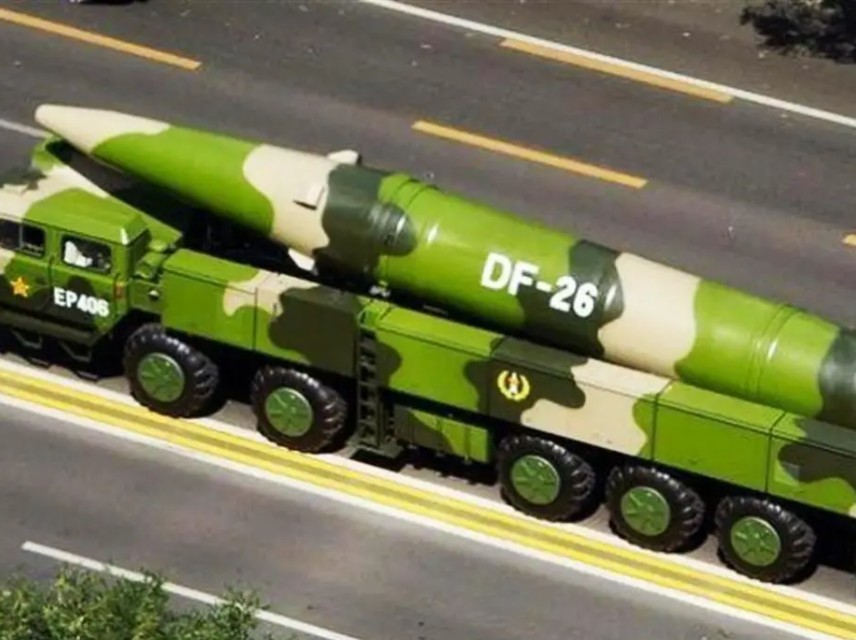
Developed by the People’s Liberation Army Rocket Force (PLARF), the Dongfeng-26 (DF-26) is widely recognized as the linchpin of China’s formidable anti-access/area-denial (A2/AD) architecture. Earning the ominous monikers of “Guam Killer” and “Carrier Killer,” this intermediate-range ballistic missile (IRBM) represents a profound paradigm shift in Pacific geopolitics, designed to project Beijing’s strategic reach far beyond its immediate shores.
Range and Versatility Boasting an estimated operational range of 4,000 kilometers, the DF-26 shatters the geographical buffers that once protected key U.S. military hubs, placing strategic outposts like the island of Guam directly within the crosshairs of mainland China. What truly sets this system apart, however, is its unprecedented operational flexibility. It is uniquely categorized as a “dual-capable, dual-role” weapon. This means it can seamlessly alternate between executing conventional high-explosive missions and delivering nuclear payloads, all while being equally adept at prosecuting stationary land-based infrastructure or moving maritime vessels.
Anti-Ship Capability Striking a moving warship with a ballistic missile is an engineering feat of immense complexity, yet the DF-26 is engineered to do exactly that. Outfitted with a maneuverable reentry vehicle (MaRV) and advanced terminal seekers, the missile can dynamically adjust its trajectory as it plunges back through the atmosphere at hypersonic velocities. This sophisticated targeting capability allows the PLARF to hold massive, high-value maritime assets—most notably, U.S. Navy aircraft carrier strike groups—at severe risk from thousands of miles away, well outside the effective combat radius of the carriers’ own air wings.
Launch Platform To ensure these critical assets survive a potential preemptive or decapitation strike, the DF-26 is deployed on a massive, rugged 6-axle road-mobile Transporter Erector Launcher (TEL). This extreme mobility allows the missile batteries to leverage China’s vast geography and extensive underground tunnel networks. By utilizing “shoot-and-scoot” tactics, these units can emerge from hiding, launch their payloads, and quickly relocate, drastically complicating adversary targeting cycles and guaranteeing a robust retaliatory capability.
Strategic Role The deployment of the DF-26 fundamentally alters the strategic calculus and wargaming across the Indo-Pacific. By explicitly holding U.S. and allied forces at risk all the way out to the Second Island Chain, the missile serves as a towering deterrent. In the event of a contingency in the Taiwan Strait or the South China Sea, the sheer presence of the DF-26 is intended to force opposing naval armadas to operate at extreme standoff distances, effectively denying them access to the immediate theater of conflict.
Conclusion The DF-26 is more than just a missile; it is the physical embodiment of the Chinese Rocket Force’s rapid evolution into a highly sophisticated, precision-strike arm. Blending conventional lethality with nuclear deterrence, it stands as a defining weapon system of modern Far East warfare and a stark reminder of the increasingly contested nature of the Pacific theater.