
Breaking Analysis: Trump Extends Ceasefire at Pakistan’s Request, But Iran Smells a Tactical Trap


A catastrophic regional escalation has been temporarily averted thanks to an eleventh-hour intervention from Islamabad. Following intense backchannel diplomacy, the US-Iran ceasefire has been extended. Pakistan Prime Minister Shehbaz Sharif took to social media to publicly confirm the development, directly thanking the US President for halting kinetic military action to give the diplomatic process a fighting chance.
The Pakistani Lifeline
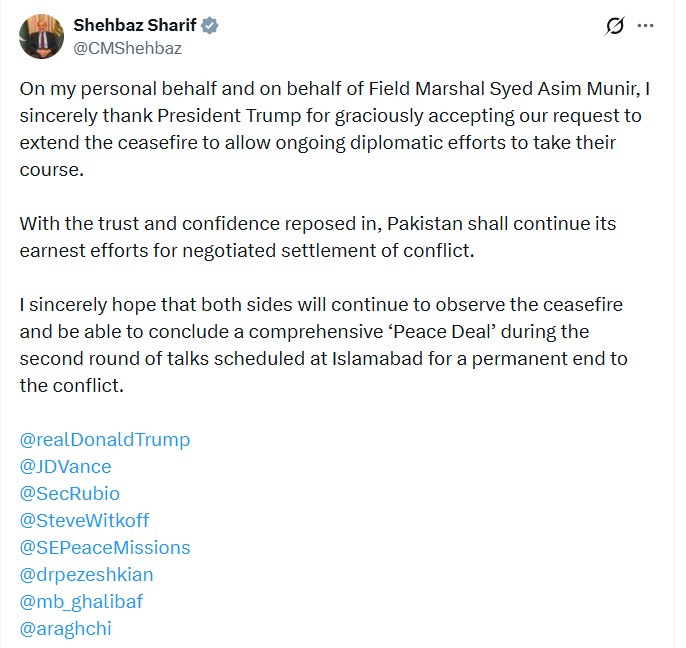
Sharif’s statement explicitly highlighted the joint civil-military effort behind the mediation. “On my personal behalf and on behalf of Field Marshal Syed Asim Munir, I sincerely thank President Trump for graciously accepting our request to extend the ceasefire,” the Prime Minister wrote. Sharif emphasized that Pakistan will continue its earnest efforts for a negotiated settlement and expressed hope that a comprehensive ‘Peace Deal’ could be concluded during the second round of talks scheduled in Islamabad.
The Washington Calculus: Blockade Remains Active
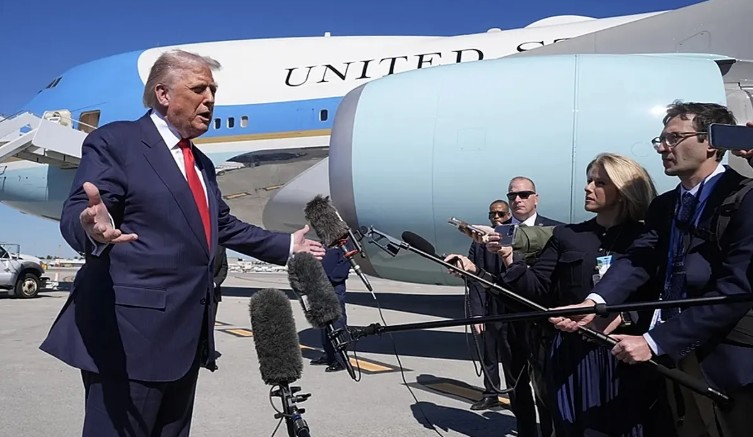
Despite accepting the Pakistani request, Washington is not releasing its strategic chokehold. In his own announcement on Truth Social, President Trump noted that the ceasefire extension was granted specifically to allow a “seriously fractured” Iranian government the time to present a unified diplomatic proposal.
However, the US President made it abundantly clear that the economic and maritime siege will persist. Trump explicitly directed the US military to continue the naval blockade of Iranian ports, maintaining complete combat readiness to strike if negotiations collapse. Reflecting this tense holding pattern, Vice President JD Vance’s planned trip to Islamabad to lead the US delegation has been indefinitely put on hold.
Tehran’s Reaction: “A Ploy for a Surprise Strike”
While Islamabad celebrates a diplomatic victory, the mood in Tehran is intensely hostile. Iranian leadership views the ceasefire extension not as an olive branch, but as a tactical military trap.
Iran’s Foreign Minister Seyed Abbas Araghchi fiercely condemned the ongoing maritime siege, stating that blockading Iranian ports constitutes an “act of war” and a direct violation of the truce. The sentiment was echoed by an advisor to Parliament Speaker Mohammad Baqer Qalibaf, who warned that the ceasefire extension is certainly a “ploy to buy time for a surprise strike”.
Consequently, the semi-official Tasnim News Agency has reported that Iran formally informed Pakistani mediators it will boycott the upcoming talks. Tehran argues that participating is a waste of time as long as the US refuses to step back from its “excessive demands” and continues the blockade, which Iranian officials equate to active bombardment.
The current geopolitical reality is a perilous stalemate. Pakistan has set the diplomatic table, and Washington has paused its bombers—but with the blockade choking its ports, Iran refuses to sit down.