THE RISE OF THE MACHINES: UNDERSTANDING UAV AND UCAV SYSTEMS


 React
React
GLOBAL TECHNOLOGY DESK — In the history of warfare, few innovations have altered the battlefield as rapidly as the Unmanned Aerial Vehicle (UAV). Once relegated to simple reconnaissance, these “eyes in the sky” have evolved into lethal, autonomous, and strategic assets. Today, the question for a modern military is no longer if they should use drones, but how many they can deploy to achieve absolute tactical dominance.
What is a UAV and a UCAV?
-
UAV (Unmanned Aerial Vehicle): Commonly known as a “drone,” it is an aircraft operated without a human pilot on board. It is controlled either remotely by a pilot on the ground or autonomously by onboard computers.
-
UCAV (Unmanned Combat Aerial Vehicle): This is the “armed” version of a UAV. A UCAV is specifically designed to carry and deliver ordnance (missiles, bombs) to neutralize high-value targets.

The Taxonomy of Drones: How are they Categorized?
The global defense industry classifies drones primarily based on their altitude, endurance, and mission profile:
1. MALE (Medium-Altitude Long-Endurance)
The most versatile class. They operate at altitudes up to 30,000 feet and can stay airborne for over 24 hours.
-
Role: Persistent surveillance and precision strikes.
-
Examples: MQ-9 Reaper (USA), Bayraktar TB2 (Global standard for efficiency).
2. HALE (High-Altitude Long-Endurance)
These are the strategic giants. Operating at 60,000 feet or higher, they serve as “atmospheric satellites.”
-
Role: Strategic intelligence, signals interception, and border monitoring.
-
Examples: RQ-4 Global Hawk.
3. Loitering Munitions (Kamikaze Drones)
A hybrid between a drone and a missile. They “loiter” over a target area and dive-bomb the target upon detection.
-
Role: Precision destruction of air defenses and armored units.
-
Examples: Sky Dagger, Switchblade, Harop.
4. Tactical & Nano UAVs
Small, hand-launched drones used by infantry for “over-the-hill” reconnaissance.
-
Role: Immediate situational awareness for frontline troops.
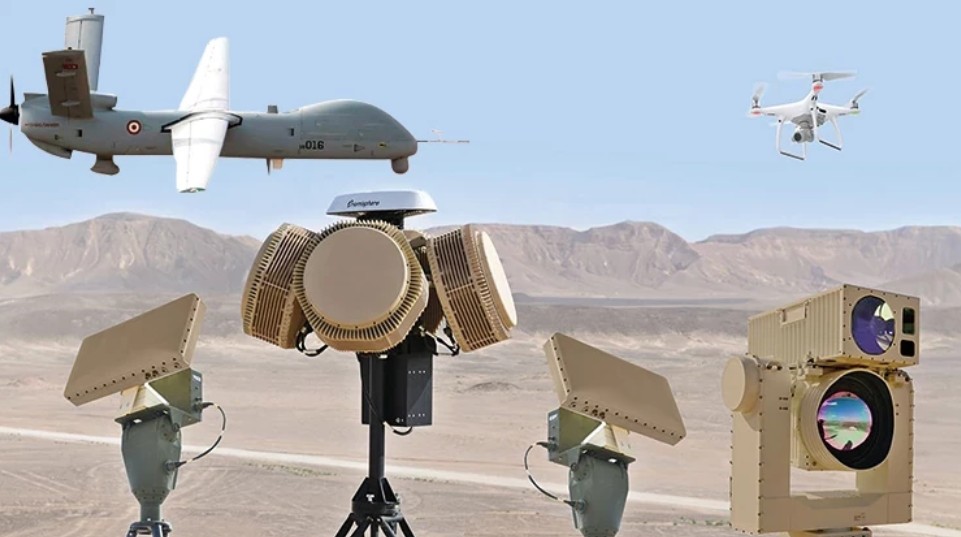
[Image comparing the sizes of a Nano UAV, a MALE drone, and a HALE strategic drone]
How are They Used in Modern Conflict?
Modern drone doctrine relies on three main operational pillars:
-
ISR (Intelligence, Surveillance, Reconnaissance): Providing a “God’s eye view” of the battlefield in real-time, 24/7.
-
Precision Strike: Eliminating targets with surgical accuracy, minimizing “collateral damage” compared to traditional carpet bombing.
-
Electronic Warfare (EW): Carrying jammers to blind enemy radars, acting as a shield for manned aircraft.
-
Network Node: Acting as a relay station to ensure communication between ground troops and command centers in remote areas.
The Future: Swarm Intelligence and Autonomous Wingmen
The next frontier is Swarm Technology. Instead of one expensive drone, militaries will deploy hundreds of small, cheap drones that communicate with each other to overwhelm enemy defenses through sheer numbers and coordinated AI.