
Hsiung Feng III (HF-3): Taiwan’s Supersonic ‘Carrier Killer’
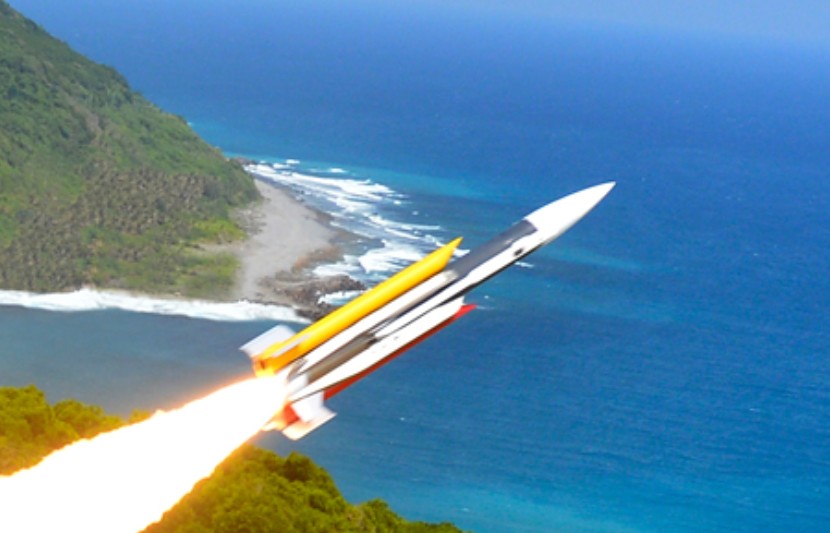
Developed by the National Chung-Shan Institute of Science and Technology (NCSIST), the Hsiung Feng III (HF-3, or “Brave Wind III”) is far more than a standard anti-ship missile. Today, this supersonic cruise missile is widely regarded as Taiwan’s sharpest and most potent naval deterrent against the People’s Liberation Army Navy (PLAN).
Performance and the Destructive Power of Speed Unlike traditional missiles, the HF-3 utilizes an integrated rocket-ramjet propulsion system to achieve a staggering speed of around Mach 3. This near-hypersonic threshold not only ensures a higher probability of bypassing defenses but also exponentially multiplies the destructive power upon impact through immense kinetic energy. While the standard variant boasts a range of approximately 150 kilometers, the extended-range version reportedly exceeds 400 kilometers. This impressive reach grants the missile the capability to strike strategic maritime targets directly along the Chinese mainland coast.

Deployment: The Quills of the “Porcupine” Strategy At the heart of Taiwan’s renowned “porcupine” asymmetric defense doctrine, the HF-3 relies on a highly flexible network of firing platforms. The missile is currently integrated into the high-speed Tuo Chiang-class corvettes and Kang Ding-class frigates. However, the most significant deterrent stems from the mobile coastal batteries that can be easily concealed within the island’s rugged, mountainous terrain. This mobility ensures that the missile units can survive an initial wave of aerial or missile attacks and launch immediate, devastating retaliatory strikes.
Capability Against Carriers: A Nightmare for Modern Fleets Publicly dubbed a “carrier killer” by Taiwanese officials, the HF-3 is meticulously designed to defeat advanced naval air defense systems. To penetrate modern defense networks—such as the formidable HHQ-9 surface-to-air missiles found on China’s Type 055 destroyers—the missile executes “high-G” evasive maneuvers during its terminal phase. This erratic flight profile makes it exceptionally difficult for enemy radars and interceptor munitions to achieve a solid lock, rendering massive warships highly vulnerable in the final seconds of an engagement.
Strategic Role: Raising the Cost of Invasion On the geopolitical chessboard, the primary mission of the HF-3 is not necessarily to win a protracted war, but to make the cost of starting one unaffordably high. As a core component of Taipei’s “deterrence-by-denial” doctrine, this weapon guarantees severe casualties and operational bottlenecks for any naval force attempting an amphibious invasion across the Taiwan Strait.
Conclusion The Hsiung Feng III stands as the flagship product of Taiwan’s domestic defense industry and a testament to its vision of technological self-reliance. In the delicate balance of power in the Far East, it remains one of the most critical asymmetric trump cards held by a small island nation against a numerically superior naval force.