
BREAKING: Explosions Rock Tehran and Strait of Hormuz Amid U.S.-Iran Naval Clash


 React
React
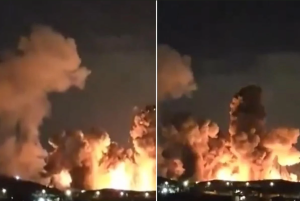
TEHRAN / WASHINGTON — The geopolitical landscape of the Middle East has experienced a dramatic and sudden escalation tonight. A series of powerful explosions have been reported across critical Iranian infrastructure, stretching from the strategic chokepoint of the Strait of Hormuz all the way to the nation’s capital, Tehran.
What began as a localized naval confrontation in the Persian Gulf appears to have rapidly expanded, raising immediate concerns of a wider regional conflict or highly coordinated internal sabotage.
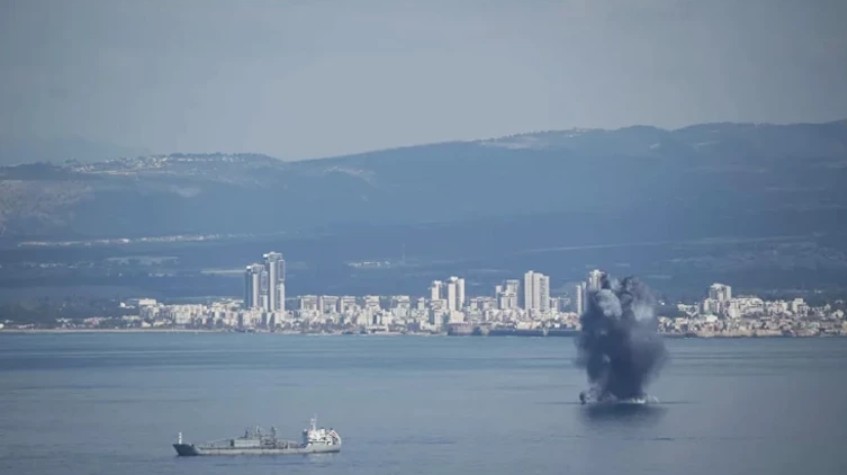
The Flashpoint: Clashes in the Strait of Hormuz
The initial wave of kinetic activity was confirmed in Iran’s southern naval corridor. Within the last few hours, severe explosions were reported on Qeshm Island, the port city of Bandar Abbas, and Sirik. These locations are the absolute nerve centers of Iran’s maritime operations in the Strait of Hormuz.
Iranian state media has officially acknowledged the military engagements. In a pre-written military intelligence statement broadcast twice by state television network IRIB (at 23:26 Tehran time), an official confirmed the escalation:
“A few minutes ago, some reports indicated that an explosion was heard near Qeshm. Following this news, a military official announced that the US military attacked a single Iranian tanker. Enemy troops attacked and came under missile fire in the Strait of Hormuz region, and announced they were forced to flee after sustaining damage.”
While the Pentagon has yet to release an official statement regarding the alleged retreat or damage to U.S. vessels, the IRIB broadcast serves as official confirmation from Tehran that direct missile exchanges have occurred between Iranian and American forces in the world’s most critical oil transit chokepoint.
The Capital Under Fire: West Tehran Explosions
While a skirmish in the Strait of Hormuz is highly volatile, the most alarming development of the night is occurring hundreds of miles to the north. Multiple reports have emerged of loud explosions and the activation of air defense systems in West Tehran.
If the blasts in the capital are the result of foreign airstrikes, it signifies a massive, unprecedented expansion of the conflict parameters by U.S. or allied forces—moving beyond neutralizing maritime threats to striking deep inside the Iranian mainland.
However, defense analysts point out a second, equally destabilizing possibility. Given the heavily fortified nature of Tehran’s airspace, the explosions could be the result of coordinated internal sabotage. In the fog of war, anti-government factions or proxy cells often exploit foreign military distractions to target domestic infrastructure.
A Waiting Game for Global Markets
The situation remains highly fluid. The confirmation of anti-ship missile fire in the Strait of Hormuz alone is enough to send shockwaves through global energy markets. But if the explosions in West Tehran are confirmed as a direct kinetic strike by foreign adversaries, the parameters of engagement in the Middle East will have fundamentally changed overnight.
DefenseAndTech.com is closely monitoring incoming intelligence from both CENTCOM and regional sources. This is a developing story and will be updated as official damage assessments and strategic responses are verified.