
THE F-22 RAPTOR: THE FIGHTER JET THE US REFUSES TO SELL

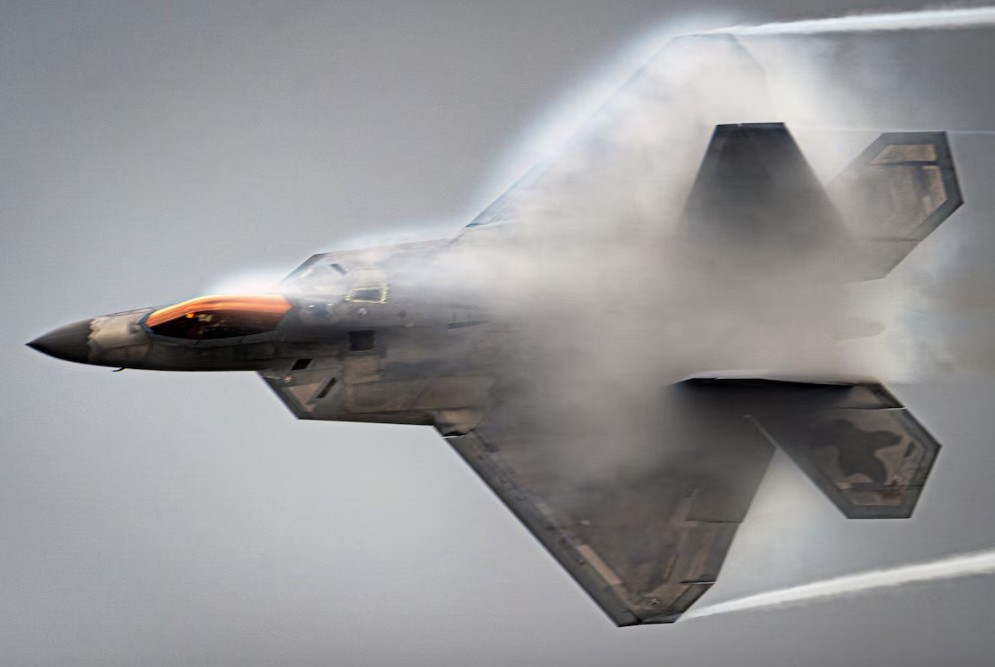

When an aircraft is so far ahead of its time that its maneuvers seem to defy the laws of physics, rumors are bound to start. For the Lockheed Martin F-22 Raptor, its unmatched agility, invisible radar signature, and absolute dominance of the skies have spawned a persistent internet joke: that the United States must have used reverse-engineered alien technology to build it.
While the truth involves brilliant human aerospace engineering rather than extraterrestrials, the F-22 Raptor remains a platform surrounded by intense secrecy. It is the undisputed king of air superiority, and it holds a unique title in modern military history: it is the only fighter jet that the United States absolutely refuses to sell to anyone—not even its closest allies.
The “Alien” Tech: What Makes the Raptor So Special?
Introduced in December 2005, the F-22 was the world’s first operational fifth-generation fighter. It was designed with a singular, uncompromising purpose: to enter heavily defended enemy airspace, completely unseen, and destroy any hostile aircraft before the enemy even knew they were under attack.

The aircraft achieves this through a triad of capabilities that, when combined, create a lethal combination:
-
Extreme Stealth: While most modern fighters try to minimize their radar signature, the F-22 masters it. Through a combination of radar-absorbent materials (RAM) and highly classified geometric design, the 19-meter-long jet has a Radar Cross Section (RCS) roughly the size of a steel marble.
-
Supercruise: The F-22 is powered by two Pratt & Whitney F119 turbofan engines that allow it to achieve “supercruise.” This means the Raptor can fly at supersonic speeds (Mach 1.5) for extended periods without using its afterburners, conserving massive amounts of fuel and masking its infrared heat signature from enemy missiles.
-
2D Thrust Vectoring: This is where the “alien physics” come into play. The engine nozzles at the rear of the F-22 can pivot 20 degrees up or down. This thrust vectoring allows the pilot to execute extreme, mind-bending maneuvers—like the famous “J-Turn” or falling backward out of a stall while maintaining complete control—that traditional aerodynamic surfaces simply cannot achieve.
The Obey Amendment: Why is it Banned from Export?
Historically, the United States has used fighter jet sales as a powerful diplomatic tool, exporting platforms like the F-15, F-16, and eventually the F-35 Lightning II to strategic partners worldwide. However, the F-22 is the sole exception.
In 1998, US Congressman David Obey introduced an amendment that explicitly prohibited the foreign sale of the F-22. The U.S. government feared that the secrets behind the Raptor’s unparalleled stealth coatings and its advanced avionics were simply too critical to risk. If an F-22 were sold to an allied nation and a hostile intelligence agency managed to infiltrate their defense networks—or if an allied government underwent a hostile regime change—the bedrock of America’s air dominance could be compromised.
As a result, requests to purchase the F-22 from top-tier allies like Japan, Israel, and Australia were outright denied.
A Class of Its Own
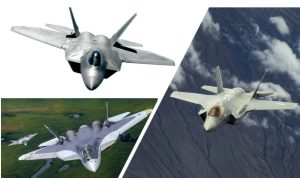
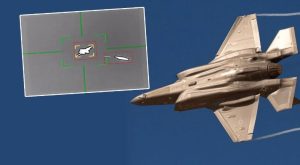
Today, despite the proliferation of the newer, more networked F-35 (which is widely exported), the F-22 Raptor remains the US Air Force’s dedicated “door kicker.” Production was controversially halted in 2011 with only 195 airframes built, making it an incredibly rare and elite asset.
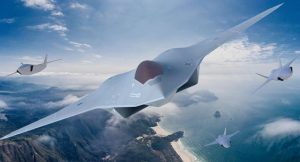
Until the US fields its highly secretive Next Generation Air Dominance (NGAD) platform, the F-22 will continue to rule the skies. It stands as a testament to the absolute pinnacle of Cold War-era design entering the 21st century—a machine so lethal and so secretive that keeping it strictly at home was the only way to ensure the balance of power.