
Israel Attacks Sumud Flotilla: 22 Ships Reportedly Hijacked in International Waters
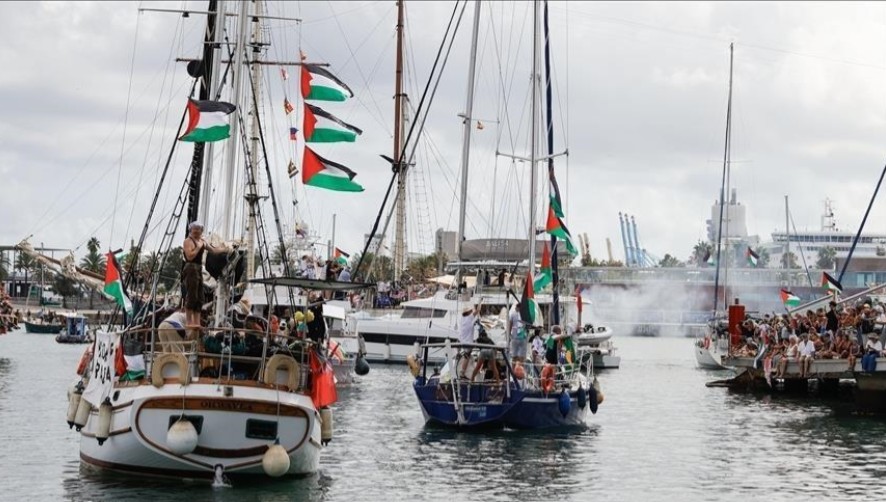
MEDITERRANEAN SEA — In an unprecedented escalation of maritime friction, Israeli naval forces have launched a massive, coordinated interception of the civilian “Sumud Flotilla,” operating deep within international waters. Initial field reports and activist communications indicate that up to 22 vessels have been hijacked by Israeli naval commandos, sparking an immediate global outcry and raising severe questions regarding blatant violations of international maritime law.
The flotilla, comprised of over 50 boats carrying hundreds of international activists—including a significant contingent of Turkish, Spanish, and Italian citizens—was attempting to break the naval blockade of the region. However, the military interception did not occur near the blockade zone; it was executed hundreds of miles away in the open Mediterranean Sea.
A Breach of International Maritime Law
From a legal and defense analysis perspective, the location of this operation transforms it from a localized blockade enforcement into a major international diplomatic crisis.
Under the United Nations Convention on the Law of the Sea (UNCLOS), vessels operating in international waters (the high seas) are subject to the exclusive jurisdiction of the state under whose flag they sail. Boarding, seizing, or redirecting civilian vessels flagged to sovereign nations in international waters without authorization is widely considered a severe breach of maritime law, often legally categorized by international jurists as an act of piracy or unlawful state aggression.
Legal experts warn that Israel’s decision to intercept the flotilla so far from its territorial waters effectively strips the operation of its standard defensive legal justifications.

Electronic Warfare and Commando Boarding
The tactical execution of the interception was highly aggressive. According to fragmented communications received before a complete blackout, the Israeli Navy deployed advanced electronic warfare (EW) capabilities. High-powered signal jammers were used to sever the flotilla’s satellite uplinks and radio communications, isolating the vessels before military boarding parties arrived.
Activists reported that Israeli forces pointed semi-automatic weapons at civilian passengers during the forced boarding procedures, systematically seizing control of the helms and redirecting the 22 hijacked vessels.
Strategic Fallout
While the Israel Defense Forces (IDF) have demonstrated an immense capacity for power projection and deep-sea interception, the strategic cost of this operation is likely to be astronomical.
By conducting military hijackings of civilian vessels in international waters, Israel risks alienating key European and regional allies. The presence of citizens from NATO member states aboard the hijacked ships ensures that this incident will rapidly escalate from a regional security issue to the highest levels of international courts and diplomatic tribunals.
DefenseAndTech will continue to monitor the status of the hijacked vessels and the impending legal fallout as the situation develops.