
The 48-Hour Countdown: Trump Warns of ‘Incredible Events’ as US Blockade Paralyzes Iran


 React
React
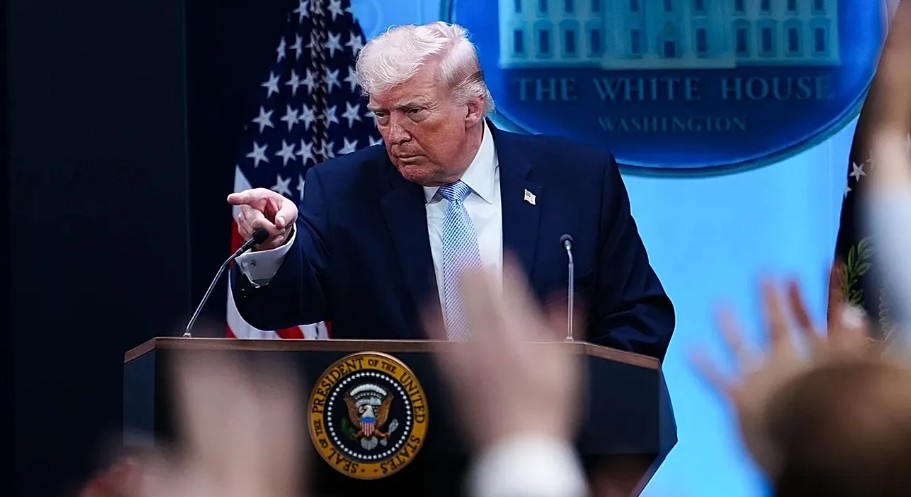
WASHINGTON / PERSIAN GULF – The fragile ceasefire between Washington and Tehran is effectively hanging by a thread. In a series of high-stakes statements made on Wednesday, President Donald Trump confirmed he has no plans to extend the current pause in hostilities, warning the global community to prepare for “incredible events” within the next 48 hours.
“If I weren’t President, the world would be in pieces right now,” Trump stated during an interview with ABC News. His words signal a shift from defensive containment to a potential finality in the 2026 conflict: an agreement on U.S. terms or the total kinetic elimination of Iran’s military capabilities.
CENTCOM: “Economic Activity Has Stopped”
While the diplomatic clock ticks, the tactical reality on the water is one of total dominance. Vice Admiral Cooper, representing U.S. Central Command (CENTCOM), confirmed that the maritime blockade is achieving its goals with surgical efficiency.
“In less than 36 hours since the blockade was implemented, U.S. forces have completely halted economic trade entering and exiting Iran by sea,” Cooper stated.
Given that 90% of Iran’s economy is tied to international maritime trade, the “economic asphyxiation” strategy has moved faster than analysts predicted. Every Iranian port is currently under a “zero-traffic” mandate enforced by U.S. carrier strike groups and guided-missile destroyers.
The Kinetic Front: Hezbollah’s 34-Strike Escalation
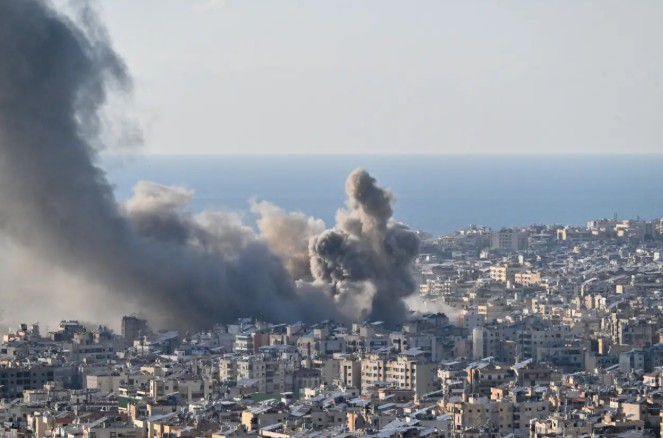
As the U.S. tightens the noose in the Gulf, the northern front in Israel has exploded into high-intensity warfare. Hezbollah announced it targeted Israeli Defense Forces (IDF) positions at least 34 times in a single 24-hour cycle using a mix of rockets and suicide drones.
The most significant loss for the IDF was the confirmed downing of a Hermes-450 unmanned aerial vehicle (UAV) over the town of Siddikin. This loss highlights Hezbollah’s improved anti-air capabilities, likely bolstered by recent shipments of advanced MANPADS.
| Location | Action | Impact Reported |
| Kiryat Shmona | Rocket Barrage (Hezbollah) | Sirens active; multiple impacts in open areas. |
| Kadmus (S. Lebanon) | Israeli Air Strike | 4 fatalities, significant structural damage. |
| Ensariyye | High-Precision Strike (IDF) | 5 fatalities; targeting command node. |
| Hermes-450 | Tactical Downage | IDF UAV neutralized over Siddikin. |
Trump’s Ultimatum: Agreement or Attrition
Speaking to the New York Post, Trump hinted that negotiations could technically resume within the next 48 hours, but only under the shadow of the “incredible events” he previously mentioned.
“An agreement is preferable because then they can rebuild their country,” Trump noted. “But we have already removed the radicals. They are gone.” His rhetoric suggests that the U.S. may have already conducted clandestine operations against top-tier Iranian leadership, or is prepared to do so if the 48-hour window expires without a breakthrough.
Strategic Verdict: The “Asymmetric Gap”
For the defense news community, the next two days represent a critical “event horizon.” If the blockade continues to hold and Iran cannot break the maritime siege, Tehran may be forced into a “use it or lose it” scenario with its remaining ballistic missile arsenal.
However, with Hezbollah increasing its strike frequency to nearly 1.5 attacks per hour, the risk of a multi-front regional collapse remains at its highest point since the conflict began. The world is now watching the 48-hour clock, waiting to see if Trump’s “incredible events” imply a new peace or the final stage of a regional war.
Editor’s Note: This is a live-developing story. Defense & Tech will provide minute-by-minute updates on the status of the blockade and the 48-hour deadline. Stay tuned for our upcoming analysis on “Tactical Nuclear Deterrence in the Persian Gulf.”
React