
Baykar’s Bayraktar TB3: The Carrier-Capable UCAV Raising the Stakes at Sea

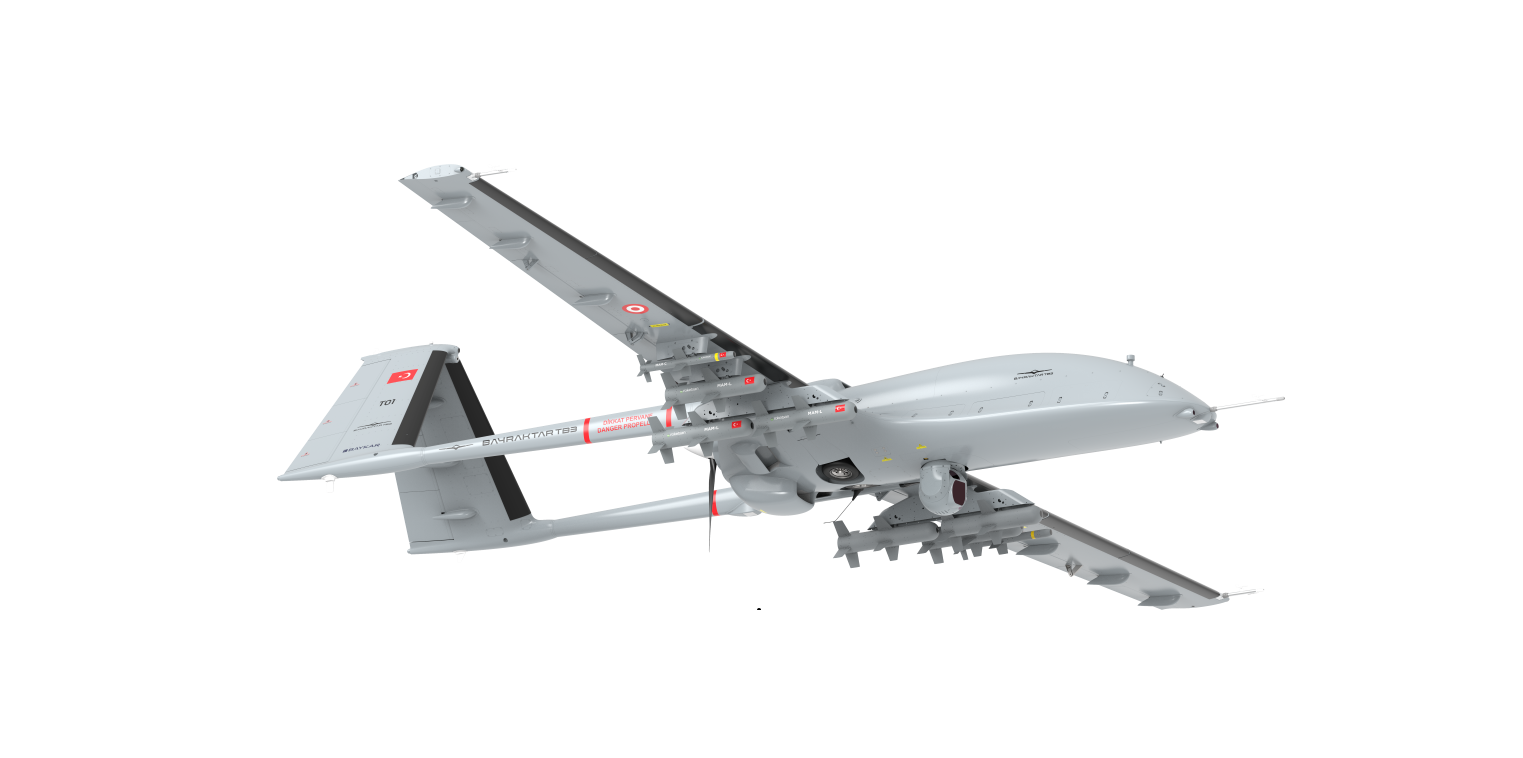

Baykar’s Bayraktar TB3 takes everything that made the TB2 a battlefield phenomenon and adds one transformative capability: the ability to operate from short-runway aircraft carriers. That single design decision elevates Turkey’s naval reach from a coastal power to one with credible blue-water unmanned strike capability.
| Specification | Value |
|---|---|
| Max Takeoff Weight | 1,600 kg |
| Payload Capacity | 280 kg |
| Endurance | 24+ hours |
| Cruise Speed | 110–130 KTAS |
| Service Ceiling | 25,000 ft |
| Operating Altitude | 20,000 ft |
| Engine | 170 hp turbodiesel |
| Wingspan | 14 m (foldable) |
| Length | 8.35 m |
| Height | 2.6 m |
| Carrier Operations | Short-runway aircraft carrier capable |
| Communication | LOS + BLOS satellite |
Not a TB2 Upgrade — A Different Animal
TB3 shares a family resemblance with TB2 but is a distinct airframe engineered around naval requirements. The defining feature is foldable wings — a seemingly simple addition that enables storage in the confined hangars of carriers like TCG Anadolu. A more powerful 170-hp turbodiesel engine and an increased MTOW of 1,600 kg expand the payload capacity and push endurance beyond 24 hours. Where TB2 carries 150 kg, TB3 hauls 280 kg — roughly double, opening room for heavier sensor packages and more varied munitions.
What It Carries and What It Can Do
TB3’s payload includes simultaneous EO/IR/laser designator optics, ELINT (Electronic Intelligence) gathering systems, and a surveillance radar — a comprehensive ISR package that lets the aircraft contribute to fleet situational awareness over extended overwater transits. On the strike side, laser-guided and INS/GPS munitions provide precision engagement, while mini cruise missile compatibility enables standoff attacks well outside air-defense envelopes.
The Naval Dimension
Turkey’s TCG Anadolu amphibious assault ship was purpose-built to operate TB3s, creating an at-sea strike and reconnaissance platform without the vulnerability of a fixed land base. In the Mediterranean, Aegean, and Black Sea theaters, a carrier-based TB3 can maintain 24-hour surveillance of contested maritime zones — monitoring shipping lanes, tracking surface combatants, and striking if ordered — all without tethering Turkey’s strike options to land bases that an adversary can target or threaten to close.
Where It Fits in the Baykar Family
TB3 is not a TB2 replacement but a complement. TB2 remains optimal for land-based light operations; TB3 extends the family’s reach into naval and heavy-ISR roles; AKINCI handles strategic depth. Together they form a layered unmanned architecture that covers tactical, operational, and strategic requirements — a portfolio approach that gives Turkish planners flexibility no single platform could provide.