
How Mine-Clearing Robots Work: The US Navy’s Answer to the Hormuz Blockade

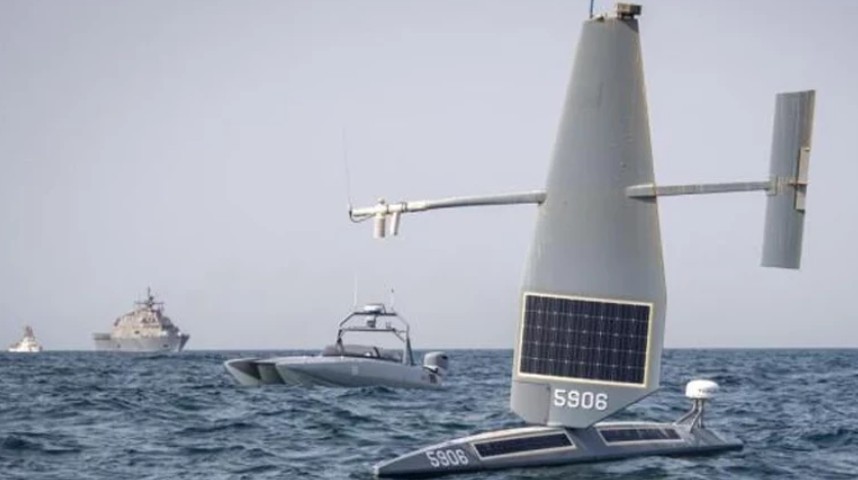

The geopolitical standoff in the Middle East has rapidly escalated from diplomatic gridlock to kinetic action. Following Iran’s decision this past Saturday to officially close the Strait of Hormuz and open fire on two commercial vessels, the global energy market is facing a severe crisis. To break this Anti-Access/Area Denial (A2/AD) chokehold, the US Navy is deploying its most advanced asymmetric countermeasure: Mine-clearing robots.
As traditional, crewed minesweeping ships are gradually retired from the fleet, Unmanned Underwater Vehicles (UUVs) and Unmanned Surface Vehicles (USVs) have become the absolute backbone of America’s counter-mine capabilities. But what exactly are these robots, and how do they neutralize one of the oldest and deadliest naval threats?
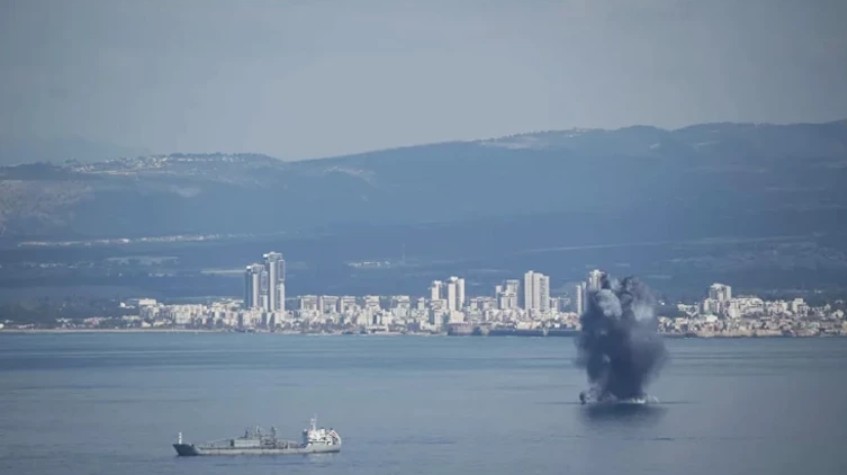
The Three Phases of Robotic Mine Clearance
Detecting and neutralizing a sea mine in the murky, highly trafficked waters of the Persian Gulf is a complex engineering challenge. The robotic workflow is divided into three distinct phases:
1. Detection (The Sonar Sweep) The operation begins with autonomous UUVs, often resembling small torpedoes, being launched from a safe distance. These drones navigate predetermined grid patterns just above the ocean floor. They are equipped with advanced Side-Scan Sonar and Synthetic Aperture Sonar (SAS). Instead of relying on cameras—which are useless in dark, sediment-heavy waters—these sonars bounce acoustic waves off the seabed, creating ultra-high-resolution, 3D topographical maps of the ocean floor.
2. Classification and Identification (The AI Brain) The raw sonar data is incredibly dense. The robots use onboard Artificial Intelligence to instantly filter out natural rocks, sunken debris, and marine life. If the AI detects a geometric anomaly that matches the acoustic signature of a bottom mine or a tethered contact mine, it marks the exact GPS coordinates. Some advanced drones will then physically approach the anomaly, using magnetic sensors or high-definition optical lenses to positively identify the explosive device.
3. Neutralization (The Expendable Killers) Once a mine is confirmed, the US Navy does not send human divers to disarm it. Instead, they deploy specialized “mine-killer” robots. These are typically remotely operated vehicles (ROVs) guided by a technician via a fiber-optic cable. The ROV swims up to the sea mine, attaches a shaped explosive charge to its hull, and swims away. Alternatively, some smaller robots are designed as “kamikazes”—they simply ram the mine and detonate themselves, destroying the threat in a controlled explosion.
The Strategic Advantage: Removing the Human Element
The deployment of these robotic systems is not just a technological upgrade; it is a massive geopolitical lever.
A traditional sea mine costs a few thousand dollars, but it can sink a billion-dollar warship and kill hundreds of sailors. By utilizing robots, the US Navy completely neutralizes the psychological and political terror of the minefield. Scott Savitz, a senior engineer at the RAND Corporation and former analytical support for the Navy’s mine warfare command, recently explained this paradigm shift to The Wall Street Journal:
“Robots cause less concern about casualties. Therefore, running them through a minefield is much more acceptable, and if you lose some, they can be replaced.”
By removing the risk of American casualties from the equation, the US Navy can rapidly clear the Strait of Hormuz, reopening global trade routes and stripping Tehran of its primary maritime negotiation leverage. In the 21st century, the deadliest naval battles are being fought not by battleships, but by autonomous machines in the dark depths of the ocean.