
Nuclear Leak in the Norwegian Sea: Radiation Detected from Sunken Soviet Submarine
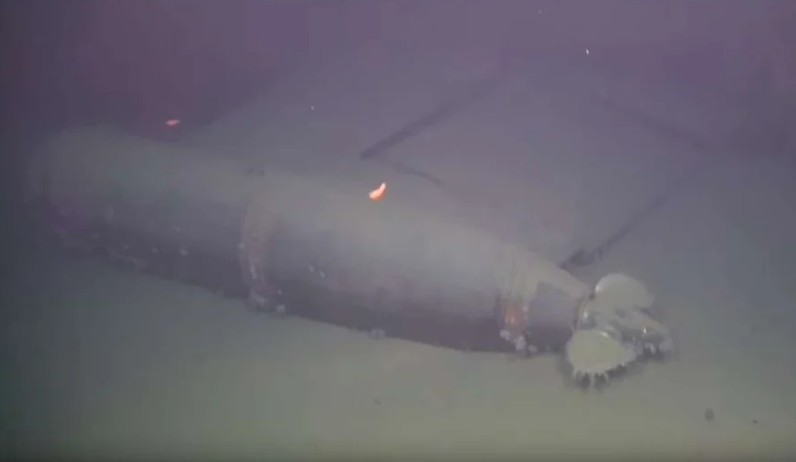
BERGEN, NORWAY – New scientific data released in April 2026 has confirmed that the Norwegian Sea is facing a persistent nuclear challenge. The K-278 Komsomolets, a Soviet nuclear-powered submarine that sank following a tragic fire in 1989, is showing signs of accelerated radioactive leakage.
According to the latest deep-sea research missions conducted at a depth of 1,700 meters, radioactive isotopes are officially mixing with the surrounding seawater, sparking fresh concerns over the structural integrity of the Cold War relic.
The 800,000x Factor: Analyzing the Leak
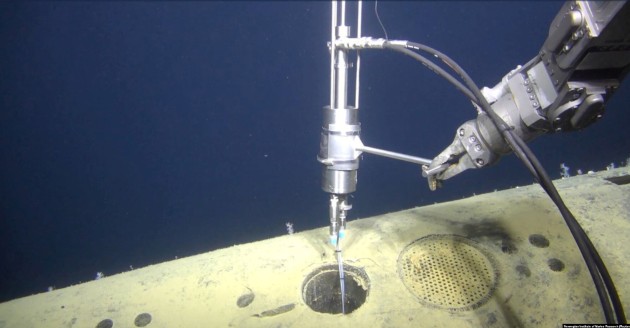
The research, conducted using advanced Remotely Operated Vehicles (ROVs), focused on the submarine’s reactor section and ventilation pipes. The results are startling:
Isotopes Found: High concentrations of Cesium-137 (Cs-137) and Strontium-90 (Sr-90) were detected in water samples taken directly from the wreck’s interior.
Radiation Levels: In specific samples taken near the ventilation ducts, radiation levels were found to be up to 800,000 times higher than the normal background radiation levels of the Norwegian Sea.
The “Plutonium” Threat: Two Nuclear Torpedoes
While the reactor leak is the primary focus, the presence of two nuclear-tipped torpedoes remains the most significant long-term risk. These torpedoes contain several kilograms of plutonium, which has a half-life of over 24,000 years.
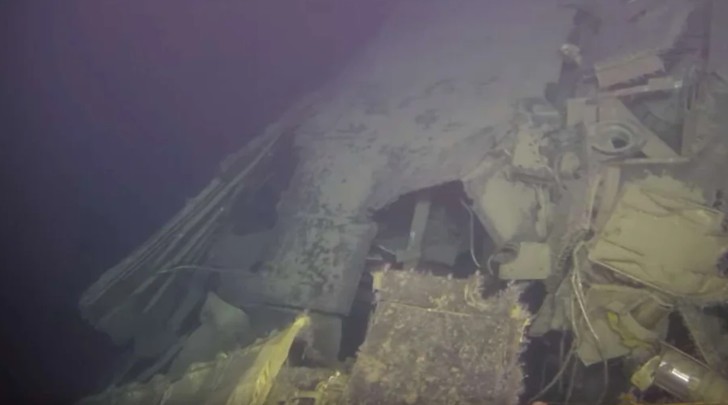
“Currently, our sensors do not show a breach in the torpedo compartments,” stated a lead scientist involved in the 2026 mission. “However, the corrosive nature of the saltwater at these depths means that the metal hull is thinning. If the plutonium warheads are exposed, we move from a manageable leak to an environmental catastrophe.”
Environmental Impact: Is the Seafood Safe?
Despite the alarming figures near the wreck, the defense news community and environmental agencies maintain that there is no immediate threat to human health or commercial fishing.
Dilution Factor: The sheer volume of the Norwegian Sea and the extreme depth (1.7 km) ensure that the radiation is diluted rapidly as it moves away from the source.
Localized Concentration: The high radiation levels are currently confined to a very small area around the hull.
A Geopolitical Challenge
The Komsomolets is not just a scientific problem; it is a diplomatic one. Located in international waters but within Norway’s economic zone, the wreck belongs to the Russian Federation. For years, there have been discussions about raising the submarine or encasing it in a specialized “sarcophagus,” similar to the Chernobyl reactor. However, the extreme depth and the fragile state of the hull make any recovery operation high-risk.
Conclusion: A Ticking Clock
As we monitor the situation in 2026, the message is clear: the K-278 Komsomolets is a ticking clock of the Cold War. While the sea currently provides a natural buffer, the ongoing leakage of radioactive isotopes into the water serves as a stark reminder that nuclear legacies do not disappear—they simply wait in the depths.
Editor’s Note: This report is based on the latest 2026 maritime surveillance data and isotopic analysis. Defense & Tech will continue to track the structural degradation reports provided by the Norwegian Institute of Marine Research.