
The Strategic Shift: Why Modern Militaries Prefer Solid-Fuel Missiles
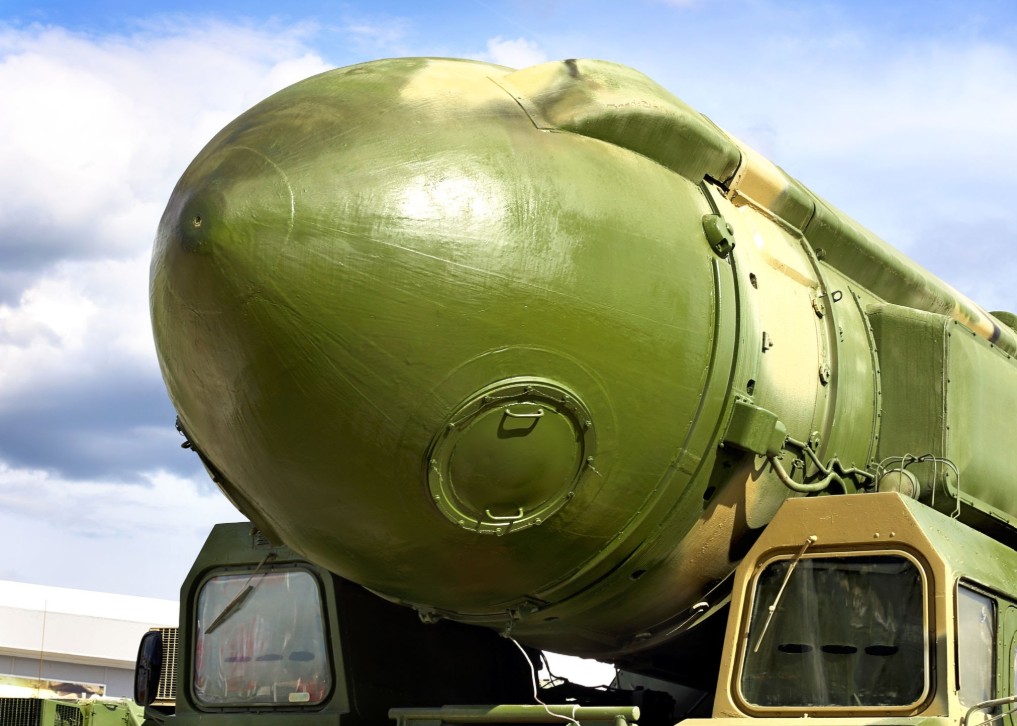
In the high-stakes environment of modern warfare, the time between detection and launch is the difference between deterrence and destruction. Across recent defense news headlines, from the Persian Gulf to the Indo-Pacific, there is a clear and accelerating trend: global militaries are aggressively shifting their ballistic arsenals from liquid to solid-propellant systems. Why is solid fuel the preferred choice for modern tactical and strategic missile platforms, and how does it fundamentally alter battlefield doctrine?
The Doctrinal Imperative: Time is Survivability
To understand the preference for solid fuel, one must look at the “Kill Chain.” Early generations of ballistic missiles relied entirely on liquid propellants. While liquid fuel offers excellent specific impulse (raw engine efficiency) and allows the engine to be throttled or restarted mid-flight, it comes with a fatal tactical flaw: launch preparation time.
Liquid propellants typically consist of highly corrosive, toxic, and cryogenic components (like liquid oxygen and hydrazine). They cannot be stored inside the missile for long periods without degrading the fuel tanks. Therefore, a liquid-fuel missile must be fueled just before launch—a dangerous and highly visible process that can take hours. In an era of persistent satellite surveillance and advanced counter-battery fire, an immobile missile taking hours to fuel is a sitting duck.
Solid-fuel missiles, by contrast, are cast with the fuel and oxidizer already mixed into a stable, rubbery compound. They are loaded, sealed, and ready to fire at a moment’s notice.
Interactive Analysis: Propellant Performance
Explore how the two chemical architectures dictate launch readiness and platform survivability in the simulator below:
Key insight: The transition to solid fuel compresses the sensor-to-shooter loop from several hours down to less than 15 minutes.
The Battlefield Reality: A Technical Comparison
When analyzing weapons systems in modern defense news, the structural differences between these propellants dictate the entire design of the missile.
| Feature | Solid-Fuel Missiles | Liquid-Fuel Missiles |
| Launch Readiness | 3 to 15 minutes (Pre-packaged) | 2 to 4 hours (Requires fueling sequence) |
| Storage & Maintenance | Can be stored fully loaded for years with minimal maintenance. | Highly corrosive; fuel must be stored separately in specialized facilities. |
| Platform Mobility | Extremely high (ideal for TELs and Submarines). | Very low (mostly restricted to fixed silos). |
| Engine Throttling | Once ignited, it burns until depleted (cannot be turned off). | Highly controllable (can be throttled, stopped, and restarted). |
Platform Integration: Submarines and “Shoot and Scoot”
The true catalyst for solid-fuel dominance was platform integration, specifically for two critical delivery methods:
Submarine-Launched Ballistic Missiles (SLBMs): Storing highly volatile, toxic liquid fuel inside the confined, pressurized hull of a nuclear submarine is a catastrophic safety risk. The development of solid fuel made continuous at-sea nuclear deterrence viable.
Transporter Erector Launchers (TELs): A mobile launcher’s survival depends on the “shoot and scoot” doctrine—driving out of a hidden bunker, firing the weapon, and relocating before the enemy can trace the trajectory and fire back. Liquid-fuel systems require a convoy of fueling trucks and a stable launch pad, completely negating the advantage of mobility.
While liquid fuel still powers space exploration and certain heavy ICBMs due to its sheer payload capacity, the tactical battlefield definitively belongs to the solid-fuel engine.